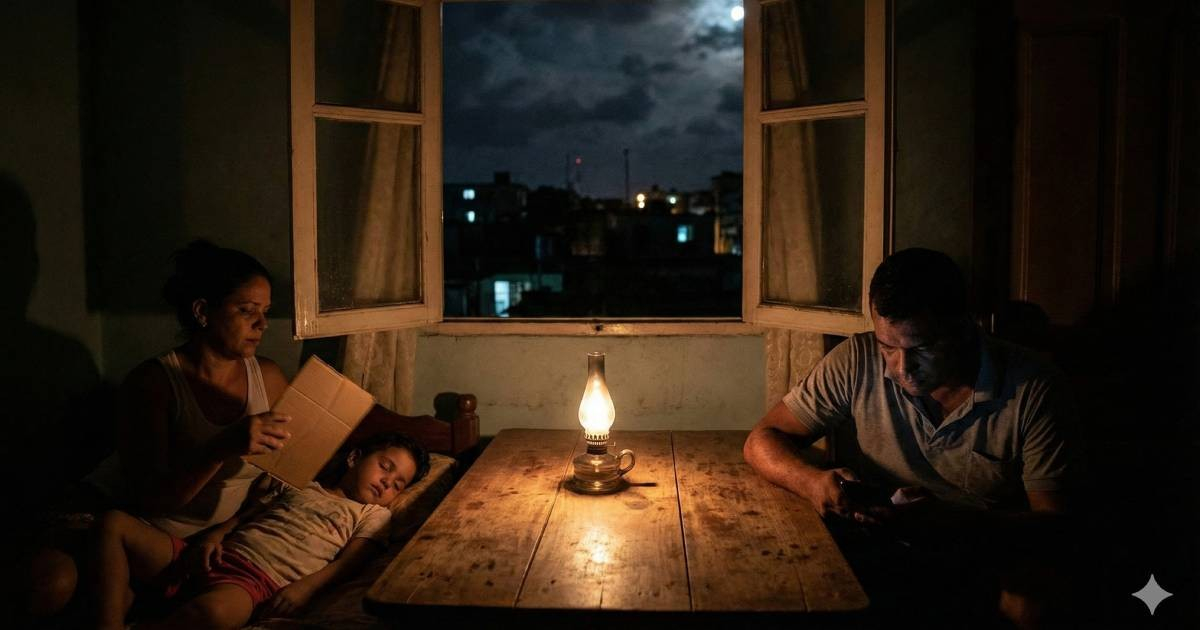
The Cuban Electric Company, Unión Eléctrica (UNE), has released its daily report for Saturday, offering what seems like a rare glimmer of hope amid the island's ongoing power crisis. They project a deficit of 1,290 MW for the peak evening hours, a decrease from the 1,591 MW on Friday and 1,671 MW on Wednesday.
As of 6:00 am on Saturday, the National Electric System (SEN) had an availability of 1,570 MW against a demand of 2,500 MW, resulting in 932 MW already being affected since early morning hours.
Anticipated Evening Power Supply
For the evening peak, the state-run company forecasts a power availability of 1,810 MW with an expected demand of 3,100 MW, leading to an estimated shortfall of 1,320 MW. This improvement is attributed to the expected activation of five engines from the Moa Fuel Site (60 MW), unit 6 of the Mariel thermoelectric plant (80 MW), unit 1 of the Santa Cruz thermoelectric plant (60 MW), and unit 4 of Energás Varadero (40 MW).
The relative improvement is reportedly due to the arrival of Russian fuel at the end of March, which has allowed for the reactivation of distributed generation, according to social media discussions.
Public Skepticism and Social Media Reactions
Despite these numbers, four blocks of the Mariel, Ernesto Guevara, Antonio Maceo, and Felton thermoelectric plants remain out of service, with an additional 367 MW sidelined due to thermal generation limitations.
Cubans were quick to express their doubts on UNE's Facebook page, mixing disbelief with the humor born from years of enduring blackouts.
"Did the availability really spike by 600 MW overnight?" questioned one skeptical user.
"I don't buy those numbers because I see no light; they are amusing, but I'm not in the mood for jokes," a young woman remarked.
"If you're not in Havana, don't even dream of seeing any changes," a Santiago resident asserted.
"Well, I haven't noticed it; we've been in blackout since yesterday here in Matanzas," commented a Varadero resident.
"Get ready for next week, this is weird," a Havana local noted.
"OMG, Unión Eléctrica and its magic wand!" mocked a mother.
Broader Implications of the Energy Crisis
The energy crisis extends beyond just electricity. Abel Fernández Díaz, director of the Havana Water Supply Agency, reported on Wednesday that over 200,000 Havana residents—about 11% of the city’s population—lack regular access to potable water due to the blackouts.
Even President Díaz-Canel acknowledged the severe fuel shortage affecting nearly all sectors, despite the late March arrival of a Russian fuel shipment.
In terms of healthcare, the United Nations confirmed that two million people are impacted, with 96,000 surgeries still pending.
Understanding Cuba's Ongoing Energy Crisis
What is causing the power crisis in Cuba?
Cuba's power crisis is largely due to outdated infrastructure, a lack of investment, and limited fuel supplies exacerbated by the country's economic struggles.
How are Cuban citizens reacting to the power shortages?
Many Cubans express skepticism and frustration, often using social media to voice their disbelief and share humorous comments about the situation.
What other areas are affected by the energy crisis in Cuba?
Beyond electricity, the crisis impacts access to potable water and healthcare services, with significant delays in surgeries and medical care.