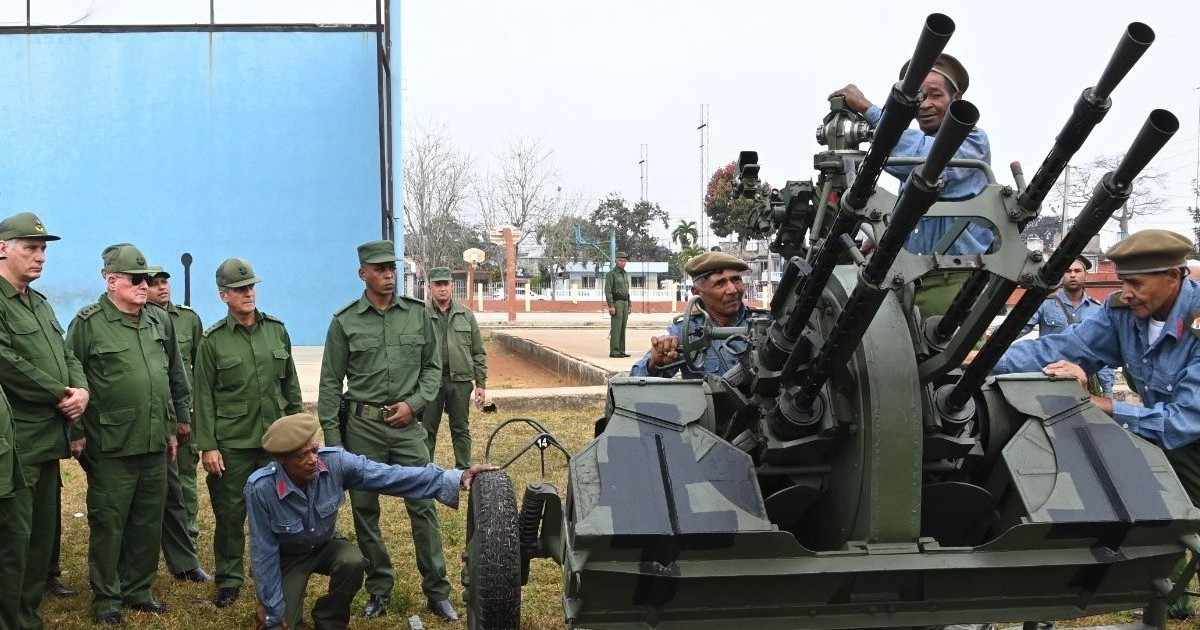
In an exclusive interview with RT during the V International Patria Colloquium on Digital Communication held in Havana, Miguel Díaz-Canel declared that the Cuban people stand ready to defend their country against any external aggression.
This statement comes amidst a sustained campaign of combative rhetoric that Díaz-Canel has escalated since January 2026. The arrest of Venezuelan dictator Nicolás Maduro by U.S. forces cut off the island's main oil supply, worsening Cuba's already dire economic situation.
During the interview, Díaz-Canel commemorated the 32 Cuban military personnel from the FAR and MININT who died in Venezuela on January 3 while defending Maduro, presenting them as symbols of the Cuban people's readiness to fight.
"If 32 Cuban fighters perished in Venezuela defending that nation's president, imagine the millions of Cubans who would follow their example, fighting to save the revolution and defend Cuban soil," he asserted.
Rejecting Comparisons with Venezuela
The Cuban leader dismissed comparisons between Cuba and Venezuela, emphasizing that the island has its own unique history of over six decades of resisting external pressures. "I dislike comparisons with the realities of other countries because it fails to recognize our unique history," he stated.
"Cuba has endured more than 60 years of blockade and aggression. We've always been under attack," he expressed. "We've survived, we've resisted these aggressions, and we've even managed to make progress, though not as much as we dreamt or desired," he added.
Upcoming Institutional Changes
Regarding upcoming institutional changes, Díaz-Canel announced plans to reduce the number of ministries and implement legal modifications to cut down on bureaucracy by mid-2026. "We're considering a resizing of the entire state, administrative, and business apparatus, aiming to reduce bureaucracy and create flatter, more efficient structures," he explained.
This RT interview is part of a series of international appearances by Díaz-Canel. On April 7, he featured on the cover of Newsweek with the headline "WE WILL FIGHT BACK," following the first appearance of a Cuban leader on U.S. television since 1959. He has consistently asserted in various forums that Cuba is not a failed state but rather a besieged one.
Understanding Cuba's Resilience and Future Plans
What are the key changes Díaz-Canel plans for Cuba's government structure?
Díaz-Canel plans to reduce the number of ministries and implement legal changes to decrease bureaucracy, aiming for more efficient and streamlined government structures.
Why does Díaz-Canel reject comparisons between Cuba and Venezuela?
He believes that such comparisons fail to acknowledge Cuba's unique history of over six decades of resisting external pressures and blockades.
How has Díaz-Canel addressed Cuba's current economic challenges?
Díaz-Canel has intensified combative rhetoric since the capture of Nicolás Maduro, which worsened Cuba's economic situation by cutting off oil supplies, and emphasized the Cuban people's readiness to defend their nation.