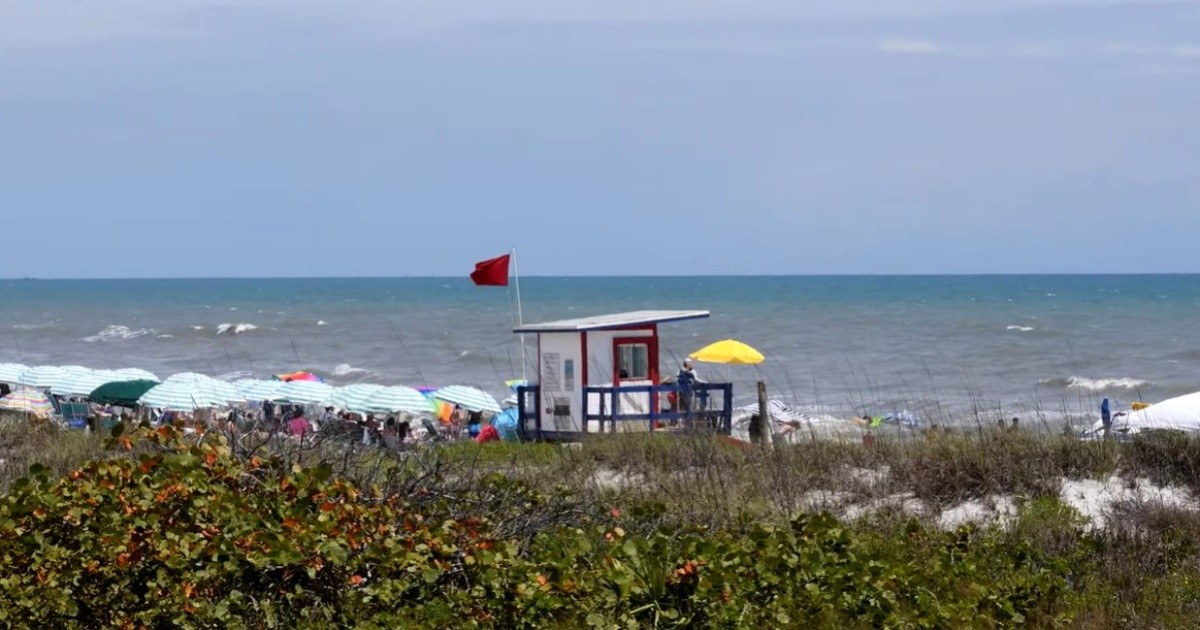
A tragic incident unfolded on Tuesday in Cocoa Beach, Florida, where a 34-year-old woman from Ohio and a 42-year-old man from Connecticut lost their lives while attempting to rescue a child caught in a rip current.
The event occurred at approximately 1:00 p.m. near Fourth Street South, in an area of the beach lacking lifeguard protection. The nearest lifeguard tower was nearly a mile away, as reported by Brevard County authorities.
According to official reports, the woman was the first to enter the water upon noticing the child in distress. The man followed suit, trying to assist her after she, too, became trapped by the current. Both were pulled out to sea.
Emergency response teams arrived promptly, managing to assist four individuals involved in the ordeal. The child was rescued unharmed, and a fourth person emerged without injuries, declining medical attention.
Tragically, the two adults were transported to a hospital, where they subsequently passed away. Local residents noted a recent increase in emergency activity on the beach.
"We've observed lifeguards rushing up and down the beach with sirens blaring more frequently, and that's never a good sign," a local resident shared with ClickOrlando.
Katie Connolly, who watches the ocean from her seventh-floor apartment, explained how to recognize a rip current: "You can see waves breaking to the left or right, but not in a certain area. That's where you see the water turning foamy and starting to move away."
Eisen Witcher, Brevard County's Ocean Rescue Chief, attributed the dangerous conditions to a recent six to eight-foot swell that disrupted sandbanks, creating what he called "flash rip currents." These are fast-moving water channels that can sweep swimmers out to sea in seconds, even in seemingly calm waters.
The incident highlighted a staffing crisis in the county, with 45 lifeguard positions unfilled, leaving several towers without personnel. The county operates only five permanent towers, and authorities have been urgently recruiting for two or three months to fill these positions.
This tragedy is part of a broader wave of rip current-related fatalities in Florida, ongoing since late March. On April 1, Ryan Jennings, a 46-year-old father from Maine, died at Juno Beach while saving his two children. On April 5, another father of three lost his life in Pompano Beach under similar circumstances. In Miami-Dade alone, from March 29 to April 5, there were 509 aquatic rescue incidents, 330 of which involved rip currents.
Authorities emphasize that swimmers should not fight against a rip current but instead swim parallel to the shore to escape. If swimming is not possible, they advise floating on your back, conserving energy, and signaling for help. Additionally, they caution against attempting a rescue without appropriate equipment.
The National Weather Service warns that rip currents account for over 100 annual deaths in the United States and more than 80% of rescues on beaches with surf, urging beachgoers to always stay near lifeguard stations.
Understanding Rip Current Safety
What should you do if caught in a rip current?
If caught in a rip current, don't swim against it. Instead, swim parallel to the shore to escape it. If unable to swim, float on your back, conserve energy, and wave for help.
How can you identify a rip current?
Rip currents can often be identified by a break in the wave pattern, where waves are not breaking. Look for foamy, churning water moving away from the shore.
Why is lifeguard presence important on beaches?
Lifeguards play a crucial role in beach safety, providing immediate rescue response, warning of dangerous conditions, and helping prevent drownings.