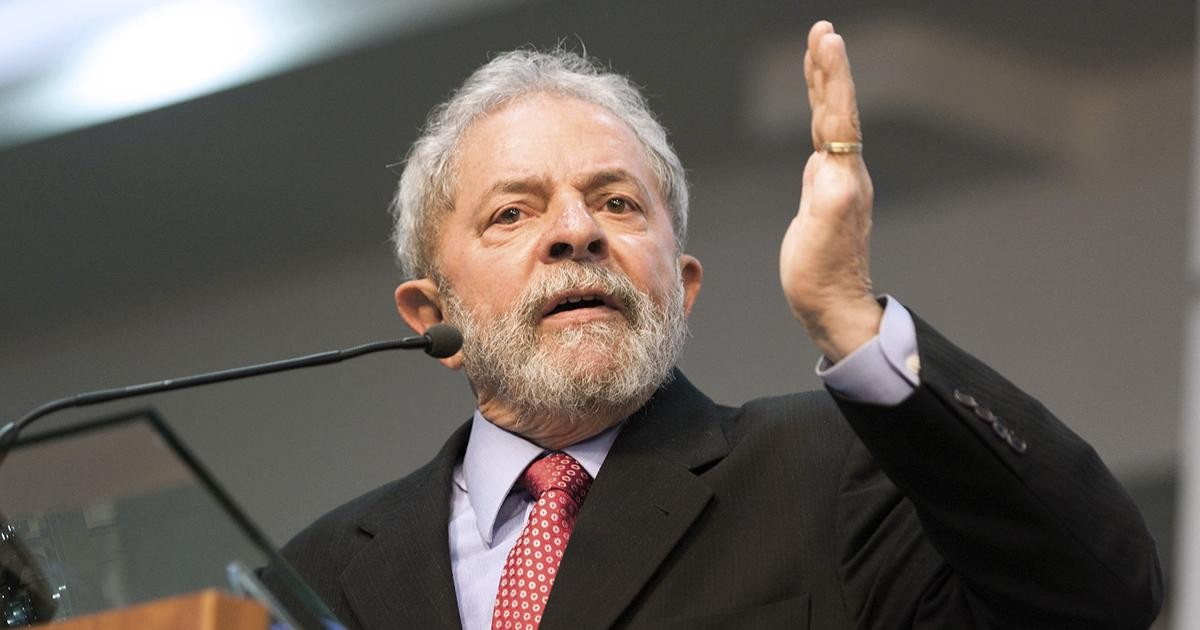
Brazil's President Luiz Inácio Lula da Silva once again came to the defense of the Cuban regime on Thursday during an exclusive interview with El País, conducted from Brasília. He used the situation in Haiti as a shield to deflect criticism aimed at the dictatorship in Cuba.
When directly asked if the Cuban regime might collapse, he replied, "Seventy years of embargo is unjustifiable. If those who oppose the Cuban regime truly cared about the Cuban people, why aren't they equally concerned about Haiti, which doesn't have a communist regime?"
He further stated, "Cuba deserves a chance. How can a country survive without access to food or energy?"
With this response, Lula shifted all blame for Cuba’s crisis onto the U.S. embargo, avoiding any mention of political repression, prisoners of conscience, or the decades of documented human rights abuses by international organizations.
The Repeated Argument
This argument is neither new nor unique. On March 4th, during the opening of the 39th FAO Regional Conference for Latin America and the Caribbean in Brasília, Lula used the same comparison with Haiti to shield the regime.
On that occasion, he declared, "Cuba isn't starving because it can't produce or generate energy. It's starving because some don't want it to have access to things that everyone should be entitled to."
Leftist Deflection Tactics
This tactic of using Haiti's tragedy as a shield to protect Cuba from criticism is common among radical left-wing circles. Former Spanish Vice President Pablo Iglesias employed the same rhetorical tool in October 2025, claiming that if communism fell in Cuba, the country would become "a democracy like Haiti, plagued by hunger, violence, illiteracy, and a total lack of services."
Lula consistently omits a critical fact: according to Prisoners Defenders, as of the end of March, Cuba had 1,250 political prisoners, including 131 women and 31 minors. From July 2021 to the same month this year, the regime has amassed 2,026 political detainees, with an average of 14 new arrests per month.
Human Rights Concerns Ignored
On April 9th, the Cuban government announced the release of 2,010 inmates as a supposed "humanitarian gesture," yet no political prisoners were included, as reported by Human Rights Watch, Prisoners Defenders, and Justicia 11J.
Moreover, in March, the regime launched a wave of arrests in neighborhoods like Guanabacoa, described by activists as a "true hunt" against protesters.
Lula's Enduring Stance
Lula's stance towards Cuba has a long history of complicity. In August 2025, following U.S. sanctions on the Mais Médicos program—employing 2,659 Cuban doctors under conditions Washington labels as "coercive labor export" due to the regime retaining 70% to 85% of their salaries—Lula urged the U.S. to admit it "waged a war and lost" and to let Cubans "live in peace."
In January 2026, he defended Nicolás Maduro following his capture by the United States, calling the operation "an affront to sovereignty," without addressing the Chavista repression.
Cuban-American Congresswoman María Elvira Salazar was blunt in her assessment of this stance in August 2025: "It is increasingly evident that Lula deeply admires the Cuban dictatorship and truly intends to turn Brazil into another Cuba: lacking freedom of expression, imprisoning political dissidents, and crushing any opposing voice."
Key Questions About Lula's Defense of Cuba
Why does Lula use Haiti as a comparison to defend Cuba?
Lula uses Haiti as a comparison to divert criticism from Cuba by highlighting that Haiti suffers severe issues without being under a communist regime, attempting to suggest that Cuba’s problems stem from external factors like the U.S. embargo rather than its government.
What are the human rights concerns in Cuba omitted by Lula?
Lula omits concerns such as the presence of over 1,250 political prisoners, instances of political repression, and documented human rights abuses in Cuba, as reported by organizations like Prisoners Defenders.