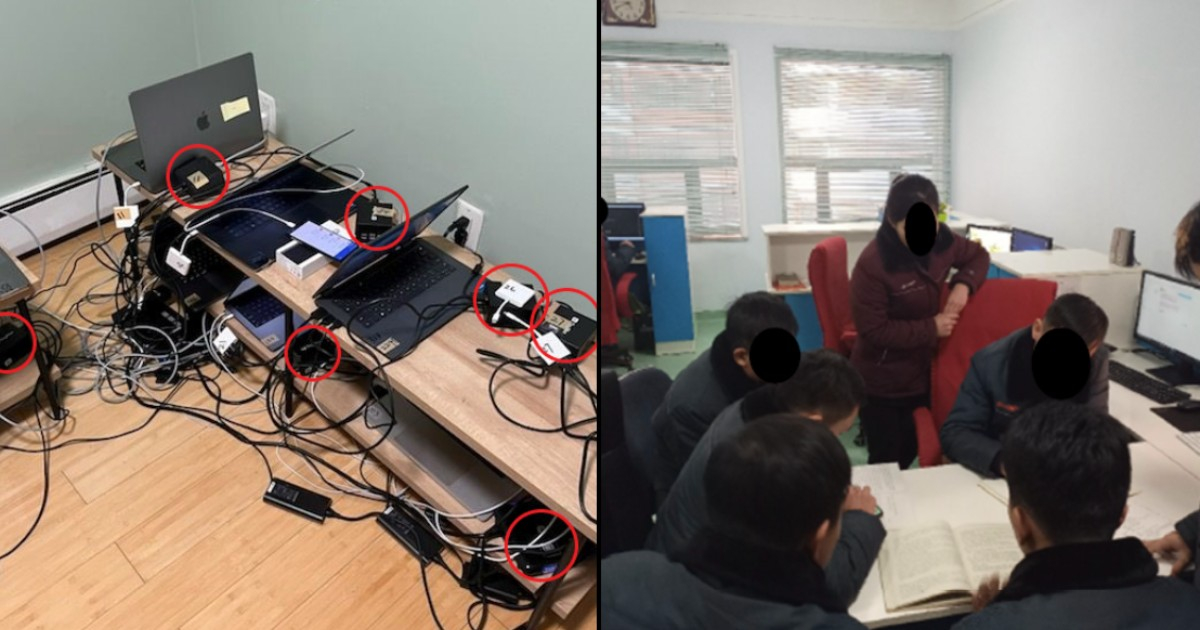
In a recent ruling, the United States Department of Justice sentenced Kejia Wang and Zhenxing Wang, two American citizens, for orchestrating a fraudulent scheme involving remote IT workers that funneled over five million dollars in illegal revenue to North Korea's government.
Kejia Wang, aged 42 and residing in Edison, New Jersey, received a prison sentence of 108 months, equating to nine years. Meanwhile, Zhenxing Wang, 39, from New Brunswick, New Jersey, was sentenced to 92 months behind bars. Both individuals will also serve three years under supervised release and were ordered to forfeit a total of $600,000; of which $400,000 has already been reclaimed.
The fraudulent operation, which authorities described as consisting of "laptop farms," ran from around 2021 until October 2024. The accused obtained laptops from employers and connected them to remote access devices, allowing North Korean workers abroad to control corporate systems without raising suspicions.
To carry out the deception, the conspirators used stolen identities from at least 80 U.S. citizens, securing remote jobs at over 100 firms, including Fortune 500 companies and a California defense contractor with access to sensitive international arms traffic data.
Operating as the U.S.-based manager, Kejia Wang oversaw at least five facilitators and traveled twice to Shenyang and Dandong, China, in 2023 to coordinate with North Korean operatives, including a former classmate who he knew hailed from North Korea.
To channel the illicit payments, the pair established shell companies—Hopana Tech LLC, Tony WKJ LLC, and Independent Lab LLC—which had no employees or genuine operations. These entities received millions from victimized companies before transferring funds overseas. Collectively, the six American facilitators involved earned approximately $700,000 for their participation.
The impacted companies faced additional losses of at least three million dollars in legal fees and network remediation costs, indirectly supporting North Korea's weapons of mass destruction programs.
Key Information on North Korea-Linked Fraud Scheme
Who were the main perpetrators in the fraud scheme?
The primary individuals involved were Kejia Wang and Zhenxing Wang, American citizens residing in New Jersey.
What were the consequences for the companies affected by the scheme?
The victimized companies incurred over three million dollars in legal and network remediation expenses due to the fraudulent activities.
How did the scheme benefit North Korea?
The scheme generated more than five million dollars in illicit funds that were funneled to the North Korean government, aiding their weapons programs.