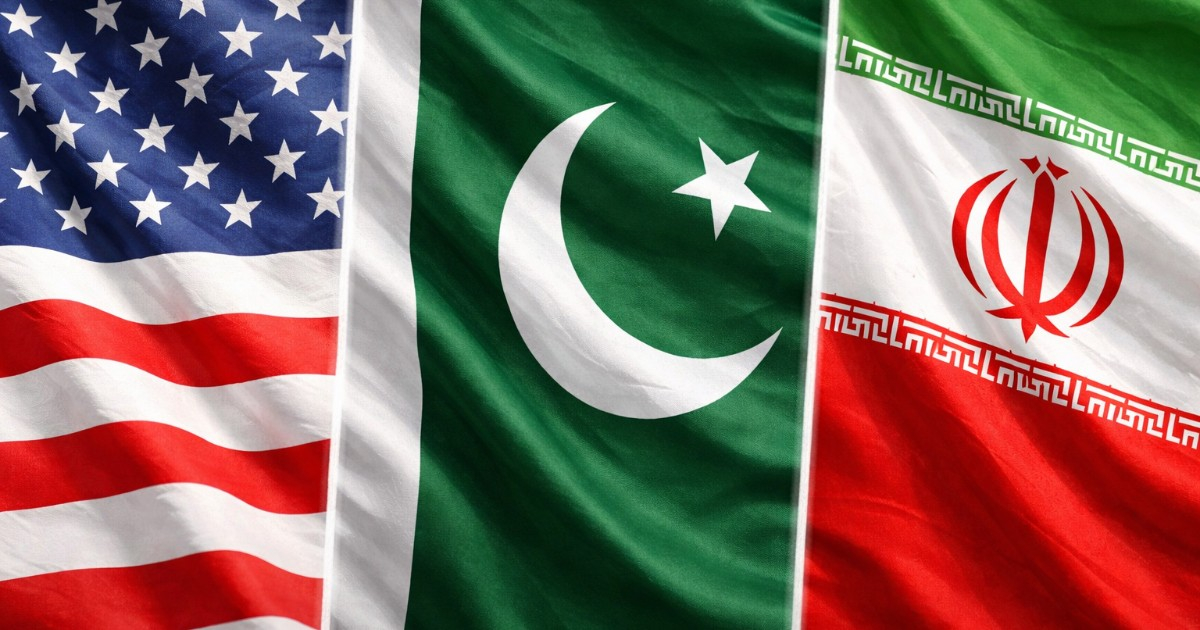
On Thursday, Pakistani sources revealed a "significant breakthrough" in the ongoing discussions between the United States and Iran concerning Iran's nuclear program, as Islamabad steps up its role as a neutral mediator between these global powers.
Leading the efforts, Pakistan's Army Chief, Field Marshal Asim Munir, spearheaded a high-level delegation to Tehran, carrying a message from Washington to the Iranian leadership, as reported by Iran's state television, Press TV.
Munir was welcomed by Iran's Foreign Minister, Abbas Araghchi, who expressed gratitude for Pakistan’s "generous hospitality in the dialogue process."
Pakistan's Mediation Efforts
Al Jazeera correspondent Osama Bin Javaid, who has been closely monitoring the talks, noted that Pakistani delegates continue to relay messages between Washington and Tehran, with hopes that Pakistan can sway Tehran towards a favorable outcome.
The central sticking point remains the duration of Iran's uranium enrichment freeze. "Both sides are essentially stuck between a five-year freeze and a twenty-year freeze. There's a middle ground solution," Bin Javaid explained.
Complexities of the Negotiations
Another critical issue is the fate of Iran's 440 kilograms of highly enriched uranium, theoretically enough to manufacture nine nuclear weapons if enriched to 90% purity. Options considered include transferring it to a third country, diluting it to its natural form, or reducing enrichment to 3%.
The shuttle diplomacy by Pakistan follows the unsuccessful first round of direct negotiations on April 12 in Islamabad, which ended without an agreement after over twenty hours of discussions.
Regional Dynamics and Diplomatic Moves
Meanwhile, Prime Minister Shehbaz Sharif embarked on a regional tour, visiting Saudi Arabia, as well as Qatar and Turkey. Bin Javaid described this as a "twin-track strategy" aimed at countering opponents of the deal, including Israel, which, according to Pakistani sources, "seeks perpetual conflict in the region."
Pakistan's optimism aligns with statements from President Donald Trump, who remarked on Wednesday that the war is "very near to ending" and that the world should brace for "two incredible days."
White House Press Secretary Karoline Leavitt confirmed that a second round of talks is likely to be held in Islamabad, describing the negotiations as "productive and ongoing."
"We feel good about the prospects of reaching an agreement," Leavitt stated.
From Tehran, Iranian Foreign Ministry spokesman Esmaeil Baghaei confirmed the exchange of several messages via Pakistan, expressing Iran's positions in these exchanges.
Despite these advances, tensions endure: the U.S. naval blockade in the Strait of Hormuz, imposed on April 13, remains active, with the U.S. Central Command reporting nine vessels turned away as of Thursday.
The two-week ceasefire, brokered by Pakistan, Egypt, and Turkey and effective since April 7, is set to expire on April 22, marking a critical window to reach an agreement before the potential resumption of conflict.
Key Aspects of Iran Nuclear Talks
What role is Pakistan playing in the Iran nuclear negotiations?
Pakistan is acting as a neutral mediator, facilitating communication between the United States and Iran, and sending delegations to help bridge the gap between the two parties.
What are the main issues in the Iran nuclear discussions?
The primary issues include the duration of Iran's uranium enrichment freeze and the management of 440 kilograms of highly enriched uranium that Iran possesses.
What are the potential solutions for Iran's uranium stockpile?
Options being considered include transferring the uranium to a third country, reducing it to its natural state, or lowering the enrichment level to 3%.