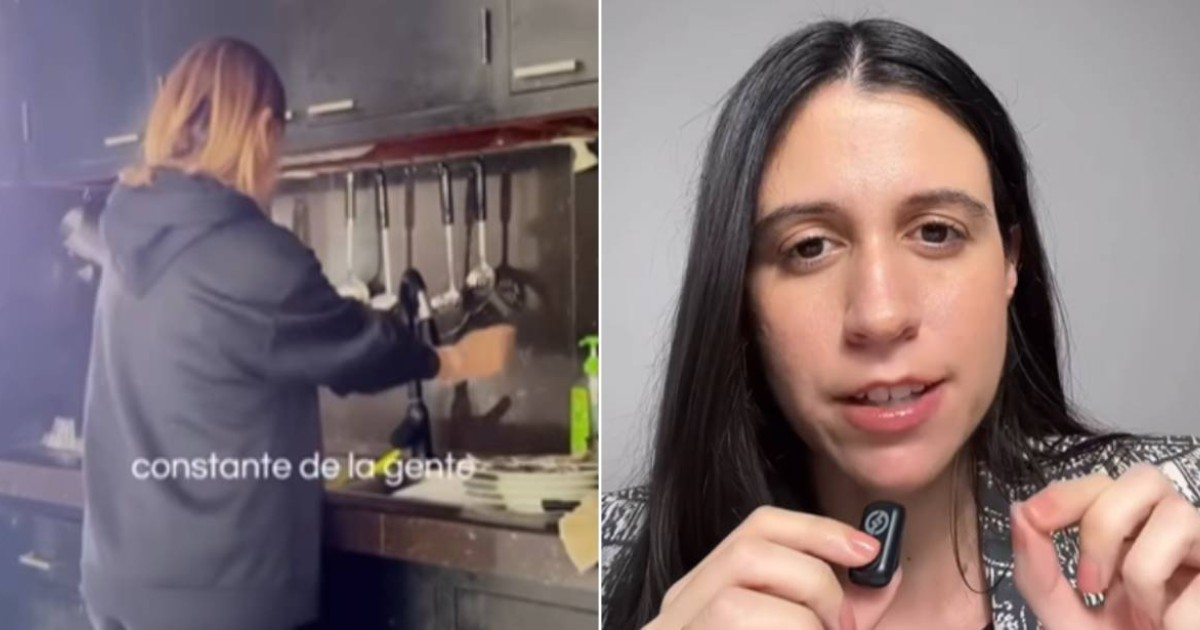
Gise Ponce, a Cuban psychologist known for her Instagram profile "Guapas por Dentro," ignited a heated discussion on social media by addressing the statements of influencer Jess Pilar. Jess claims that personal stagnation is solely the individual's responsibility, overlooking the poverty enforced by the Cuban dictatorship.
In a reel shared a few weeks ago, Jess defends herself against criticism for her luxurious lifestyle in Cuba. She accuses her detractors of "constant victimization" for blaming Cuba's lack of progress on the government or limited freedom in the country. Her message is blunt: "The reason you're not advancing, the reason you're stuck, is nobody else's fault but your own."
The video went viral, sparking a flurry of harsh comments directed at the influencer. Among these was a thoughtful response from Ponce, crafted with calm reflection and psychological analysis of Jess's online persona.
Analyzing the Impact of Influencers
"Why start your video with 'I live in Cuba'? Why refer to a monarchy instead of a dictatorship? If you're whitewashing the reality of a suffering nation, you're complicit in that misery," Ponce stated.
She reminded that "most people on the island can't even watch Jess's video because they spend countless hours without power, struggling with basic needs." This implies that Jess may be targeting an audience that idealizes life in Cuba, ignoring the harsh reality of extreme poverty faced by the majority.
The Privilege of Leaving Cuba
Ponce described leaving Cuba as a significant privilege not accessible to everyone, sharing her own experience of leaving behind family, friends, and seeing her educational credentials lose validity in her new country.
She accused Jess of exploiting the suffering of others. "You're denying reality, erasing context, and using others to uphold your superiority," Ponce asserted, adding, "This content is not just offensive to those who emigrated; it's especially offensive to those still inside."
Mental Health Crisis in Cuba
The debate arises during a time when Cuba is facing a severe mental health crisis, exacerbated by prolonged blackouts and a chronic shortage of psychiatric medications like amitriptyline, risperidone, and quetiapine, which have been nearly unavailable since 2020.
The social assistance budget for Cuba in 2026 was a meager 5,981 million Cuban pesos, roughly $14,600, a paltry sum considering the crisis's enormity.
Challenging Simplistic Narratives
Such controversies are not new among the Cuban diaspora's social media circles. Debates intensify whenever someone attempts to reduce decades of repression and scarcity to mere individual attitude.
"Reducing thousands of painful stories and instrumentalizing them. Why? To support your own narrative," concluded Ponce, encapsulating the heart of the debate.
Exploring the Cuban Influencer Debate
What was the main criticism against influencer Jess Pilar?
Jess Pilar faced criticism for attributing personal stagnation solely to individuals, ignoring Cuba's difficult conditions under its regime.
How did Gise Ponce respond to Jess Pilar's statements?
Gise Ponce criticized Jess for downplaying the harsh realities in Cuba, accusing her of being complicit in the suffering by erasing the real context.
What is the current mental health situation in Cuba?
Cuba is experiencing a severe mental health crisis, worsened by prolonged power outages and a chronic shortage of psychiatric medications.