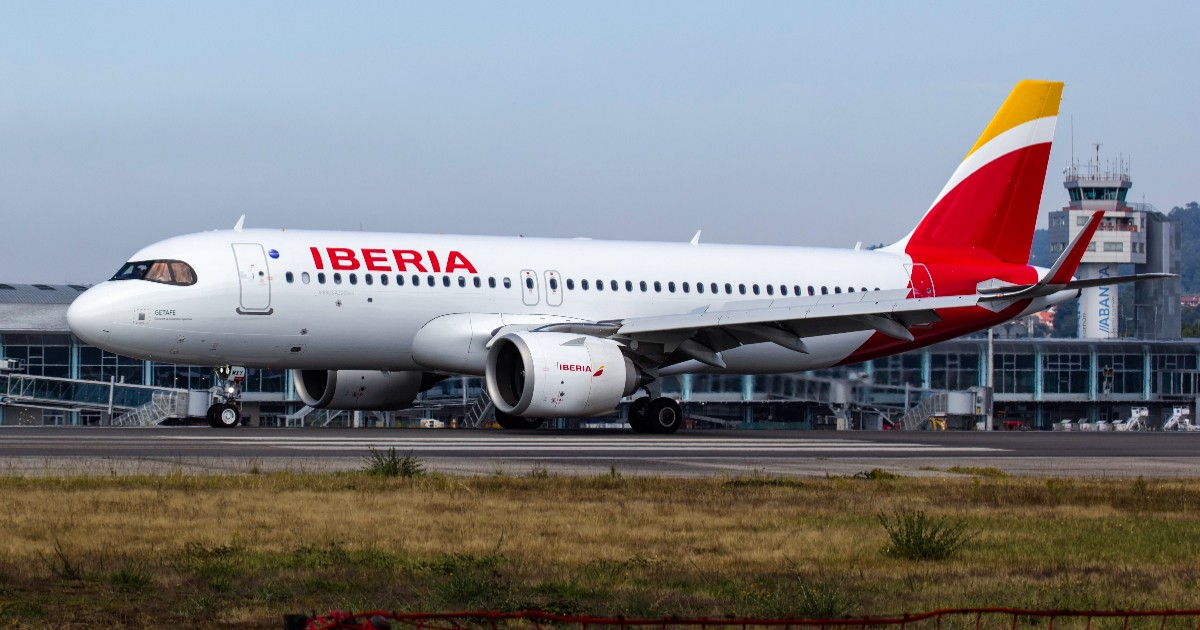
Starting in June, Iberia will temporarily halt its direct flights between Madrid and Cuba, as the island faces a dire situation that has led to a drop in demand, the airline announced on Monday via EFE news agency.
The airline described this move as a suspension "exclusively affecting Cuba, due to its exceptional circumstances," and emphasized that its other operations remain on track with a record 21.4 million seats slated for summer 2026.
This decision follows operational disruptions that began on February 9, when Cuba issued the NOTAM A0356/26, confirming the unavailability of Jet A-1 fuel at nine international airports, including those in Havana, Varadero, Holguín, Santiago de Cuba, and Camagüey.
Since then, Iberia has been forced to make technical stops in Santo Domingo to refuel on return flights to Madrid, incurring additional operational costs due to the fuel shortage on the island.
Throughout April, the airline will maintain three weekly flights on the Madrid-Havana route. However, in May, this will be reduced to two weekly flights, and from June, all direct operations will cease.
Iberia continues to sell tickets for November 2026, when it hopes to resume the route if conditions improve. During the suspension, passengers can fly to Panama and connect to Cuba through a codeshare agreement with Copa Airlines. Iberia's offices in Havana will remain open to assist customers.
The root of this aviation collapse lies in the energy crisis triggered by the halt of Venezuelan oil supplies at the beginning of 2026, which previously accounted for two-thirds of Cuba's imports.
Compounding the issue were sanctions from the Trump administration, which threatened tariffs on countries selling oil to Cuba, prompting Mexico's Pemex to halt shipments. As a result, Cuba, which produces only about 40,000 of the 110,000 barrels per day it needs, was left without sufficient external supply.
The impact on international aviation has been substantial. Air Canada suspended routes and operated empty flights to repatriate around 3,000 stranded tourists; Air Transat canceled all its flights until at least April 30; Air France suspended its Paris-Havana route from March 29 to June 15; and Turkish Airlines conducted its last flight to Havana on March 29, suspending operations until at least the end of May. Altogether, over 1,700 flights were canceled in the preceding months.
Cuba's tourism sector, the regime's main source of foreign currency, has plummeted simultaneously. In January and February 2026, the island saw 112,000 fewer visitors compared to the same period the previous year, with hotel occupancy dropping to 18.9%. Hotel chains like Meliá, Iberostar, NH, and Valentín temporarily closed hotels amid the downturn.
Iberia's suspension does not come as a complete shock. Back in February 2025, Beatriz Guillén, the airline's Global Sales Director, had noted that demand for Cuba was "quite variable" and warned that the company might cancel flights due to low profitability.
The 2026 crisis turned that warning into reality, leaving Cuba increasingly isolated from international air traffic.
Impact of Iberia's Flight Suspension on Cuba
Why is Iberia suspending flights to Cuba?
Iberia is suspending flights to Cuba due to a lack of demand and fuel shortages on the island, caused by its ongoing economic crisis.
How will passengers be affected by this suspension?
Passengers can still reach Cuba by flying to Panama and connecting via Copa Airlines, thanks to a codeshare agreement. Iberia's offices in Havana will remain operational to assist travelers.
What has contributed to Cuba's current fuel crisis?
Cuba's fuel crisis stems from the cessation of Venezuelan oil shipments and additional sanctions from the Trump administration, which have severely limited the island's external oil supply.