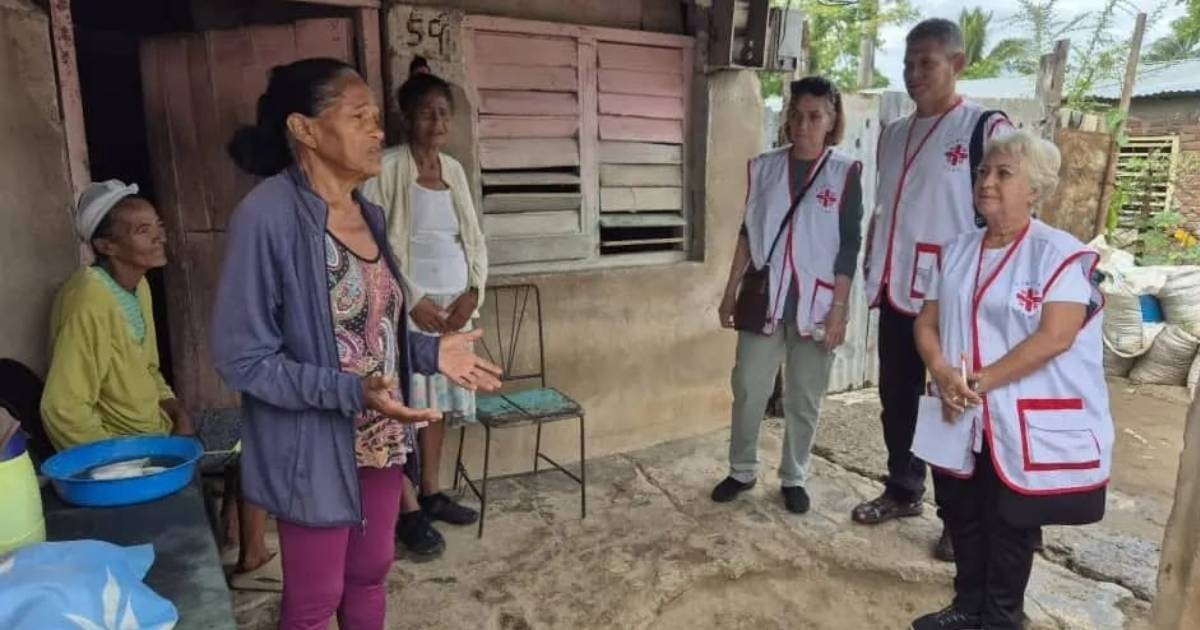
The dire fuel shortage in Cuba has reached such a critical stage that even the Church is unable to effectively distribute humanitarian aid arriving on the island, as highlighted by Miami Archbishop Thomas Wenski in an interview with USA TODAY.
For over thirty years, Wenski has been coordinating aid shipments from South Florida, yet he warns that what his diocese manages to send to Cuba is almost negligible. The acute lack of fuel makes it nearly impossible to distribute supplies once they land on Cuban soil.
The archbishop recounted how, just last week, his community successfully dispatched a container of chicken to Caritas Cuba. However, once it arrived, the organization struggled to distribute it due to limited transportation, relying on what Wenski described as "almost like wheelbarrows." He added, "They sent me photos."
The Looming Humanitarian Collapse
According to Wenski, the situation points to a more severe underlying issue: Cubans are indicating that the island is nearing a "zero hour," a term signaling an impending humanitarian collapse.
The energy crisis paralyzing aid distribution stems from a complex interplay of factors that have intensified since January 2026. The capture of Nicolás Maduro halted Venezuelan oil shipments of 25,000 to 35,000 barrels per day, which constituted the bulk of Cuba's supply. Additionally, Mexico ceased its shipments under pressure from Washington.
The Trump administration's sanctions slashed Cuba's fuel imports by 80% to 90%, leading to power outages lasting up to 25 hours daily and an electricity generation shortfall of 1,885 MW recorded in March.
Government Mismanagement and Natural Disasters
Years of governmental mismanagement have compounded the crisis, further exacerbated by Hurricane Melissa, a category three storm that devastated eastern Cuba in October 2025.
Sissi Rodríguez, Executive Director of Friends of Caritas Cubana, noted that Caritas has resorted to using horse-drawn carts for aid distribution in affected regions. People have been bringing containers to soup kitchens to take food home instead of eating on-site.
The Catholic Church is not only struggling with aid distribution but also facing disruptions to its institutional activities. Cuban bishops had to cancel their ad limina visit to the Vatican in February due to a halt in aviation fuel supplies.
Bishop Arturo González Amador from the Diocese of Santa Clara recounted how they were ready to head to the airport when informed that planes might not have enough fuel to depart. He urged dialogue, stating to Crux magazine, "Let's sit down and talk," calling for an end to opposing stances.
Political Repression and International Efforts
Javier Larrondo, President of Prisoners Defenders, sharply critiqued the situation, declaring, "The situation in Cuba is unsustainable." His organization has documented a worrying increase in political repression, with arrests of political prisoners rising from an average of 15 monthly in 2025 to 28 in February and over 45 in March 2026, amid fears of a repeat of the July 11, 2021 protests, which resulted in over 8,000 arrests.
In this context, the Vatican managed to negotiate the release of 51 Cuban prisoners in March, including 27 political prisoners, according to Prisoners Defenders. Pope Leo XIV called for a "sincere and effective dialogue" between Washington and Havana, emphasizing that the Cuban people do not need further suffering or distress.
Though Wenski, 75, had planned to travel to Cuba last month to meet with Cuban bishops, an unexpected illness forced him to postpone. His visa remains valid for several weeks. "I'm trying to find a couple of days to go," he said, although he needs to confirm with the Cuban bishops that they can pick him up at the airport, provide meals, and ensure his return home.
Cuba's Fuel Crisis and Humanitarian Aid: Key Questions
What is causing the fuel shortage in Cuba?
The fuel shortage in Cuba is primarily due to the halt in Venezuelan oil shipments following Nicolás Maduro's capture, Mexico's suspension of shipments under U.S. pressure, and the reduction of fuel imports due to U.S. sanctions.
How is the Catholic Church impacted by the crisis in Cuba?
The Catholic Church in Cuba is struggling to distribute humanitarian aid due to transportation issues caused by the fuel crisis. Additionally, the lack of aviation fuel has disrupted institutional activities, such as planned visits to the Vatican.