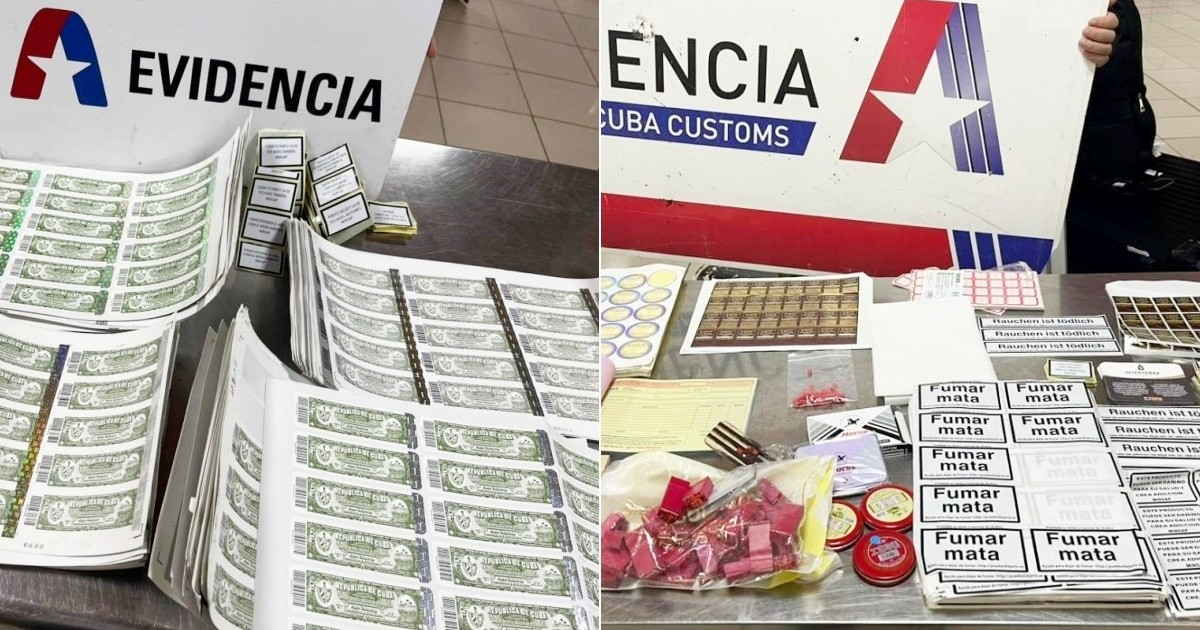
Authorities at Cuba's General Customs Office intercepted an attempt to smuggle a substantial quantity of counterfeit materials through Havana's "José Martí" International Airport. These included fake authorizations, sales invoices, and other stickers intended for the counterfeiting of Cuban cigars, as reported by official sources.
This discovery was revealed by Wiliam Pérez González, the Deputy Chief of Customs, who stated on the social media platform X that it was an "attempt to illegally introduce a large amount of fake authorizations, sales invoices, and other stickers through Havana Airport."
The involved passenger has been handed over to the police authorities, as confirmed by the official.
Illicit Trade Threatens Cuban Economy
In a subsequent announcement, Customs detailed that these materials were meant for illegal trade and counterfeiting, affecting one of Cuba's most strategic economic sectors.
The institution emphasized that such operations "directly impact an export sector and damage Cuban brands, which enjoy significant international prestige."
Counterfeit Materials Geared Towards International Markets
Seized items included circular golden adhesive labels meant to serve as seals of authenticity, hologram-like tax stamps, red plastic pieces for cigar box seals, small yellow cans, and customs forms.
Particularly notable was the variety of languages found on the labels. Some carried health warnings in Spanish, such as "Fumar mata" ("Smoking kills") and "Este producto puede ser dañino para su salud y crea adicción" ("This product can harm your health and is addictive"), while others were in German, with messages like "Rauchen ist tödlich" ("Smoking is deadly").
This suggests the materials were intended for the counterfeiting of Cuban cigars targeting European markets, both Spanish and German-speaking.
Additionally, several Spanish-language labels referenced Spanish organizations and websites, reinforcing the theory that the ultimate destination might have been the Spanish market. Since October 2003, Spain has been using adhesive holographic seals with unique codes to authenticate Cuban cigars sold within its borders, making these seals a frequent target for counterfeit networks.
Ongoing Pattern of Smuggling Attempts
This incident is part of a broader pattern of recent detections at Cuban airports involving cigar smuggling and counterfeiting.
In March, Customs reported an attempt to smuggle more than 370 boxes of counterfeit cigars from various brands through Havana's airport. In that case, two passengers were caught trying to leave the country with products from different brands without adhering to current regulations, and they were similarly handed over to authorities.
Earlier that month, over 4,400 counterfeit Cohiba seals from the United States were intercepted entering the country. At the time, Pérez González stressed that "fighting counterfeiting and protecting our registered trademarks is a priority."
Tobacco is a hallmark export product of Cuba and a vital source of foreign currency amidst a severe economic crisis. Renowned brands like Cohiba, Montecristo, and Partagás are highly regarded worldwide, making them prime targets for counterfeit operations.
Authorities have reiterated that these attempts to introduce or export counterfeit products not only violate existing laws but also harm the international image of Cuban tobacco and its standing in crucial markets.
As of now, no further details have been provided about the identity of the passenger involved in the latest incident or any possible connections to international illicit trade networks.
Frequently Asked Questions on Cuban Cigar Counterfeiting
What counterfeit items were seized at Havana Airport?
Authorities confiscated fake authorizations, sales invoices, circular golden adhesive labels meant as seals, hologram-like tax stamps, and other counterfeit materials intended for the illicit trade of Cuban cigars.
Why are Cuban cigars targeted by counterfeit networks?
Cuban cigars, such as Cohiba, Montecristo, and Partagás, are globally renowned for their quality and prestige, making them lucrative targets for counterfeit operations seeking to exploit their high market value.
How does counterfeiting affect Cuba's economy?
Counterfeiting undermines Cuba's export sector, damages the reputation of its iconic cigar brands, and results in lost revenue, further exacerbating the country's economic challenges.