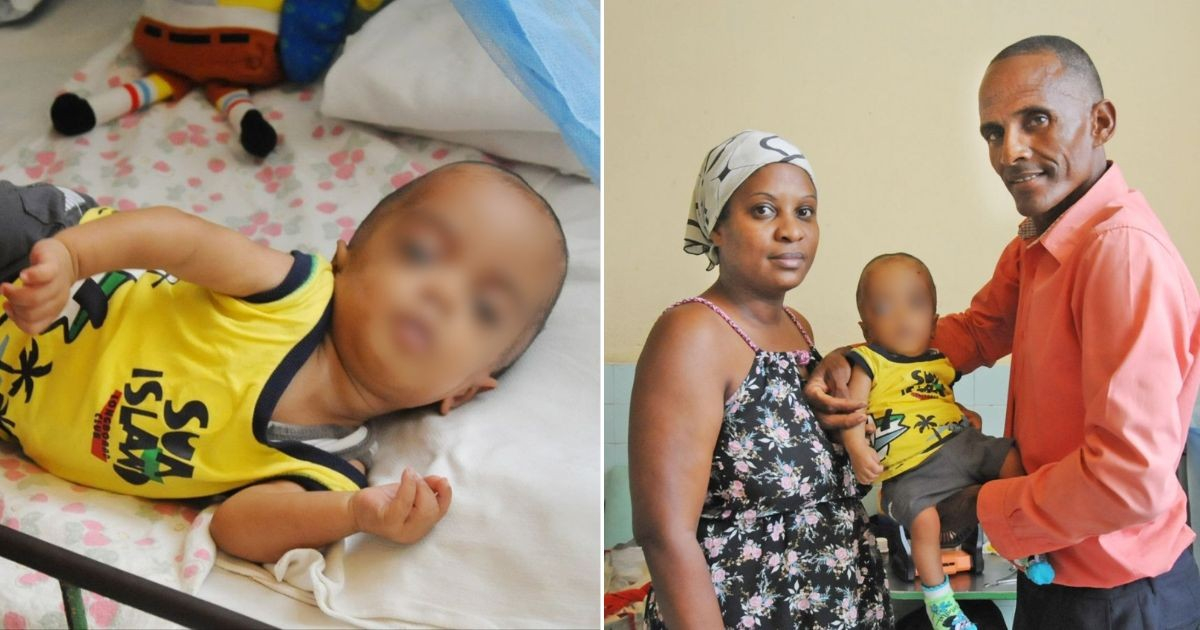
For Yordis Andrews Rodríguez and Ayleni Sariol Sánchez, March 20 will forever be remembered as one of the most challenging days of their lives.
They anxiously waited for over two hours as their eight-month-old son, Adabi, underwent a delicate operation that could potentially alter his future. This was compounded by the additional stress of navigating a healthcare system in Cuba that is experiencing one of its most severe shortages in history.
According to a report by the state-run news outlet Cubadebate, the infant required surgery to insert a shunt system that would drain excess cerebrospinal fluid from his brain, a condition that posed a significant threat to his development and survival—a daunting reality for anyone in Cuba.
Adabi's journey began at birth when he was diagnosed in Guantánamo with myelomeningocele, a congenital spinal defect, followed by hydrocephalus, an abnormal accumulation of fluid in the skull.
Since then, his family has navigated a complex medical process, involving transfers between provinces and specialized treatments that struggled to halt the disease's progression, all amidst the backdrop of widespread scarcity affecting the population.
The Decision for Surgery
As his condition worsened, doctors decided on surgical intervention. This required transporting the fragile infant to another hospital, racing against time to relieve the pressure on his brain.
After the surgery, Adabi spent several days in intensive care before moving to recovery, constantly accompanied by his parents, who never left his side for a moment.
Emotional Toll on the Family
Every passing hour has tested their emotional endurance. Beyond the medical outcome, their story captures the anxiety of a family grappling with uncertainty, fear, and hope, clinging to the possibility that their son might enjoy a better quality of life.
This case is one among many recent accounts highlighting the struggles faced by patients in Cuba trying to access medical treatments amid shortages.
In recent weeks, there have been reports of another infant who couldn't receive timely surgery due to a lack of resources, as well as a race against time to save a newborn requiring urgent surgery to survive.
Additionally, a young man in Trinidad faced a life-threatening situation at the year's end, in an environment where material constraints dictate medical care.
Challenges of the Cuban Healthcare System
These stories underscore the formidable challenges confronting the island's healthcare system, particularly during critical situations.
Understanding Cuba's Healthcare Struggles
What medical condition was Adabi diagnosed with at birth?
Adabi was diagnosed with myelomeningocele, a congenital spinal defect, and later developed hydrocephalus, an accumulation of fluid in the skull.
What challenges did Adabi's family face in obtaining medical treatment?
The family faced a complex medical process, including transfers between provinces and treatments that struggled to address the disease, all while dealing with widespread shortages in Cuba.
Why is the Cuban healthcare system under such strain?
Cuba's healthcare system is under strain due to significant shortages of medical supplies and resources, affecting the ability to provide timely and adequate care, particularly in critical situations.