The Bank of France has successfully repatriated all its gold reserves previously stored at the New York Federal Reserve. This move, driven by a mix of technical, financial, and geopolitical reasons, has ignited discussions about a potential large-scale European gold repatriation from the United States.
Between July 2025 and January 2026, the French central bank disposed of its 129 tons of old gold housed in New York—accounting for 5% of its total reserves—through 26 separate transactions, capitalizing on the metal's peak market prices.
Rather than resorting to transporting bars by air, France employed a more sophisticated approach: selling the gold in the U.S. market and acquiring new, higher-quality bullion in Europe, which was then stored in Paris at their vaults, known as La Souterraine.
The operation proved to be remarkably lucrative, generating extraordinary revenues of up to $14.76 billion, which allowed France to turn a net loss of €7.7 billion in 2024 into a net profit of €8.1 billion in 2025.
Currently, France holds all 2,437 tons of its gold in Paris, establishing itself as the fourth-largest holder of the metal globally, following the United States, Germany, and Italy.
Geopolitical Tensions and Financial Strategy
François Villeroy de Galhau, the Governor of the Bank of France, asserted that the decision was "not politically motivated," emphasizing the aim to swap old, "non-standard" bars for modern bullion.
Nonetheless, the bank acknowledged that the process accelerated with Donald Trump's return to the White House. Trump's confrontations with Federal Reserve Chairman Jerome Powell, including pressures to control monetary policy and Justice Department investigations, have fueled growing unease among European central banks regarding who truly governs the institutions safeguarding their gold.
The precedent of freezing Russian assets following the Ukraine invasion highlighted the reality that sovereign assets in foreign nations could be politically frozen.
European Reactions and Future Implications
This move by France has drawn attention to Germany and Italy. Germany maintains 1,236 tons in New York vaults—37% of its total reserves—while Italy holds 1,053 tons, representing 43% of its reserves.
Together, these two countries hold bullion valued at approximately $245 billion on American soil. Michael Jäger, president of the European Taxpayers Association, was candid in his assessment.
"Trump's unpredictability and relentless pursuit of revenue make our gold no longer safe in the Federal Reserve's vaults. What if tensions over Greenland persist? The risk of the Bundesbank being unable to access its gold is increasing. Repatriation should be considered," Jäger remarked.
France is not alone in its actions: India repatriated 274 tons since 2023, and the Netherlands led the way for Europe by withdrawing 122.5 tons from New York in 2014.
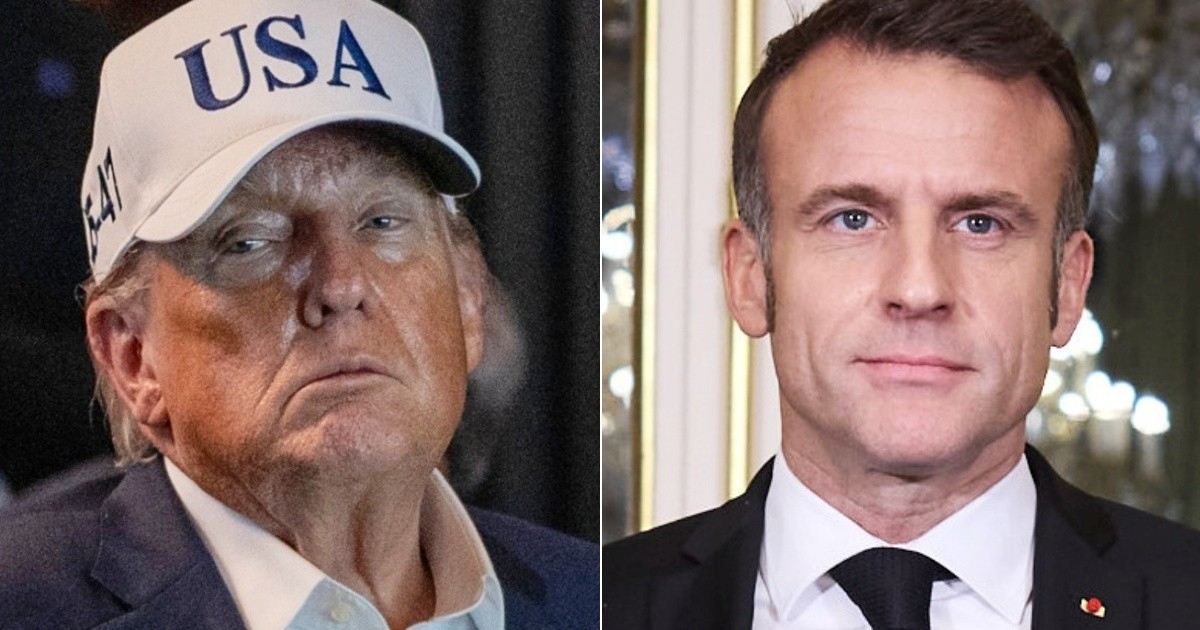
This operation also underscores the deteriorating relations between Paris and Washington. Tensions between Macron and Trump have escalated due to France’s refusal to join military operations in Iran, Trump's mocking of Macron in a now-removed White House video, and diplomatic tensions with Ambassador Charles Kushner, who was summoned by the French Foreign Ministry but failed to appear.
In response, Paris took an unusual step among allies by limiting the U.S. ambassador's access to high-level government officials.
As of now, neither Germany nor Italy has made an official decision regarding their gold's future in the United States, but the political debate is intensifying in both countries. The French precedent is acting as a catalyst for what some analysts see as the beginning of a significant European gold repatriation movement.
European Gold Repatriation: Key Questions
Why did France decide to repatriate its gold reserves?
France repatriated its gold due to a combination of technical, financial, and geopolitical reasons, including concerns over the stability of U.S. political decisions impacting foreign-held reserves.
How did France execute the repatriation of its gold reserves?
France sold its old gold in the U.S. market and purchased new, higher-quality bullion in Europe, which was then stored in its Parisian vaults.
What impact has France's repatriation had on other European countries?
France's actions have prompted discussions in Germany and Italy about the security of their gold reserves in the U.S., potentially leading to a broader European movement to reclaim gold.