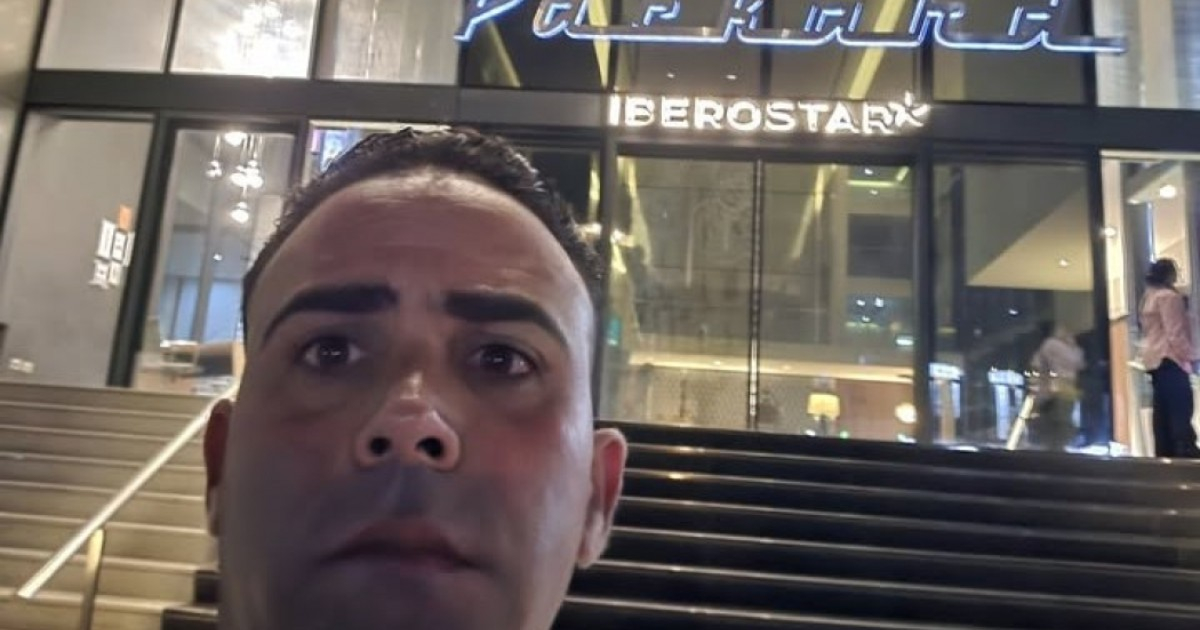
A Cuban expatriate residing in Spain, identified as Yanizorro de la Vega, shared a thought-provoking post on Facebook that struck a chord with many of his fellow Cubans. He recounted a humiliating experience at the Hotel Iberostar Grand Packard in Old Havana, following the cancellation of his return flight in November.
The airline compensated the affected passengers with accommodations, meals, and a buffet breakfast at one of Cuba's most opulent hotels, recognized as the second-best in its category worldwide according to TripAdvisor's 2024 Travellers' Choice Awards, with rates starting at 270 euros per night. This establishment boasts 321 luxury rooms, six restaurants, a spa, and a pool.
However, what might have been a pleasant surprise for any foreign tourist turned into a painful and uncomfortable experience for him.
"For the first time in my own country, I was treated like a foreign tourist. It felt so wrong; I was uncomfortable, everyone addressed me as 'sir' with an over-the-top politeness that left a bad taste," he explained.
De la Vega, who describes himself as a neighborhood guy who enjoys sharing rum and playing dominoes in the street with friends, suddenly found himself visiting Cuba as if he were Spanish.
"It was an experience, but for me, it was embarrassing. Instead of feeling good, I felt bad, painfully reminded of our misery, and I simply didn't belong there," he concluded.
Tourism Contradictions in Cuba
This situation highlights a longstanding contradiction in Cuba's tourism model. Although the government claims that Cubans have free access to hotels, the everyday reality on the Island often makes citizens feel like outsiders in spaces designed for foreign visitors.
Discrimination against Cubans in the tourism sector is a recurring issue.
Social media frequently features posts denouncing the discrimination Cubans face in their own country, where degrading policies humiliate national citizens in favor of foreigners.
In February 2023, a young man described the discrimination he faced at the Pernik hotel in Holguín when he tried to sit at a table near an outlet to work on his laptop.
In another incident, photographer and YouTuber Yander Serra reported being denied entry to the Capri hotel in Havana and was told he could only consume after foreign guests had been served.
In yet another unfortunate event, a man walking down a street in El Vedado, Havana, was expelled from the sidewalk in front of the Grand Aston hotel, owned by the military conglomerate GAESA.
These experiences echo the official tourism apartheid that once banned Cubans from hotels and beaches reserved for foreigners, a policy that profoundly affected the identity and collective memory of multiple generations.
Yanizorro's testimony comes at a time when tourism in Cuba is experiencing a severe downturn. So far in 2026, the Island has seen 112,642 fewer visitors compared to the same period last year, further exacerbating the country's dire economic situation.
Understanding Cuba's Tourism Challenges
Why do Cubans feel like outsiders in their own country's hotels?
Despite official claims of open access, Cubans often face policies and attitudes that cater primarily to foreign tourists, leading to feelings of exclusion within spaces designed for visitors.
What are some examples of discrimination faced by Cubans in hotels?
Incidents include being denied entry, having to wait for service until after foreign guests, and being removed from areas near tourist establishments.
How is the tourism crisis affecting Cuba's economy?
The decline in visitor numbers has intensified the already challenging economic conditions on the Island, as tourism is a critical source of revenue for Cuba.