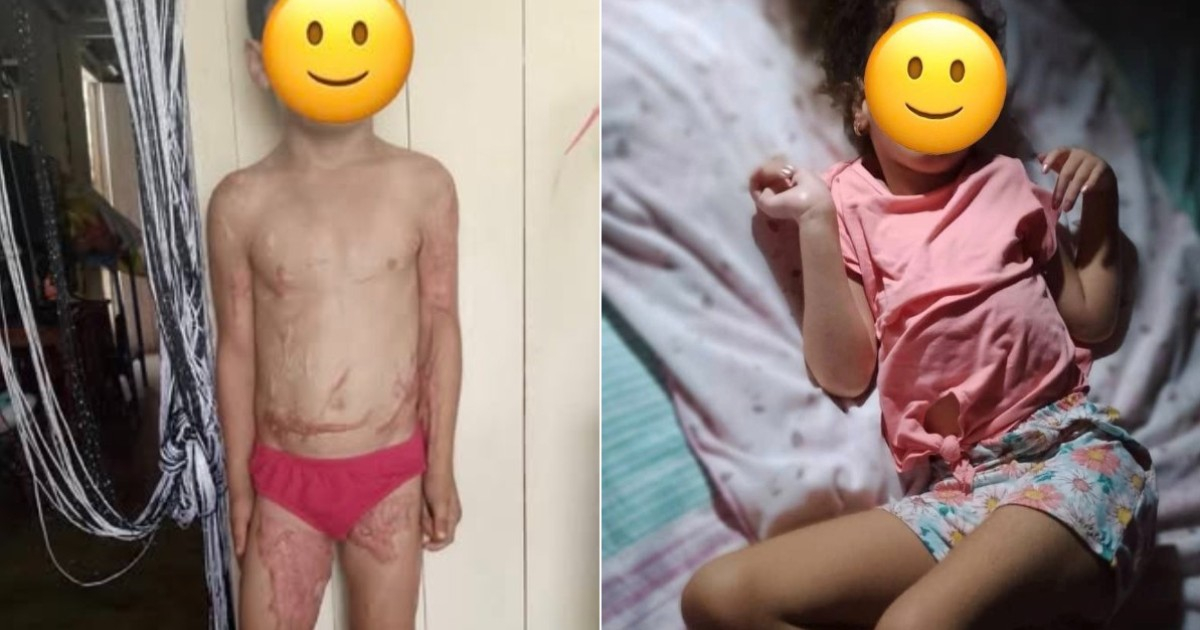
The humanitarian project "Dar es Dar" has issued an urgent plea for financial assistance to purchase five portable power stations urgently needed for children in Pinar del Río, Cuba. These children, suffering from severe illnesses, rely on electric medical equipment that becomes inoperative due to the frequent blackouts plaguing the island.
Deymi D'Atri shared this initiative on her Facebook profile on behalf of the project she is part of, along with Patricia Mónica Revuelta and Verónica C. Barrios. They have identified six children with critical conditions who require a constant power supply to survive.
"Amidst a severe energy crisis that keeps the nation in constant blackouts, the situation is particularly dire for children who depend on electricity for basic needs like feeding or breathing due to their health conditions," Deymi explained.
"For these kids, electricity is not a luxury—it's the line between stability and danger, relief and distress, life and the potential of losing it. Every hour without power is an ordeal they should not have to endure," she emphasized.
Meet the Affected Children
The children in need include:
Abraham Jesús Rodríguez Pérez, age four, who suffers from central and hippocampal brain atrophy, thinning of the corpus callosum, delayed psychomotor and language development, and mild hearing loss in the right ear.
Thiago Rafael Rodríguez Pérez, age 12, diagnosed with a deletion in the long arm of chromosome 5, childhood cerebral palsy, and severe intellectual disability.
Ana Carla Corrales Junco, age seven, also battling childhood cerebral palsy, necessitating assisted ventilation, suction devices, and feeding pumps reliant on uninterrupted electricity.
Cristian Fernández Argudin, age 13, living with Lennox-Gastaut Syndrome, a severe form of epilepsy with multiple daily seizures and a high risk of sudden death, requiring constant monitoring and refrigerated medication.
Yaidel Hernández Cruz, age seven, severely burned over 40% of his body, with second and third-degree burns, post-traumatic keloids pending multiple surgeries, lymphadenopathy in the neck and groin under study, and psychological support.
Yosbiel Alejandro Iglesias Blanco, age four, dealing with atopic dermatitis, chronic seborrheic dermatitis, and psoriasis.
"We urgently reach out to you with a specific plea: we need to acquire five power stations to maintain essential medical equipment during outages," reiterated Deymi D'Atri.
Impact of the Energy Crisis
The energy crisis in Cuba has worsened after the shutdown of the Antonio Guiteras thermoelectric plant last Monday, resulting in widespread blackouts across the country. The current electricity deficit is around 1,850 MW daily, leaving millions of Cubans facing prolonged periods without power.
Pinar del Río is among the hardest-hit provinces, enduring power cuts lasting up to 30 consecutive hours, a devastating reality for families with children who rely on ventilators, feeding pumps, or monitoring equipment.
Recently, Cuba experienced one of its worst energy collapses: a national blackout lasting 29 hours and 29 minutes, leaving all 11 million inhabitants without electricity and highlighting the magnitude of a crisis that poses a significant threat to the most vulnerable.
Understanding the Urgent Need for Power Stations in Cuba
Why are portable power stations essential for these children?
Portable power stations are crucial because they provide a reliable electricity source needed to operate medical equipment that sustains the lives of children with severe health conditions during frequent blackouts.
What is causing the energy crisis in Cuba?
The energy crisis in Cuba is exacerbated by infrastructure failures, such as the shutdown of significant power plants like the Antonio Guiteras thermoelectric facility, leading to widespread blackouts and a substantial electricity deficit.
How can individuals help with this humanitarian effort?
Individuals can support this humanitarian effort by donating funds to purchase the necessary portable power stations, ensuring critically ill children have access to essential medical equipment during power outages.