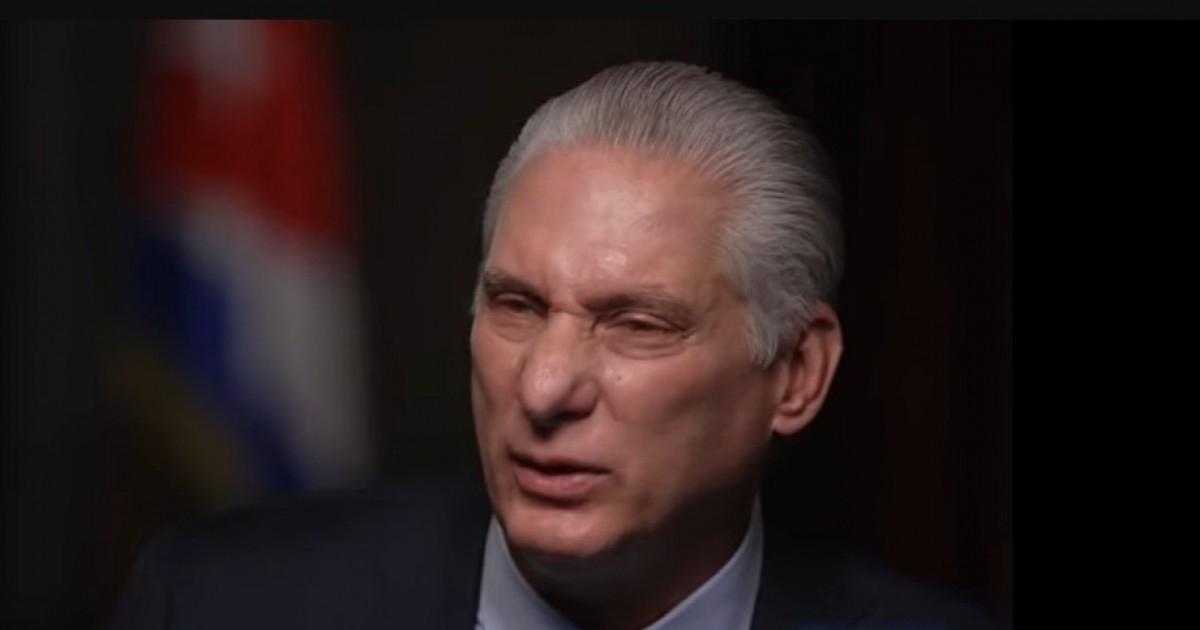
Miguel Díaz-Canel, Cuba's leader, has criticized the United States for lacking the moral authority to make demands on Cuba. In a statement made on NBC News' "Meet the Press," recorded in Havana, he called for open dialogue without any preconditions.
This public appearance comes amid heightened pressure from the Trump administration on the Cuban regime.
Questioning U.S. Authority
Díaz-Canel emphasized that Cuban officials do not cater to U.S. interests, asserting Cuba's status as a free and sovereign state. He stated, "The U.S. government, which has consistently pursued a hostile policy against Cuba, does not possess the moral authority to make any demands. They cannot claim concern for the Cuban people or blame the Cuban government for the current situation when they bear significant responsibility themselves."
Call for Unconditional Dialogue
He urged the U.S. to engage in discussions "without conditions, without demanding changes to our political system, just as we do not demand changes to theirs."
The first segment of this interview aired on Thursday at 4:00 pm, with a full version scheduled for Sunday.
Confrontation with the Press
The interview's most heated moment occurred when journalist Kristen Welker asked Díaz-Canel if he would consider stepping down "to save Cuba," referencing U.S. demands for political change on the island.
Visibly irritated, he retorted, "Have you asked any other president in the world that question? Would you pose it to President Trump? Is this your question or does it come from the U.S. State Department?"
Díaz-Canel firmly stated, "When we assume leadership responsibilities, it is a mandate from the people. The notion of revolutionaries stepping down or resigning is not in our vocabulary."
Claims of Popular Mandate
He indicated that his potential departure from power would depend on the Cuban people's decision, declaring he would only be accountable to them and not to Washington. "If the Cuban people believe I am unfit for the role, that I have not lived up to it, then I should not hold the presidency. I will answer to them," he added.
Despite his claims of popular legitimacy, the reality of Cuba's political system paints a different picture: the Communist Party is the sole legal political entity, constitutionally recognized as the "superior guiding force" of the state. There are no opposition parties, electoral campaigns, or independent press.
Unrest and Economic Crisis in Cuba
While Díaz-Canel spoke of a popular mandate on NBC, Cuba is experiencing its largest wave of protests since July 11, 2021. Since March 6, 2026, at least 156 demonstrations have been documented across various provinces, featuring pot-banging, road blockades, and attacks on Communist Party offices. Protests in Guantánamo were reported on Thursday, involving black beret troops and plainclothes police officers.
The Cuban Conflict Observatory reported 11,268 instances of protests, complaints, and criticisms of the regime during 2025. In January alone, 953 critical expressions were recorded, marking the highest monthly figure in history.
The crisis extends into economic and energy sectors: Cuba's GDP has declined by 23% since 2019, with a projected additional 7.2% contraction by 2026. The island suffers from power outages lasting up to 22 hours daily, exacerbated by the cessation of subsidized Venezuelan oil supplies that propped up the regime for over two decades. More than 600,000 Cubans have emigrated since 2022.
The interview sparked a wave of reactions among Cubans both on the island and abroad. "He's not used to unscripted questions," one social media user commented. "The issue isn't the question, it's the lack of an answer," noted another.
Understanding the Political and Economic Crisis in Cuba
What was Díaz-Canel's main critique of the United States?
Díaz-Canel criticized the U.S. for lacking the moral authority to make demands of Cuba, accusing them of having a significant responsibility for the island's current situation.
How did Díaz-Canel respond to questions about stepping down?
He dismissed the idea, stating that stepping down is not part of their revolutionary vocabulary and that any decision regarding his leadership would be up to the Cuban people.
What is the state of protests in Cuba?
Cuba is experiencing significant unrest with over 11,000 protests, complaints, and criticisms recorded in 2025, highlighting widespread dissatisfaction with the regime.