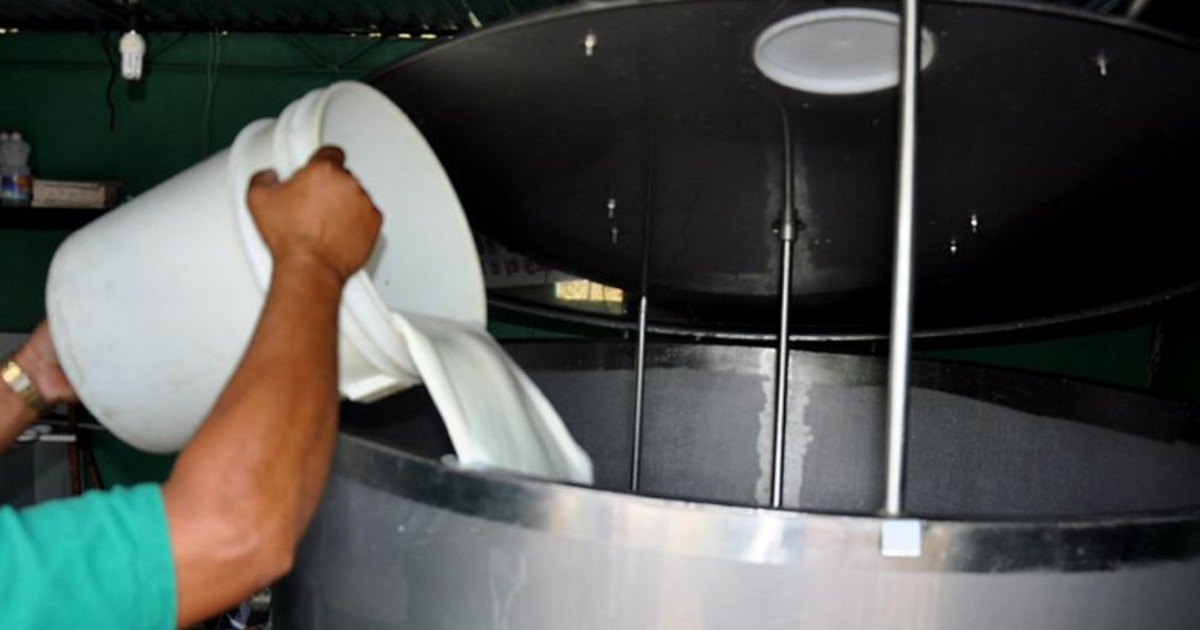
The driver of a milk tanker from the Dairy Company of Las Tunas and his accompanying representative have been arrested and charged with alleged sabotage, as reported by the Provincial Government of People's Power of Las Tunas on Wednesday.
The arrest followed the discovery last week of significant irregularities in the cow's milk they were transporting, a case brought to light by a citizen complaint.
Investigation Uncovers Milk Adulteration
A coordinated operation by the Provincial Inspection Directorate, the Technical Investigative Department (DTI), and economic specialists revealed that 392 liters of milk intended for children, inspected at Warehouse No. 1 in La Loma, had a density of 16.5 g/mL, far below the 30 g/mL required by Cuban standards.
Additionally, 202 liters of surplus milk were found unjustifiably in the distribution vehicle, suggesting irregular handling of the product.
Legal Consequences and Initial Penalties
As an initial penalty, authorities imposed five fines of 10,000 pesos on the individuals involved according to Decree 30. The milk was returned to the Dairy Company for a new pasteurization process.
The classification of this case as sabotage—rather than merely corruption or food fraud—carries severe legal implications in Cuba.
Cuba's Penal Code (Law No. 151, 2022) defines sabotage under Article 125, with penalties ranging from seven to 15 years for the basic offense, and from ten to 30 years, life imprisonment, or even the death penalty for aggravated cases.
The Supreme People's Court's Government Council Ruling 475/2025, approved in May 2025, broadened the interpretation of the crime to include acts against public goods and services, even when the perpetrator does not solely aim to cause harm but is aware of the effects of their actions.
Wider Context of Dairy Product Issues in Cuba
This incident is not isolated. In Sancti Spíritus, the Río Zaza Dairy Company faced an audit for adulterating soy yogurt with water and caustic soda, leading to the dismissal of 12 workers and three managers and the launch of a police investigation.
In Matanzas, milk delivery to children was halted for weeks due to a fuel shortage, and in Camagüey, animal traction was used for milk collection.
Cuban citizens expressed outrage on social media, pointing out that the issue is neither new nor exclusive to Las Tunas. "The operation should be nationwide; milk is diluted every day across the country," they commented.
FAQs on Milk Sabotage Case in Cuba
What led to the arrest of the individuals in Las Tunas?
The arrest followed the discovery of significant irregularities in the milk they were transporting, including low density and surplus milk without justification, which were exposed by a citizen complaint.
What are the potential legal penalties for sabotage in Cuba?
Under Cuba's Penal Code, sabotage can result in penalties ranging from seven to 15 years for the basic offense, and from ten to 30 years, life imprisonment, or even the death penalty for aggravated cases.