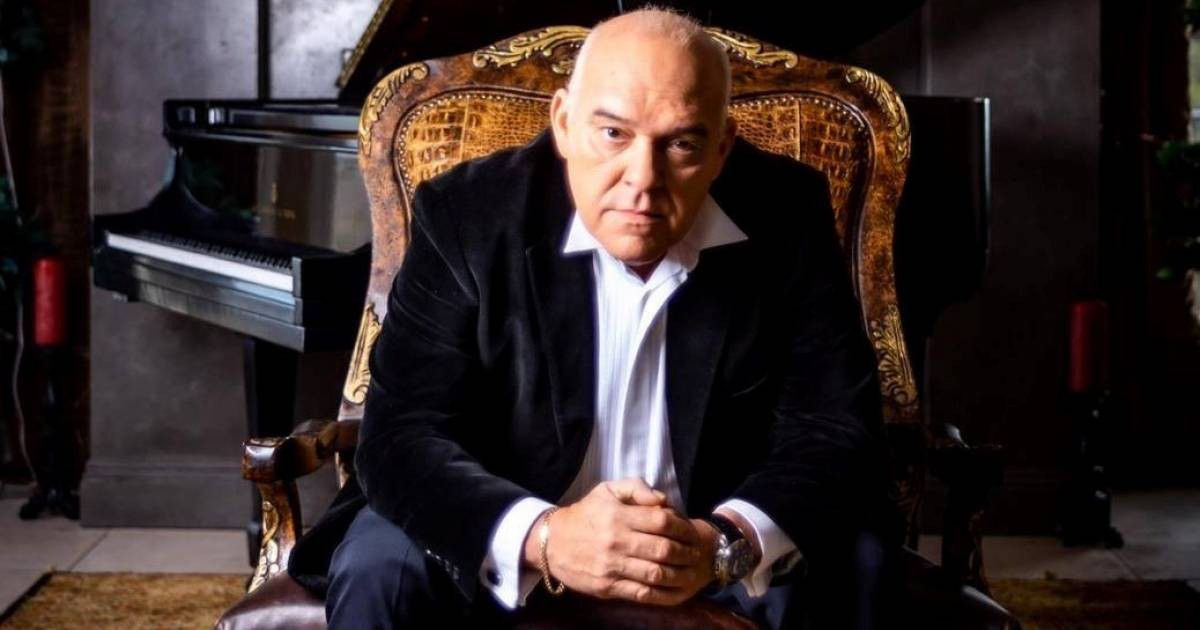
The well-known Cuban baritone, Ulises Aquino Guerra, recently took to Facebook to express his dissatisfaction with the selection process for the National Music Award. This year's award was given to singer-songwriter Amaury Pérez Vidal at the National Museum of Fine Arts in Havana.
While Aquino refrained from commenting on Pérez Vidal's artistic talent, he was vocal about his belief that the regime prioritizes political loyalty over musical excellence when granting the award.
Award Criteria Under Scrutiny
Aquino's concerns were sparked by the case of Rembert Egües, a musician with an extensive international career. Aquino believes Egües, who continues to reside in Cuba, deserves the award but has been consistently overlooked.
"Not only has he been an exceptional musician, but also a prolific composer and arranger," Aquino detailed. "He's been an extraordinary conductor, leading the Symphony Orchestra of the Gran Teatro while accompanying the legendary Alicia Alonso and the National Ballet of Cuba internationally."
Rembert, son of the legendary flutist Richard Egües from the Orquesta Aragón, also composed scores for the film "Vampires in Havana" and the ballet "Muñecos."
Overlooked Talent in Cuba
Despite the institutional neglect, Aquino emphasized that Egües remains in Cuba: "He's a patriot, residing on Consulado Street in Centro Havana. He's here despite everything, and despite being ignored."
The opera singer also cited the case of Roberto Sánchez Ferrer (saxophonist, clarinetist, composer, and conductor) as another instance of delayed recognition by the regime. Sánchez Ferrer received the National Music Award shortly before his death, even though his body of work was remarkable. "Fortunately, Maestro Sánchez Ferrer lived to be 99 and saw it happen," Aquino remarked.
Political Loyalty Over Artistic Merit?
Aquino sarcastically suggested that next year the award might be given to those who write "funeral songs" or to "watchdogs" who deserve a political medal more than a National Music Award.
On Saturday, Amaury Pérez Vidal received the 2025 National Music Award in a ceremony attended by Miguel Díaz-Canel, his wife Lis Cuesta, Minister of Culture Alpidio Alonso, Abel Prieto, and Silvio Rodríguez.
Abel Prieto deemed the award "justice," describing Pérez as a "great artist and great revolutionary."
Award Ceremony Amidst Political Ties
A founding member of the Nueva Trova movement alongside Silvio Rodríguez, Pablo Milanés, Sara González, and Noel Nicola, Amaury has long been associated with the official positions of the regime.
His close ties with the country's highest authorities, including the current leader and his family, as well as his historical alignment with previous political leadership, position him as one of the artists publicly supporting the communist project.
In February, Amaury reiterated his loyalty in a letter: "I'll help fix what's wrong, and I'll defend what's right with my songs." He also expressed enduring the current crisis "like any other Cuban" amidst "endless blackouts and shortages."
Ulises Aquino's Ongoing Critique
In contrast, Ulises Aquino, who saw his community project Opera de la Calle's licenses revoked by the government in 2012, remains a vocal critic of the regime.
In an extensive message in October, he raised alarm over the economic and social crisis afflicting the nation.
After hearing Miguel Díaz-Canel demand inspections of private enterprises to ensure energy plan compliance, Aquino condemned his ignorance of the non-state sector's critical role in the economy.
"Whatever little or much is generated comes from there, and they pay a lot in taxes while offering better salaries than the state," Aquino pointed out.
The singer harshly criticized the government's failure to manage basic services, recalling that the state should handle trash collection, power plant repairs, street maintenance, food production, and care for children and the elderly.
He noted that these resources have been squandered on bureaucracy, hotel construction, and other unproductive state expenditures, while fishing is restricted, tariffs are imposed, and alternative productive forces are prohibited.
In July, Aquino questioned the Cuban economic and social system's management, advocating for the original spirit of the 1959 Revolution and denouncing the betrayal by those in power.
"The enemy blockade has been an ideal excuse to justify both the real and the nonexistent," he declared, referencing the official narrative that solely blames the U.S. embargo.
He also suggested a transformative path, inclusive and free of ideological constraints, prioritizing full freedom and national reconstruction through the ingenuity and talent of Cubans, both on the island and abroad.
"There won't be foreign investment due to well-known reasons and accumulated debts. Only the participation and entrepreneurship of all Cubans can pull us out of this situation. But this must come with full freedom and rights, with respect for all forms of thought and expression," he asserted.
Understanding the National Music Award Controversy
What is Ulises Aquino's main criticism of the National Music Award?
Ulises Aquino criticizes the award's selection process, accusing the regime of prioritizing political loyalty over genuine musical talent.
Who is Rembert Egües and why is he significant in this context?
Rembert Egües is a Cuban musician with a notable international career. Aquino believes he deserves the National Music Award but has been unfairly ignored by the regime.
How does Aquino view Amaury Pérez Vidal's award?
Aquino sees the award as a reflection of political favoritism rather than artistic merit, given Pérez Vidal's close ties with the regime.
What broader issues does Aquino address regarding Cuba's current state?
Aquino is critical of the regime's management of basic services and resources, advocating for a transformative and inclusive approach that respects freedom and diverse expressions.