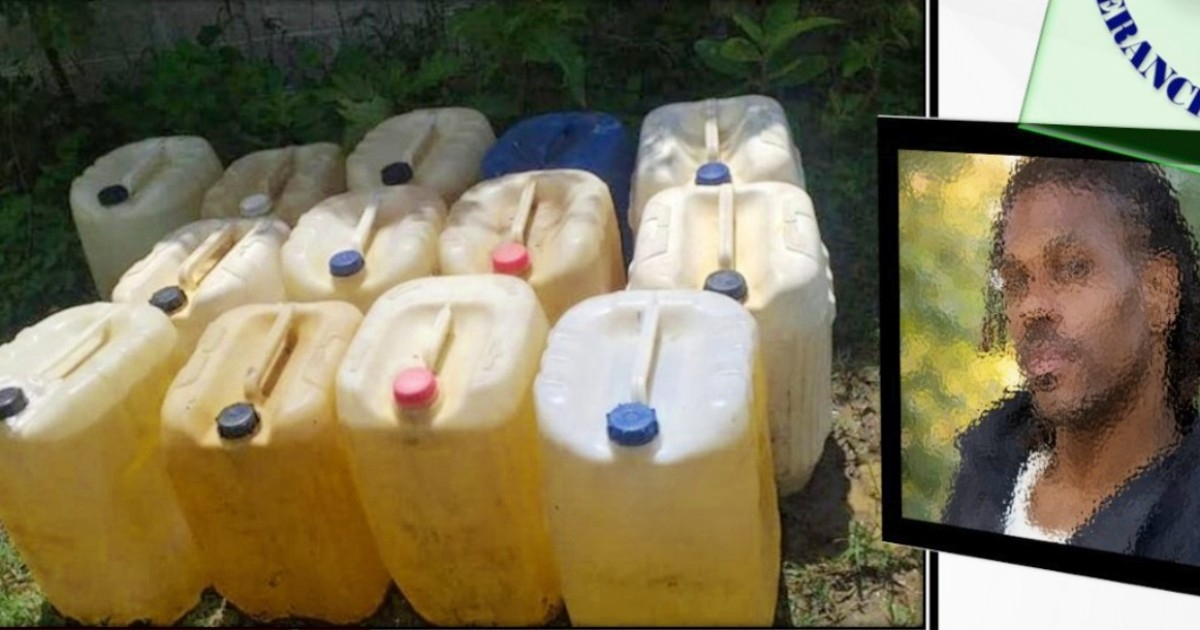
A man identified as Daymel was apprehended at the Bacunayagua checkpoint along the Vía Blanca, which links Havana with Matanzas, after being caught transporting 275 liters of illegally sourced gasoline in a white Hyundai.
The incident was publicized by the pro-government Facebook page "Todos la Victoria," which hailed it as a police success, noting the vehicle "resembled more of a mobile station than just an ordinary car."
The official source remarked, “The vehicle seemed more like a mobile station than an ordinary car,” and added that the driver “is probably wondering how he thought such a 'rolling tank' would pass without arousing suspicion.”
According to the same source, "Daymel's journey was halted by law enforcement before reaching his destination, and he will undoubtedly face legal repercussions under the law."
Zero Tolerance for Illegal Activities
The operation concluded with the immediate arrest of the individual, who is now under the authority's custody and will have to confront charges according to current legislation. The official narrative reiterated the "zero tolerance" policy towards such offenses.
Bacunayagua: A Strategic Checkpoint
The Bacunayagua checkpoint, located beside Cuba's highest bridge, serves as one of the nation’s most strategic points. It operates under Law 109 (Road Safety Code), which permits vehicle inspections and is equipped with constant surveillance cameras managed by the National Revolutionary Police (PNR) and transport inspectors.
Its placement on the Vía Blanca makes it a critical passage for traffic between Havana and Matanzas, making it particularly significant for operations against the illegal trafficking of goods and fuel.
Deeper Issues Underlying the Arrest
Beneath the official story, the case has sparked a flood of reactions on social media, highlighting a much deeper issue than just the apprehension of an individual.
Many citizens are questioning not who was transporting the fuel, but rather its origin in a country plagued by chronic gasoline shortages.
“The real question is: where did he obtain such a scarce product?” pondered an online commenter.
Others pointed to broader networks, suggesting: “This is a chain, and he is just the weakest link. Keep looking, and you'll see where it leads.”
In agreement, several comments suggested the detainee might merely be the most vulnerable piece of a larger structure: “He’s the unfortunate one carrying it and will bear the full responsibility,” another user expressed.
Fuel Crisis, Black Market, and Exorbitant Prices
This incident occurs against the backdrop of one of the worst fuel crises Cuba has faced in recent years. A mix of scarcity, state-imposed sales restrictions, and near-total reliance on the informal market for most citizens characterizes the situation.
Currently, official access to fuel is constrained by systems like Ticket, with lengthy waiting lists and sales in dollars, driving street prices up.
In this black market, a liter can fetch between 4,000 and 6,000 pesos, or even more.
Under these circumstances, illegal reselling and trafficking not only thrive but become an almost unavoidable alternative for those who depend on fuel for work or mobility.
“This fuel trafficking won't stop because of the urgent need in these trying times of daily life,” noted another commentator.
Accusations of Corruption and Structural Failures
Reactions have also exposed significant public dissatisfaction with the state distribution system, often accused of opacity, favoritism, and corruption.
“There’s gasoline for sale on the streets in every municipality... the top officials of this system have the wells,” claimed one user.
Another comment directly pointed to alleged irregularities at gas stations: “It’s a mafia in plain sight... Cupet workers can steal with ease while the public waits for something that never arrives.”
Some even questioned the coherence of the official discourse in light of everyday reality: “The State lacks fuel, yet private individuals are selling it by the truckload... how long will this continue?”
Though authorities persist in tightening controls and implementing exemplary punishments, public debate increasingly reveals a perception that these measures address only the symptoms, not the root causes.
Another comment summed up the general sentiment: “If gasoline were accessible to everyone at a price people could afford, this wouldn’t happen.”
Amidst shortages, endless lines, non-transparent allocation systems, and partial dollarization of fuel access, the black market not only persists but strengthens.
The Bacunayagua case, far from being an isolated incident, seems to confirm an increasingly evident reality on the island: when a basic resource disappears from the official circuit, it inevitably reappears—more expensive and uncontrolled—in the informal economy.
Understanding the Fuel Crisis in Cuba
What happened to the Cuban man at the Bacunayagua checkpoint?
Daymel, a Cuban citizen, was arrested at the Bacunayagua checkpoint for allegedly transporting 275 liters of illegally sourced gasoline.
Why is the Bacunayagua checkpoint significant?
The Bacunayagua checkpoint is strategically important as it lies on the Vía Blanca, a critical route linking Havana and Matanzas, making it a key spot for operations against illegal trafficking.
What broader issues does this incident highlight?
The incident highlights the severe fuel crisis in Cuba, characterized by scarcity, state-imposed restrictions, and reliance on the black market, raising questions about systemic failures and corruption.
How does the public perceive the government's response to fuel trafficking?
Public debate suggests a growing perception that government measures only tackle the symptoms of fuel trafficking, not the underlying causes, such as accessibility and affordability of fuel.