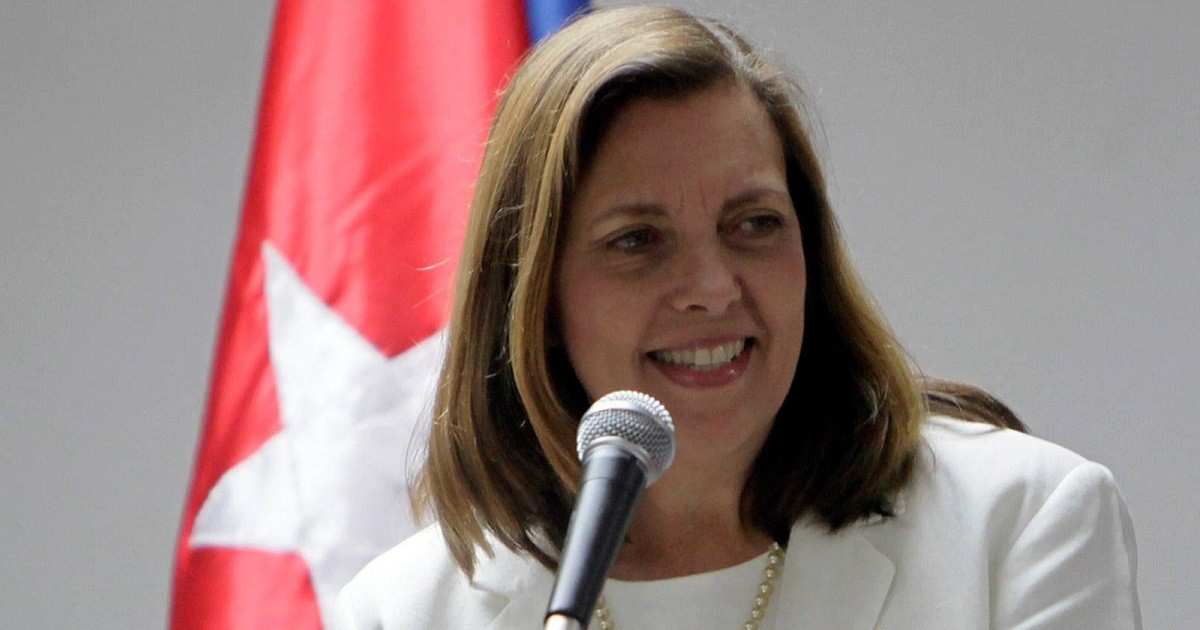
Cuban Deputy Foreign Minister Josefina Vidal revealed on Tuesday to AFP that discussions between the United States and Cuba are still in their infancy and lack a formal framework.
"We're in a very early and initial stage, and there's no structured negotiation between the two governments yet," she stated.
Vidal made these remarks during a women's rally in Havana, organized to protest the impact of U.S. economic sanctions on the island.
The 65-year-old deputy minister played a pivotal role in reestablishing diplomatic ties between the two nations in 2015, under the administrations of Raúl Castro and Barack Obama. She was identified as a key liaison with Secretary of State Marco Rubio's team during secret communications.
The Cuban government officially acknowledged on March 13 the ongoing talks with Washington aimed at finding "dialogue-based solutions to bilateral differences."
On that same day, the release of political prisoners began as part of a Vatican-mediated agreement, with at least 20 individuals freed on that date.
By April 2, the regime announced the pardon of over 2,000 inmates. However, human rights organizations like Prisoners Defenders confirmed that none of those released were political prisoners.
Current Tensions and Economic Struggles
The discussions are occurring amid heightened bilateral tensions. Since the capture of Nicolás Maduro by U.S. forces in January, Cuba has faced a drastic reduction in crude oil imports, losing between 80% and 90%, exacerbating an energy crisis with blackouts lasting up to 25 hours.
Additionally, former President Donald Trump signed an executive order imposing tariffs on any nation supplying oil to the island. Despite this, Washington allowed a Russian tanker carrying 730,000 barrels of crude to dock at the port of Matanzas last week.
Democratic Representatives Pramila Jayapal and Jonathan Jackson, after a five-day visit to Cuba where they met with Díaz-Canel on Monday, also characterized the situation as preliminary contact between governments, lacking formal negotiations.
Vidal contrasted the current situation with the swift and politically-willed 2015 process. "We worked to build a relationship that acknowledged differences but did not let them dominate," she recalled.
Despite the challenging environment, the deputy minister reiterated that "Cuba has always believed in dialogue" and "not confrontation."
Understanding U.S.-Cuba Relations: Key Questions
What is the current status of U.S.-Cuba talks?
The discussions are in an early, informal stage with no structured negotiations currently in place.
How did the 2015 U.S.-Cuba relations process differ from now?
The 2015 process was swift and driven by political will from both sides, focusing on building a relationship without letting differences dominate.
What impact have U.S. sanctions had on Cuba recently?
U.S. sanctions have led to severe shortages in crude oil imports, worsening Cuba's energy crisis with prolonged blackouts.