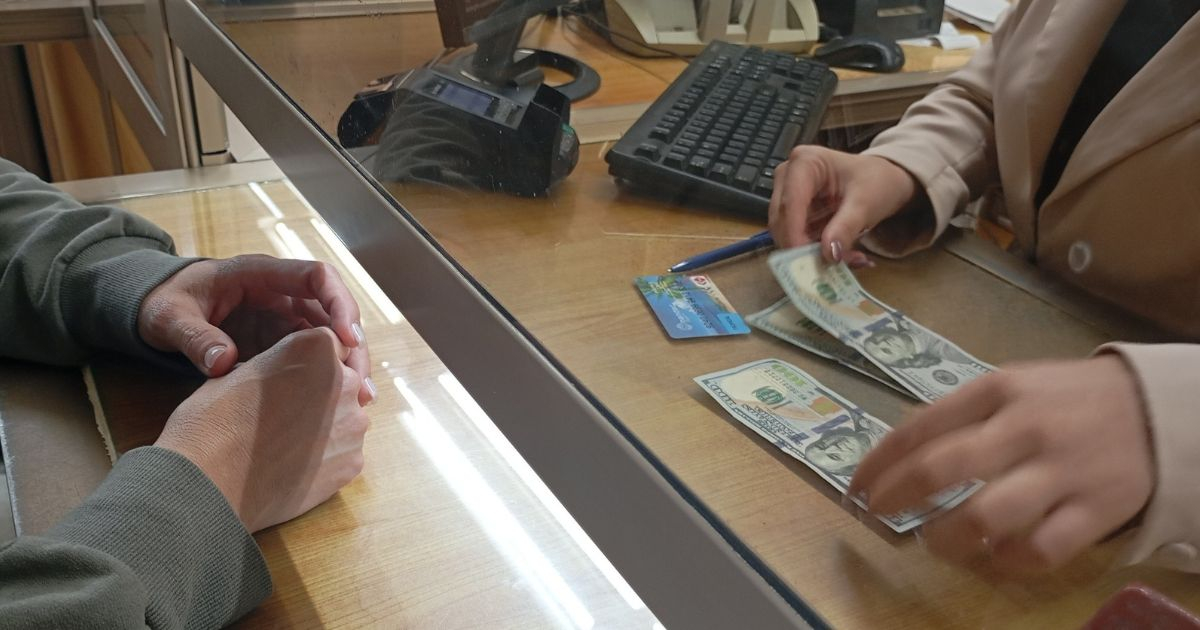
On Tuesday, Fincimex announced a significant change: money transfers from abroad can now be collected in cash, specifically in U.S. dollars, directly at Casa de Cambio (Cadeca) offices.
The Cuban government is promoting this move as an expansion of options for citizens receiving funds from overseas.
This announcement, made via Fincimex's Facebook page, comes amidst a dramatic 70% drop in formal remittances since 2019, with main channels from the United States being either blocked or made more expensive.
Key Aspects of the New Remittance Policy
Here are the essential points to understand what changes and what remains unchanged under this new policy.
Fincimex's Announcement Details
Fincimex specified that remittances sent from abroad can now be picked up in cash in U.S. dollars at Cadeca locations. The entity emphasized that if a remittance is designated for cash payment, it will only be disbursed in that manner. This is not a new remittance channel but rather a new physical location for receiving currency.
Understanding the Clásica Card
When collecting funds at Cadeca, recipients have the option to deposit all or part of the money into the Clásica Card, a reloadable prepaid card available exclusively in dollars, managed by Fincimex and CIMEX. Priced at four dollars, it is used in state-run stores such as CIMEX, Tiendas Caribe, and Trimagen, offering discounts between 4% and 10%. However, online purchases and dollar withdrawals are not permitted; the balance can only be converted into Cuban pesos. From April 2025, direct transfers between Clásica Cards in dollars will be enabled.
Suspended and Restricted Remittance Channels
Western Union halted remittances from the United States to Cuba indefinitely in February 2025 following the Trump administration's sanctions against its Cuban partner, Orbit S.A. Since then, formal channels from the U.S. have been largely inaccessible. As a result, formal remittances have plummeted by 70% compared to 2019, when Cuba received over 2,055 million dollars. While the new Cadeca option is available, crucial details from the Cuban government remain unexplained.
The Status of Orbit S.A.
Orbit S.A., a remittance operator licensed by the Cuban Central Bank and linked to GAESA, was added to the U.S. State Department's Restricted List effective March 10, 2025. This inclusion prohibits direct financial transactions with entities associated with Cuban military, intelligence, or security services.
The New 1% U.S. Remittance Tax
Since January 1, 2026, a 1% tax on remittances was enacted under Trump-era budget legislation. This tax affects cash transfers, money orders, or cashier's checks sent from the U.S. to foreign countries, including Cuba. Bank transfers and credit or debit card transactions issued in the U.S. are exempt, further complicating the cost of sending money formally to the island and pushing more people towards informal channels.
GAESA's Economic Influence
Fincimex and CIMEX, the entities behind the Clásica Card and Cadeca, are part of GAESA, the Cuban military conglomerate that controls around 40% of the island's economy and 95% of foreign currency transactions. Their earnings exceed 3.2 times the annual State Budget. Every dollar entering through Cadeca or deposited onto a Clásica Card is managed by structures under the military's control.
Alternative Money Transfer Options
With formal channels in disarray, Cuban families are turning to methods like using "mules," cryptocurrencies, and making transfers to third countries. The recent announcement offers hope to many Cubans who rely on remittances. However, Fincimex's statement omits key details such as which remittance companies will handle the service, applicable fees, exchange rates, and the exact process for sending money from abroad, leaving potential users with unanswered questions.
Additionally, the Clásica Card can be recharged from abroad using platforms like Tocopay.com, which has been available since 2024.
Meanwhile, GAESA has opened 85 stores that only accept cash U.S. dollars, with margins as high as 240% and prices up to four times those of major U.S. chains, further consolidating their grip on each dollar entering Cuba.
Frequently Asked Questions about Remittances to Cuba
How can Cubans receive remittances in U.S. dollars?
Cubans can now collect remittances in U.S. dollars in cash at Cadeca offices, provided the funds are sent for cash pickup.
What is the Clásica Card and how does it work?
The Clásica Card is a reloadable prepaid card exclusively in U.S. dollars, used in state-run Cuban stores. It cannot be used for online purchases or dollar withdrawals, with balances convertible only to Cuban pesos.
Why are formal remittance channels to Cuba limited?
Western Union and other formal channels have been largely suspended due to U.S. sanctions against Cuban entities linked to military and intelligence services, significantly reducing formal remittance options.