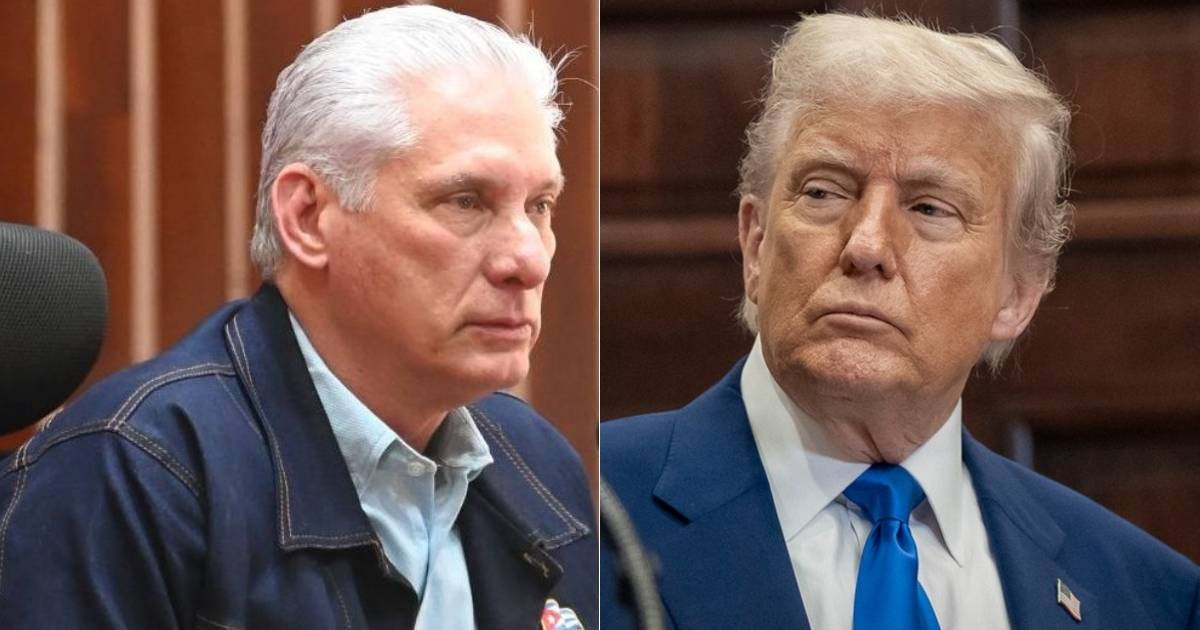
Cuban President Miguel Díaz-Canel has issued a stern warning, stating that Cuba would engage in guerrilla warfare if the United States were to initiate a military attack. He emphasized that such an operation would result in enormous losses for both nations and their citizens.
In an exclusive interview with Newsweek at the Presidential Palace in Havana, Díaz-Canel made these remarks, marking his first conversation with an American media outlet since 2023. This was in response to President Donald Trump's threats to "take" the island.
"Our priority is always to prevent war. We are committed to peace, but if faced with military aggression, we will retaliate, defend ourselves, and fight back," Díaz-Canel declared.
The Cuban leader invoked the "all people's war" doctrine to support his warning, highlighting that "the loss of life and material damage would be immeasurable" and that such an attack "would be extremely costly in every respect."
He also referenced Cuba's National Anthem, a wartime anthem, stating, "And if we fall in battle, to die for the homeland is to live."
Imbalance in Power and Resources
While acknowledging the imbalance between Cuba and the United States in terms of economic power, resources, and military capabilities, Díaz-Canel insisted there is no justification for military action.
"There is no excuse or reason for the United States to resort to military aggression as a means to resolve our differences," he stated.
Energy Crisis and External Pressure
Trump's threats come amid a severe energy crisis in Cuba, exacerbated by Executive Order 14380, signed on January 29, which imposes tariffs on any country supplying oil to the island.
This order, coupled with the loss of Venezuelan supply following the capture of Nicolás Maduro and the halt of Mexican shipments, has slashed Cuban oil imports by 80-90%, leading to power outages lasting up to 25-30 hours a day, affecting 64% of the country.
Trump's Military Ambitions
Following military operations in Venezuela and Iran this year, Trump has repeatedly stated that Cuba would be "next" and expressed that he would have the "honor of taking Havana in some form."
Díaz-Canel dismissed concerns for his personal safety, despite the assassination of Ayatollah Ali Khamenei during U.S. and Israeli attacks on Iran and Maduro's capture by U.S. special forces.
"I'm not worried about my personal safety. The leadership of the Cuban state, the Communist Party of Cuba, and the Revolution is collective. Decisions are made collectively," said the 65-year-old leader.
Open to Dialogue but Wary
While Díaz-Canel expressed openness to dialogue, he did so with caution. He confirmed that Cuban and American officials have begun talks, describing them as "challenging," and insisted any negotiation should be a "respectful dialogue on equal terms" based on international law.
"The current actions of the U.S. government: proposing supposed talks with other nations only to attack those nations later. This undoubtedly creates a state of distrust among our people," he concluded.
A White House official responded to Newsweek, suggesting that Cuba "is a declining nation whose leaders have suffered a significant setback with the loss of Venezuelan support," and Trump believes a deal "would be very easy to achieve."
Key Aspects of U.S.-Cuba Relations
What is Díaz-Canel's stance on a potential military conflict with the U.S.?
Díaz-Canel has stated that Cuba would respond with guerrilla warfare if attacked by the U.S., leading to significant losses for both countries.
How has the U.S. Executive Order 14380 affected Cuba?
The order imposes tariffs on countries supplying oil to Cuba, drastically reducing its oil imports and causing extensive power outages.
Is Díaz-Canel open to negotiations with the U.S.?
Yes, Díaz-Canel is open to dialogue but emphasizes that it must be respectful and on equal terms, adhering to international law.