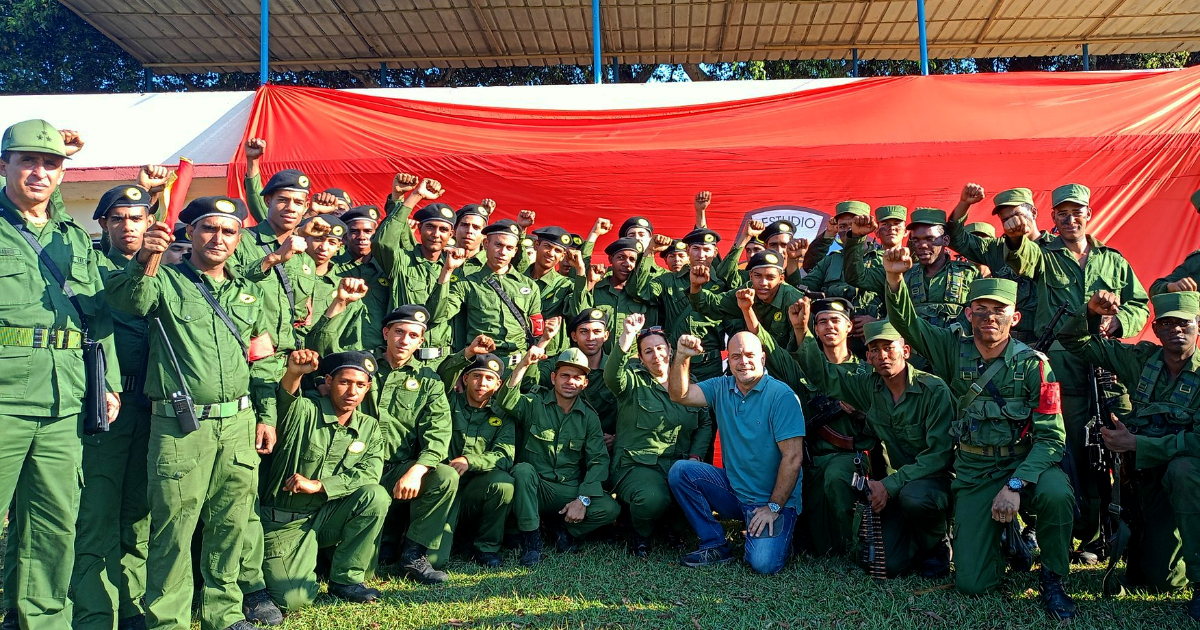
An unsettling statement from Cuban diplomat Johana Tablada de la Torre raised concerns about the internal situation on the island. When asked about the potential distribution of weapons to the populace in anticipation of a conflict with the United States, she remarked, "I wouldn't rule it out."
Though she admitted to lacking specific details, in her remarks to El Sol de México, the diplomat highlighted the existence of organizational structures within the country that are geared toward war scenarios.
She elaborated that in Cuba, mechanisms exist where citizens are aware "of where to go" in the event of an attack, including production and defense brigades.
Such statements bolster the regime's long-standing narrative of a perpetual threat, historically used to justify the militarization of society and control over its citizens.
However, the absence of transparency and verifiable information raises concerns about the actual scope of these measures.
Tablada's remarks do not occur in isolation. They come during a period of heightened political, economic, and military tension, characterized by increased pressure from President Donald Trump's administration on the Cuban regime.
In recent weeks, senior officials in Washington and President Trump himself have intensified harsh rhetoric, labeling Cuba as a "failed state" and emphasizing the need for profound changes in its political system.
These statements have been accompanied by measures that tighten the energy blockade, worsening the already critical fuel shortages and causing prolonged blackouts across the island.
Simultaneously, the regime has escalated its rhetoric and internal preparations. There has been an observable increase in military maneuvers by the Revolutionary Armed Forces (FAR), along with reviving exercises such as "Defense Saturdays," aimed at preparing the populace for confrontation scenarios.
Official media outlets have ramped up the discourse of "the war of all the people," a historical doctrine promoting widespread mobilization in the face of conflict.
This tense atmosphere unfolds as the country faces one of its worst crises in recent history, marked by widespread shortages, rampant inflation, and an unprecedented wave of emigration.
Amid the public confrontation, there have been reports of discreet contacts and alleged negotiations between regime figures, including members of the Castro family, and actors in the United States, suggesting that beyond the official narrative, Havana might be exploring political solutions or guarantees in the event of a possible transition scenario.
Analysts suggest that such rhetoric also aims to unify regime supporters and send a message of resilience against international pressure. However, opponents warn that it could serve as an excuse to strengthen repressive mechanisms in the event of internal protests, as witnessed after the social upheaval on July 11, 2021.
The international community is watching these developments cautiously, given the critical importance of regional stability. Meanwhile, within the island, fear not only stems from external threats but also from the uncertainty of how the state itself might act against its population.
Key Concerns about Cuba's Internal Situation
What did Johana Tablada suggest about arming citizens?
Johana Tablada indicated that there might be considerations for distributing weapons to the Cuban population in the event of a conflict with the United States, though she provided no concrete details.
Why has the Cuban regime increased military activities?
The Cuban regime has amplified military activities in response to increased political and economic pressures from the United States, aiming to prepare for potential confrontations and bolster internal control.
How does the international community view the situation in Cuba?
The international community is observing the situation in Cuba with caution, acknowledging the critical role of regional stability while being concerned about the Cuban government's actions towards its citizens.