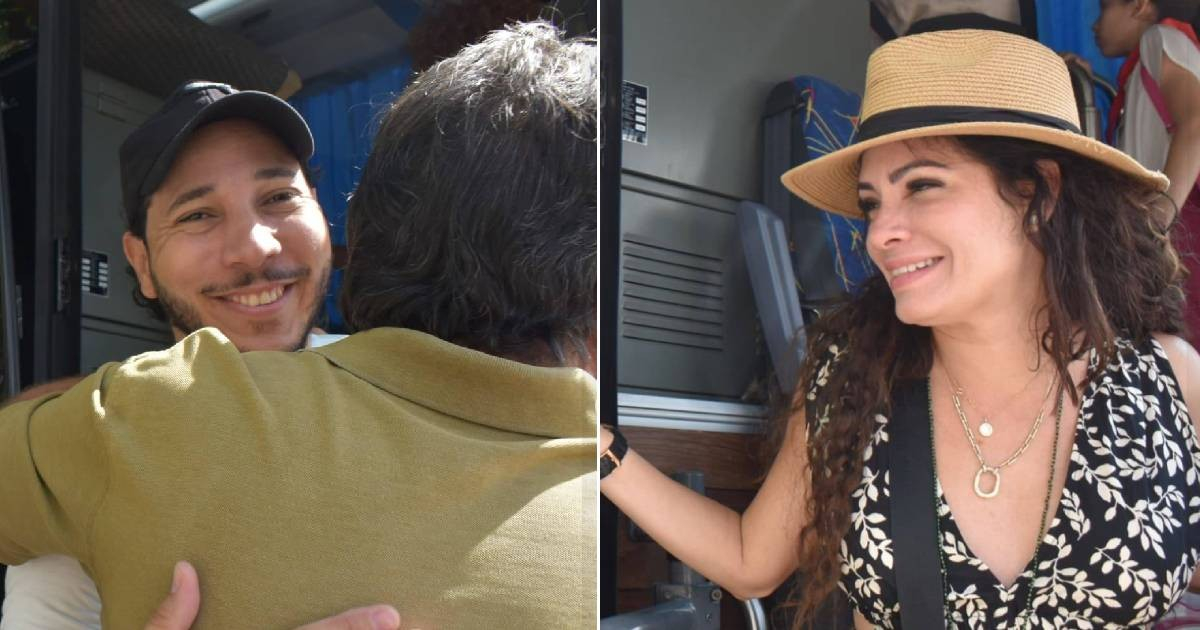
In early April, Cuban actors Denys Ramos, Belissa Cruz, and Niurka Reyes took part in the 22nd edition of the Piña Colada Festival. As Cuba faces one of its most severe economic and energy crises, these artists brought performances to rural and outlying communities in Ciego de Ávila.
Organized by musician Arnaldo Rodríguez, known as "Arnaldo y su Talismán," the festival featured the "Latir Avileño" cultural initiative, which aims to bring artists to various community centers, schools, and socially significant locations throughout the province.
In a Facebook post, the festival's official page captured the essence of their outreach: "Bringing joy to communities with these talented and beloved artists is a truly happy experience."
Private Sector Participation: A Historic First
A notable addition this year was Pedro Carr, a Cuban passenger transport company, serving as the official transport partner for the event. Founded on May 8, 2022, by Pedro Yosvany Carbonell Fernández, or "El Chino," and based in Las Tunas, the company began its commercial operations on July 23, 2024. It made history as the first Cuban private company to sell tickets through the state-run Empresa Viajeros, using its 48-passenger Chinese-made buses for interprovincial routes.
The festival expressed gratitude for the involvement of this private enterprise, stating, "This year, Pedro Carr joined the Piña Colada Festival family, making each journey more pleasant and secure." This marks a significant milestone: the first formal integration of a private transportation company into the logistics of a state cultural event.
The Broader Implications of "Bread and Circuses"
The phrase "Bread and Circuses" is not used lightly. Historically, "panem et circenses" refers to the political strategy of using entertainment to distract the populace. In the context of today's Cuba, plagued by shortages, blackouts, and a migration crisis, the deployment of actors and artists to communities takes on a meaning that transcends mere cultural outreach.
Denys Ramos, recognized for his role as Shidartha in the 2010 soap opera "Aquí estamos," as well as his appearances in "El derecho de soñar" (2023) and "El rostro de los días," joined a lineup that featured around 100 artistic units, 70% of which are part of Empresa Musicávila. Fellow actress Belissa Cruz is also a well-known figure in Cuba's national artistic scene.
The 2025 edition, themed "Culture, Tradition, and Modernity," also showcased international participants from Argentina, Mexico, Colombia, Suriname, Burundi, Palestine, Syria, Kenya, and South Africa. Renowned Cuban artists included Havana D'Primera, la Original de Manzanillo, David Blanco, Buena Fe, Frank Delgado, and Rumbavila.
Dedicated to anniversaries of the Union of Young Communists, the José Martí Pioneer Organization, and the 150th anniversary of the first crossing of the Júcaro-Morón trocha by Máximo Gómez's mambí troops, the festival aligns closely with the regime's political calendar.
The festival concluded with a message encapsulating its official spirit: "THANK YOU and may it happen again."
Cuban Piña Colada Festival: Key Insights
What is the significance of the Piña Colada Festival in Cuba?
The Piña Colada Festival is a cultural event that brings together artists and performers to engage with communities across Ciego de Ávila, aligning with government anniversaries and promoting cultural development during challenging times.
How did Pedro Carr's involvement impact the festival?
Pedro Carr's participation marked the first time a private transport company was integrated into a state-run cultural event, providing improved logistics and demonstrating a shift towards including private enterprises in public initiatives.
Who are some of the notable Cuban artists involved in the festival?
Notable Cuban artists participating in the festival included Havana D'Primera, la Original de Manzanillo, David Blanco, Buena Fe, Frank Delgado, and Rumbavila, showcasing a mix of traditional and contemporary Cuban music.