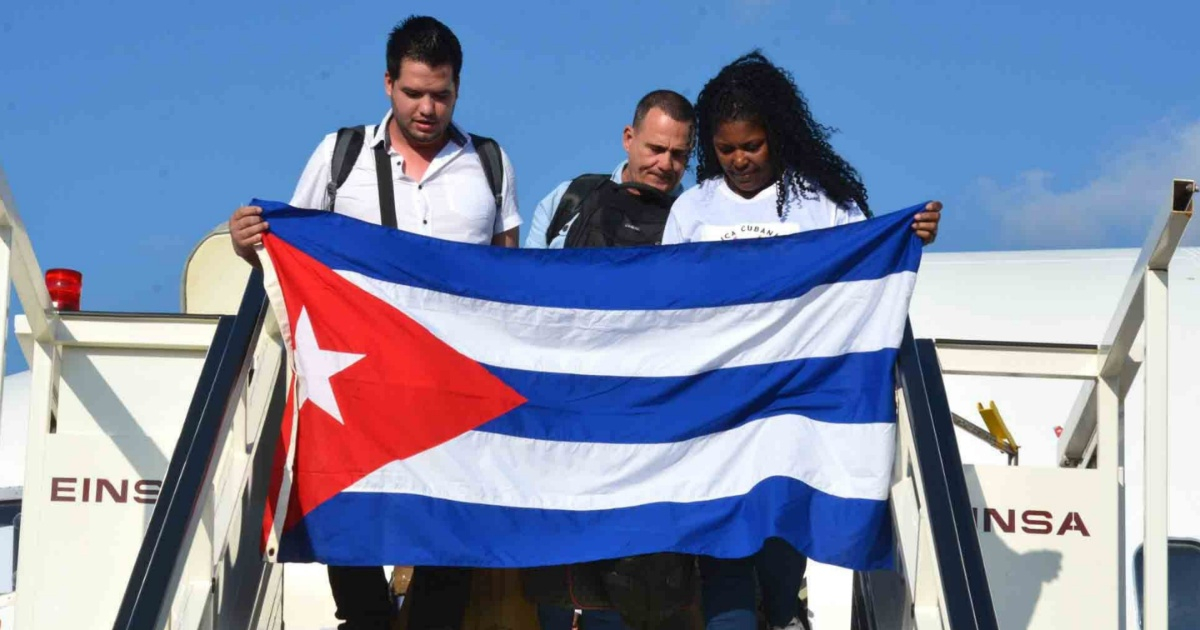
The termination of medical agreements across Latin America and the Caribbean has placed hundreds of Cuban healthcare professionals at a crossroads: follow the regime's directive to return or remain in the host country, facing repercussions such as an eight-year ban on returning to Cuba and enforced separation from their families.
In the initial months of 2026, countries like Guatemala, Honduras, Jamaica, Guyana, and Antigua and Barbuda have either canceled or opted not to renew their accords with Havana, hastening the withdrawal of brigades that, in some instances, have been operational for decades.
The Cuban government brands those who choose not to return as "deserters" or "traitors to the homeland," imposing penalties that keep them apart from their children and relatives for extended periods. These laws are designed to intimidate and suppress doctors, who risk losing their family connections.
In response to this challenging situation, human rights organizations and diplomatic representatives are exploring solutions. A meeting was recently convened in Washington D.C. with delegates from the Guatemalan embassy to consider pathways that would allow Cuban professionals to remain in the country legally and securely.
Specifically, in Guatemala, activists and support groups are advocating for the Green Teams project, a tangible alternative to integrate Cuban doctors into the local healthcare system without relying on bilateral agreements with Havana.
In contrast, the scenario in Jamaica unfolded differently: 277 Cuban healthcare professionals decided to return to Cuba, declining the option to stay, a decision that underscores the influence of family pressures and the regime's threats.
A frequent grievance among these mission participants is wage retention. Documented testimonies reveal that the regime withholds about 85% of the salary that host countries pay for their services, leaving professionals with only a small fraction of their actual earnings.
The U.S. Department of State has condemned the export of Cuban doctors as a forced labor scheme, highlighting the coercive conditions under which these professionals work abroad.
Groups like Prisoners Defenders report that 75% of the personnel leave against their will, driven by economic incentives unattainable in Cuba, or directly coerced by the authorities.
Key Issues Facing Cuban Doctors on International Missions
What are the consequences for Cuban doctors who decide to stay in the host countries?
Cuban doctors who choose to remain in host countries face an eight-year ban from returning to Cuba and the risk of forced separation from their families.
How does the Cuban government view doctors who do not return?
The Cuban government labels doctors who do not return as "deserters" or "traitors," applying sanctions that separate them from their families.
What is the U.S. Department of State's stance on the Cuban medical missions?
The U.S. Department of State criticizes the Cuban medical missions as a form of forced labor, citing the coercive conditions faced by the professionals.