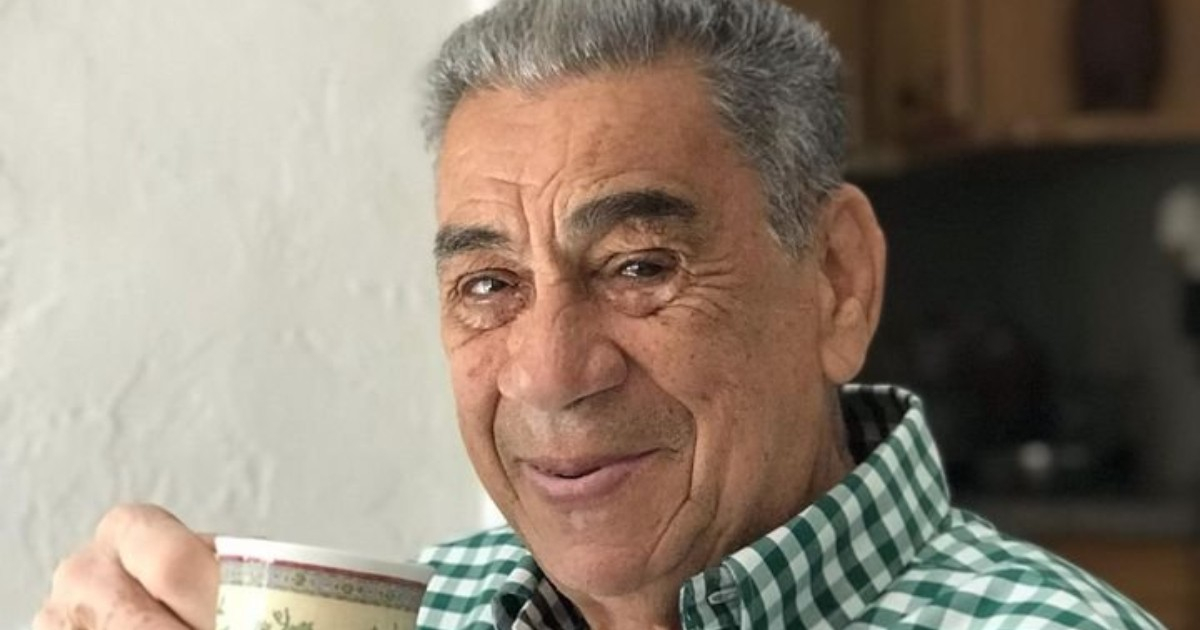
The renowned Cuban actor, Jorge Losada Moreno, died on Sunday in Havana at the age of 92. The news was shared on Facebook by his friend and colleague, Luis Lacosta, who serves as the art director at the Cuban Institute of Cinematographic Art and Industry (ICAIC).
"There are no words that can capture what I feel. A friend, like an older brother, has left us after more than 65 years together. He will always be with us," said Luis.
In recent times, Lacosta had been vocal about Jorge's declining health and the difficult living conditions he endured. Frequently, he took to social media to seek aid for his friend.
Less than a month ago, he highlighted the dire lack of food, resources, and access to medical care that Jorge faced amidst a critical situation.
"The beloved actor's health has deteriorated significantly. To be blunt: there's no food to give him, no transportation to take him to the doctor, and no more funds. We're in dire need," Lacosta wrote in his post.
Enduring Challenges in a Legacy of Cuban Culture
The message painted a grim picture: an actor with an extensive career in Cuban cinema and television relying on public generosity for basic needs like food, transport, and medical care.
Jorge Losada is regarded as a pivotal figure in Cuban television, theater, and film.
For decades, he participated in productions that resonated with generations of viewers, making him a familiar face in the island's audiovisual culture. He began as a reciter on Radio Mambí, trained in dramatic arts, and was part of the Rita Montaner theater group.
His involvement with the Havana Musical Theater included memorable roles in plays such as "Maestra Vida," "El Solar," and "Pedro Navaja." On the big screen, his performances in films like "Soy Cuba," "Techo de Vidrio," "Maluala," and "Alicia en el País de las Maravillas" were noteworthy.
He was honored with the acting award from UNEAC. Yet, his later years highlighted the stark contrast between artistic acclaim and the harsh realities faced by many creators in Cuba.
Struggles with Health and Scarcity
Despite dedicating his life to national culture, Losada's survival largely depended on the goodwill of friends and fellow citizens.
Losada's health issues had been a concern among colleagues and fans for years. In August of the previous year, he experienced a medical emergency that necessitated an urgent transfer to the Calixto García Hospital.
Lacosta recounted that securing an ambulance was an ordeal. After over three hours of attempts by family and friends, a public service official finally arranged for a Red Cross vehicle to transport Losada from his home to the hospital.
The process was particularly challenging due to his residence on a high floor and his limited mobility. Returning home was equally arduous when hospital staff hesitated to provide an ambulance, fearing nighttime assaults.
Eventually, with further efforts and support from a second ambulance team, they managed to bring him back home. This wasn't the only instance where friends and family had to rally support for the actor.
In recent years, campaigns were organized to obtain food, medicine, blood donations, and even essential items like a bath chair. In 2024, severe pain from a dislocated hip prosthesis confined him to a wheelchair, prompting another public appeal for assistance.
In 2021, following surgery that left him with severe anemia, he required scarce medications, which were sought through social media.
Despite these challenges, Losada remained active in Cuban television. In 2023, he appeared in the telenovela "Renacer," humorously suggesting it might be his last role.
Aging in Poverty
Losada's case exemplifies a harsh reality affecting thousands of elderly in Cuba.
For decades, the State promised those who dedicated their lives to work and culture a dignified old age. However, many retirees now barely survive on pensions that cover only a fraction of essential goods.
Runaway inflation has driven up the costs of food, medicine, and basic necessities. In a country plagued by increasing shortages, even acquiring basic products has become a daily struggle fraught with obstacles.
The elderly face even greater hardships. With limited mobility, health issues, and minimal resources, many are almost entirely reliant on family, neighbors, or donations.
When these support networks are absent or insufficient, the only recourse often is to seek help through social media, as was the case with Losada.
While the government continues to praise Cuban culture and celebrate its historical figures in official speeches, the everyday lives of many of those same artists reveal a vastly different reality, where public solidarity takes the place of institutional support.
The Struggles of Aging Artists in Cuba
What were the main challenges Jorge Losada faced in his later years?
In his later years, Jorge Losada struggled with severe health issues, lack of food, limited access to medical care, and financial difficulties, largely relying on public generosity for support.
How did Jorge Losada's career impact Cuban culture?
Jorge Losada had a significant impact on Cuban culture through his extensive work in television, theater, and film, becoming a recognizable face and contributing to productions that influenced generations.
What does Losada's situation reveal about the treatment of artists in Cuba?
Losada's situation highlights the disparity between the recognition of artists and the harsh realities they face, as many struggle with inadequate support and resources despite their contributions to national culture.