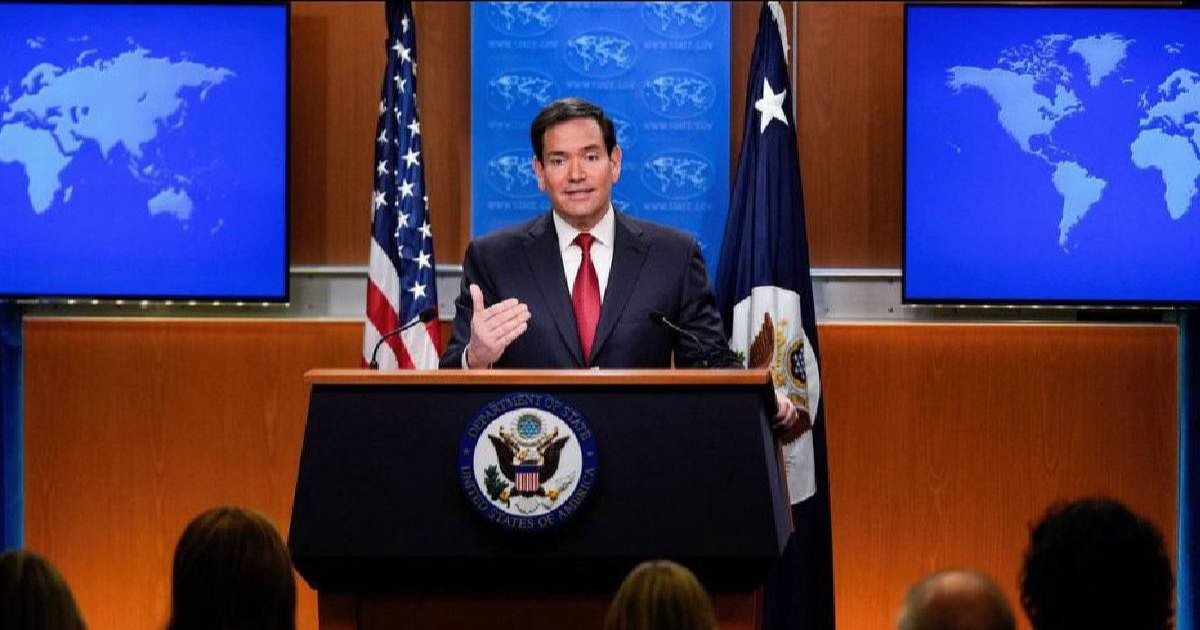
On Saturday, Secretary of State Marco Rubio announced the revocation of permanent residency cards for Hamideh Soleimani Afshar and her daughter, who are related to the late Iranian General Qasem Soleimani. The two were arrested by Immigration and Customs Enforcement (ICE) on Friday night and are now in federal custody pending deportation from the United States.
Rubio shared the news via his social media account, stating, "Until recently, Hamideh Soleimani Afshar and her daughter were living in luxury as permanent residents in the United States."
According to Rubio, Afshar was not discreet about her political affiliations. She was described as "an ardent supporter of the Iranian regime, who openly celebrated attacks on Americans and referred to our nation as the 'Great Satan.'" These statements were reportedly shared on various social media platforms, including Instagram, while Afshar resided legally in Los Angeles.
The Secretary of State justified the decision by emphasizing that the Trump administration will not allow the U.S. to become a haven for foreign nationals who support terrorist regimes that oppose American interests.
This week, Afshar and her daughter were not the only ones affected. The visas of Fatemeh Ardeshir-Larijani, the daughter of former Iranian national security advisor Ali Larijani, and her husband Seyed Kalantar Motamedi were also revoked. Both were outside the U.S. at the time and are now banned from re-entry.
In total, at least four Iranian nationals with connections to the Tehran government had their immigration status revoked this week. The State Department released an official statement on Saturday, confirming these actions as part of the Trump administration's policy against harboring individuals who support what Washington deems terrorist regimes.
Qasem Soleimani, Afshar's uncle, served as the commander of the Quds Force of the Islamic Revolutionary Guard Corps (IRGC) from 1998 until his death. He was considered Iran's second most powerful figure after Supreme Leader Ayatollah Ali Khamenei and was blamed by the Pentagon for the deaths of hundreds of U.S. soldiers. Soleimani was killed on January 3, 2020, in a drone strike ordered by President Trump at Baghdad airport.
Following Soleimani's death, Iran retaliated with ballistic missile strikes on U.S. bases in Iraq on January 8, 2020, and issued arrest warrants for Trump and 35 other individuals. Washington has since accused Tehran of plotting multiple attempts on the U.S. president's life.
This week's actions fall in line with the hardline immigration policy the Trump administration has enforced since January 2025, particularly targeting Iranian nationals linked to the IRGC, which is designated as a foreign terrorist organization.
FAQs on Immigration Policy and Recent Actions
What prompted the revocation of green cards for Afshar and her daughter?
The revocation was prompted by their open support for the Iranian regime and public statements celebrating attacks on Americans, which were deemed incompatible with U.S. residency.
How does the U.S. justify these immigration policy actions?
The U.S. justifies these actions as part of a broader policy to prevent the country from becoming a sanctuary for individuals who support terrorist regimes hostile to American interests.
What are the consequences for those affected by the visa revocations?
Individuals whose visas have been revoked are subject to deportation and banned from re-entering the United States.