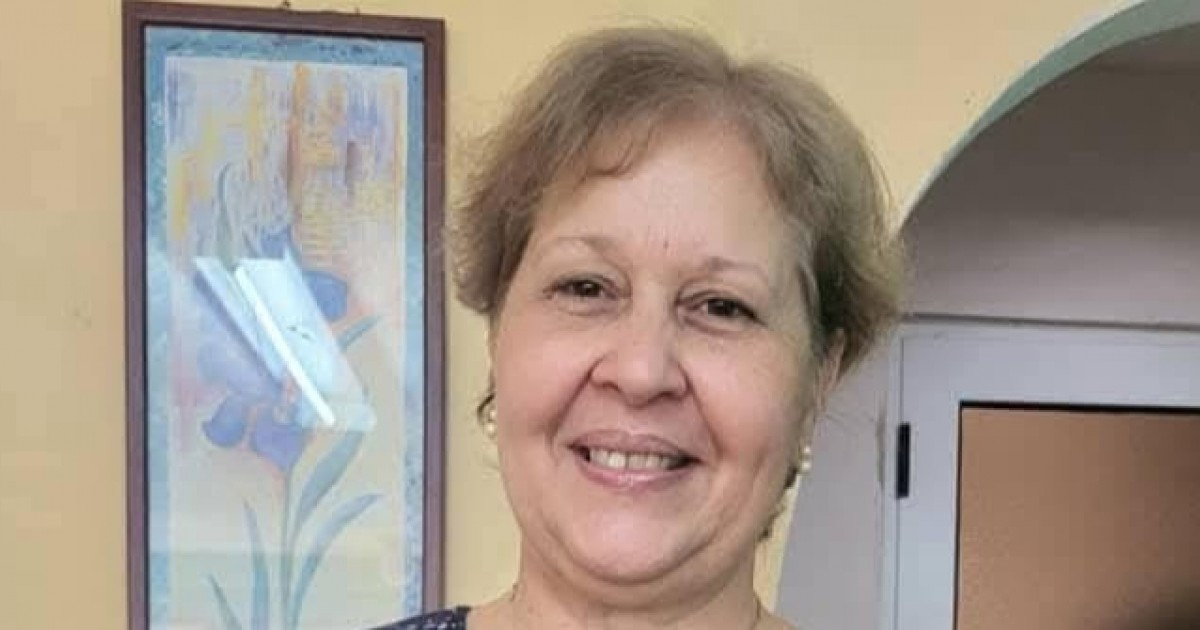
Prominent Cuban academic Alina Bárbara López Hernández has released a critical review consisting of seven key points regarding the pardon of 2,010 individuals announced by the Cuban regime. She asserts that this action is an attempt to counteract the ongoing public campaign advocating for amnesty for political prisoners.
In a message shared on Facebook, López declared, "They won't succeed."
The government revealed the pardon on Friday during the Easter celebrations, promoting it as a "humanitarian and sovereign gesture."
Exclusion of Political Offenders
However, the official statement specifically excluded those convicted of "crimes against authority," which include charges such as sedition, disrespect, public disorder, disobedience, and assault. These charges are precisely the ones under which the majority of Cuban political prisoners are held.
"The official note excludes 'crimes against authority' from the pardoned list, and these are mainly considered political crimes: disobedience, sedition, disrespect, assault, public disorder, etc.," López emphasized in her post.
The Reality Behind the Numbers
López also urged caution regarding the number of pardoned individuals: "While the number seems significant, Cuba's per capita prison population is the second largest globally, estimated at around 90,000 inmates. In this light, enthusiasm should be tempered."
Economic and Strategic Motives
She further highlighted the economic motivations behind the government's decision.
"Such a large prison population is too costly for a bankrupt state," she wrote, recalling a hunger strike that erupted less than a month ago at Canaleta prison in Ciego de Ávila province.
The uprising, which took place on February 18 and 19, was sparked by severe hunger and mistreatment of inmates, resulting in at least seven deaths during the crackdown by special forces.
López also warned of a strategic calculation by the dictatorship: "In anticipation of a major social upheaval, possibly this summer, they may be preparing new spaces in prisons for another influx of political prisoners."
Diplomatic Implications
Regarding the diplomatic context, López was straightforward: "The gesture is clearly aimed at the Vatican, the world, and talks with the United States, a familiar tactic for a system that views its prisoners as bargaining chips in bilateral negotiations, rather than as human beings."
On the systemic nature of the issue, López was unequivocal: "A regime based on political exclusion, like Cuba's, is an ongoing and constant factory of new political prisoners. Without changes in this regard, this will be an endless story."
López Hernández is among the most vocal intellectual critics within Cuba.
She has spearheaded monthly protests in Matanzas' Parque de la Libertad, demanding amnesty for political prisoners, and is involved in the Forum for Amnesty Action 2026, an opposition group advocating for an amnesty law and the decriminalization of dissent.
In February, she was detained for 12 hours on charges of "disrespect" while en route to a protest where she intended to deliver an amnesty petition to the Municipal Assembly.
This government-announced pardon is the fifth since 2011 and the second this year, following the release of 51 individuals on March 18 after Vatican mediation.
According to Prisoners Defenders, there were 1,214 political prisoners in Cuba as of February, none of whom were included in the latest pardon.
Understanding Cuba's Political Pardon
What was the government's reasoning behind the recent pardon?
The Cuban government presented the pardon as a "humanitarian and sovereign gesture" in line with the Easter celebrations.
Why are political prisoners excluded from the pardon?
The official decree excluded those convicted of "crimes against authority," which encompass charges often used against political prisoners, such as sedition and public disorder.
How does the pardon impact the political climate in Cuba?
Critics argue that the pardon is an attempt to mitigate growing demands for political amnesty while avoiding genuine reform of political exclusion practices.