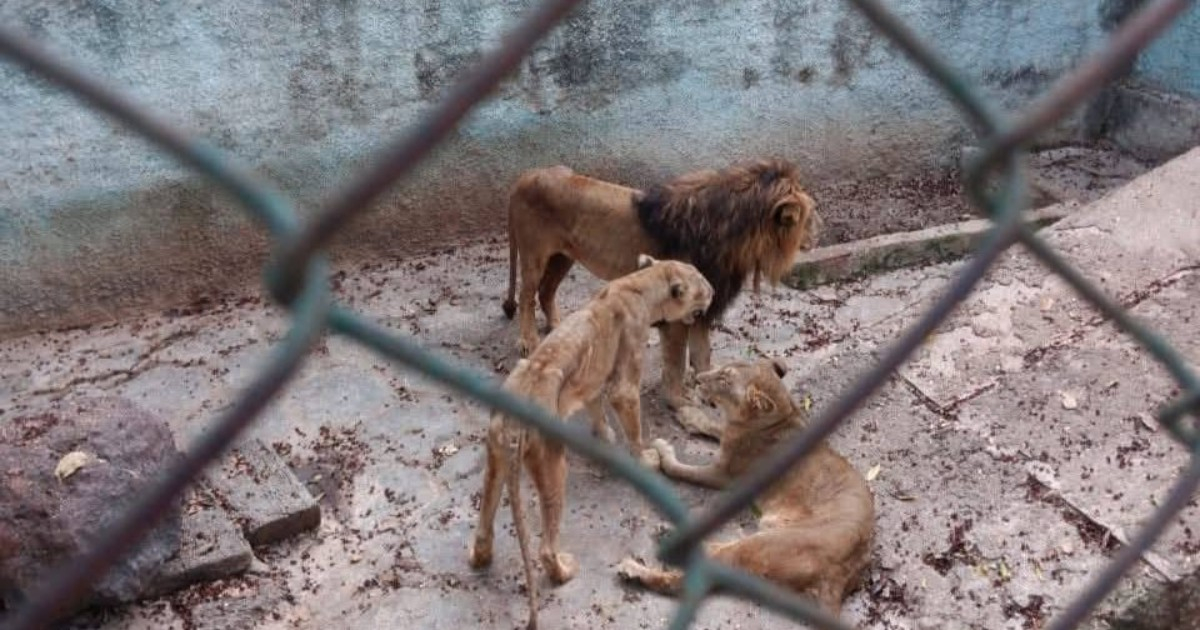
The management of the Camagüey Zoo, located in the Casino Campestre, has issued a statement in response to recent social media claims regarding the neglect and malnutrition of its animals. While the statement dismisses these accusations as "manipulation and slander," it subtly acknowledges the impact of Cuba's economic crisis on the zoo's operations.
The announcement, shared by Radio Camagüey on Facebook, insists that the zoo's staff cares for the animals "with great dedication and care." Yet, it admits that the zoo's oldest lioness, at 22 years old, is showing "natural signs of deterioration due to her inability to digest food," attributing this to her advanced age.
The institution claims to have five caretakers, a food preparation specialist, a biologist, and a veterinarian who monitor the animals' health daily. However, the statement ends with a phrase that highlights the contradiction between official rhetoric and reality: the zoo operates "despite the effects of the current economic situation in the country, from which they are not exempt."
The institutional response was prompted by complaints that began last Thursday, when Cuban citizen Yanaris Álvarez posted images of three lions at the Casino Campestre, showing prominent ribs and bones, severely atrophied muscles, and lying on concrete floors amid dry leaves in a neglected environment.
On Friday, Pedro González reported in the Facebook group Revolico Camagüey that the zoo's director prevented him and other locals from feeding the animals with meat, guava, bananas, and corn purchased with their own money. The director insisted that "the animals have a diet and are not starving," and called the police when visitors questioned his stance.
González's response was clear: "Where is that diet when the animals are starving? Where is the care when the water is dirty and the environment is unsanitary?" The director suggested that citizens donate food to the zoo staff to be given to the animals, a proposal the locals rejected. "We all know what happens with donations: they don't always reach those who truly need them," González explained.
The situation at the Casino Campestre, the largest zoo in Cuba with over 900 specimens from 72 species, is not an isolated incident but part of a documented pattern of neglect in state-run facilities throughout the island.
Back in December 2025, it was reported that a lion at the Florida municipality zoo in Camagüey had gone without food for eight days. In February, the organization Bienestar Animal Cuba reported widespread neglect and hunger at the zoo in Puerto Padre, Las Tunas, where animals "don't ask for luxury, they ask for food."
In January, the lions at the Santiago de Cuba zoo were being fed with scraps and slept on their own waste; a zoo worker's response was simply: "There they are." Cuba enacted the Animal Welfare Decree-Law in 2021, imposing fines between 500 and 4,000 Cuban pesos, but activists and independent organizations argue that the law lacks effective enforcement mechanisms and that state institutions rarely respond to complaints.
This Saturday's statement is a notable exception, although its defensive tone and veiled acknowledgment of the economic crisis as a limiting factor reveal that behind the official words, the situation of animals under state care remains critical.
As González summed up: "Feeding the animals is prohibited, but letting them starve is not; helping is forbidden, but neglect is not; acting is banned, but turning a blind eye is not."
Key Issues Surrounding Camagüey Zoo and Animal Welfare in Cuba
What prompted the Camagüey Zoo to respond publicly?
The Camagüey Zoo responded publicly following social media posts and complaints about animal neglect and malnutrition, which gained significant attention and criticism.
How does the economic situation in Cuba affect the zoo?
The economic crisis in Cuba directly impacts the zoo's ability to operate, affecting the availability of resources needed for proper animal care.
What has been the public's response to the zoo's statement?
Many locals and activists have criticized the zoo's statement, questioning the care provided to the animals and the effectiveness of the proposed solutions.