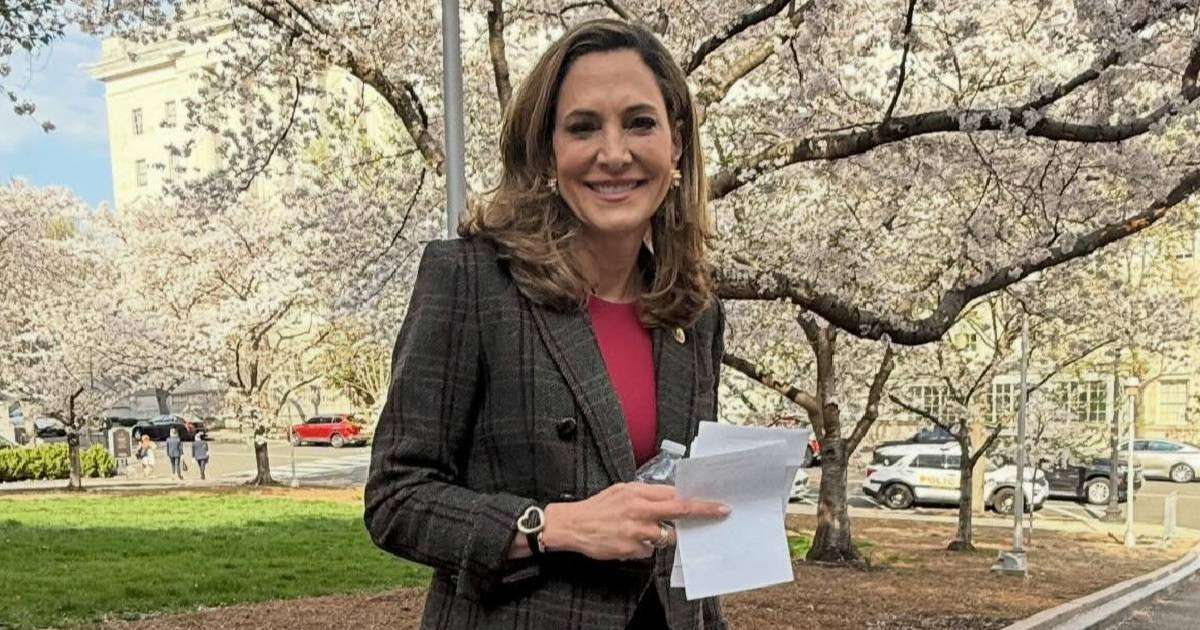
On Friday, Cuban-American Republican Congresswoman María Elvira Salazar criticized the Cuban government's decision to pardon 2,010 incarcerated individuals, dismissing the move as mere propaganda and asserting that it deceives no one.
The Cuban regime made the announcement on Thursday, with initial releases occurring today at La Lima prison in Havana. The pardon primarily benefits those convicted of common crimes such as theft or bribery.
Notably, the decree clearly omits "crimes against authority," including sedition, public disorder, and contempt—charges that have led to the imprisonment of the majority of Cuban political detainees, particularly those involved in the July 11, 2021, protests.
A History of Deception
"We've seen this tactic before," Salazar expressed on social media platform X. "The regime sets a few free for headlines, while the reality of political prisoners remains hidden."
Salazar highlighted the lack of transparency in the process: "Let's be clear: we don't even know who is supposedly being released because the dictatorship lies."
Exclusion of Prominent Political Prisoners
The congresswoman also pointed out that high-profile political prisoners, such as Maykel Osorbo, Félix Navarro, Saily Navarro, Miguel Díaz Bauzá, and Luis Manuel Otero Alcántara, remain excluded from the pardon. "These are just a few of the many political prisoners kept in the dark by the regime," she stated.
Each of these individuals represents the regime's repression: Osorbo, a rapper with the San Isidro Movement, is serving a nine-year sentence. Otero Alcántara, a founder of the same movement, has spent five years in prison and is recognized as a prisoner of conscience by Amnesty International.
Félix Navarro, aged 72, has been detained since the Black Spring of 2003 and again after the 11J protests; his daughter Saily is serving a six-year sentence for the same demonstrations. Meanwhile, Miguel Díaz Bauzá, aged 81, faces a 30-year sentence despite severe health issues.
Opposition Voices and Human Rights Concerns
"This isn't an act of humanitarianism. It's a ploy to retain power and generate headlines," Salazar declared.
Her skepticism is echoed by fellow Republican Congressman Carlos A. Giménez, who labeled the pardon as a "distraction" tactic, as reported by Martí Noticias. Cuban dissident Yunior García accused the regime of "feigning clemency" for prisoners.
Numerous human rights organizations have criticized the lack of transparency in the process. As of February 2026, Prisoners Defenders estimated there were 1,214 political prisoners in Cuba, while Justicia 11J reported at least 760, with 358 linked to the 11J protests.
The Cuban Observatory of Human Rights today demanded that all political prisoners be included in the pardon.
This marks the fifth such pardon in Cuba since 2011, benefiting over 11,000 individuals in total. It is the second pardon in 2026; on March 13, the regime released 51 people following discussions with the Holy See, only 19 of whom were political prisoners, according to Prisoners Defenders.
"True change involves the release of all political prisoners and a path towards democracy. Until then, it's the same dictatorship," Salazar concluded.
Understanding the Cuban Pardon and Its Implications
Why is the pardon by the Cuban government considered propaganda?
Critics, including María Elvira Salazar, view the pardon as a propaganda measure because it excludes political prisoners and is seen as an attempt to generate positive headlines without addressing the core issues of repression.
Who are some of the prominent political prisoners excluded from the pardon?
Notable figures such as Maykel Osorbo, Félix Navarro, Saily Navarro, Miguel Díaz Bauzá, and Luis Manuel Otero Alcántara were excluded from the pardon, highlighting the regime's continued repression of dissent.
How have human rights organizations responded to the pardon?
Human rights groups have criticized the lack of transparency in the pardon process and demanded the inclusion of all political prisoners, emphasizing the ongoing issue of political repression in Cuba.