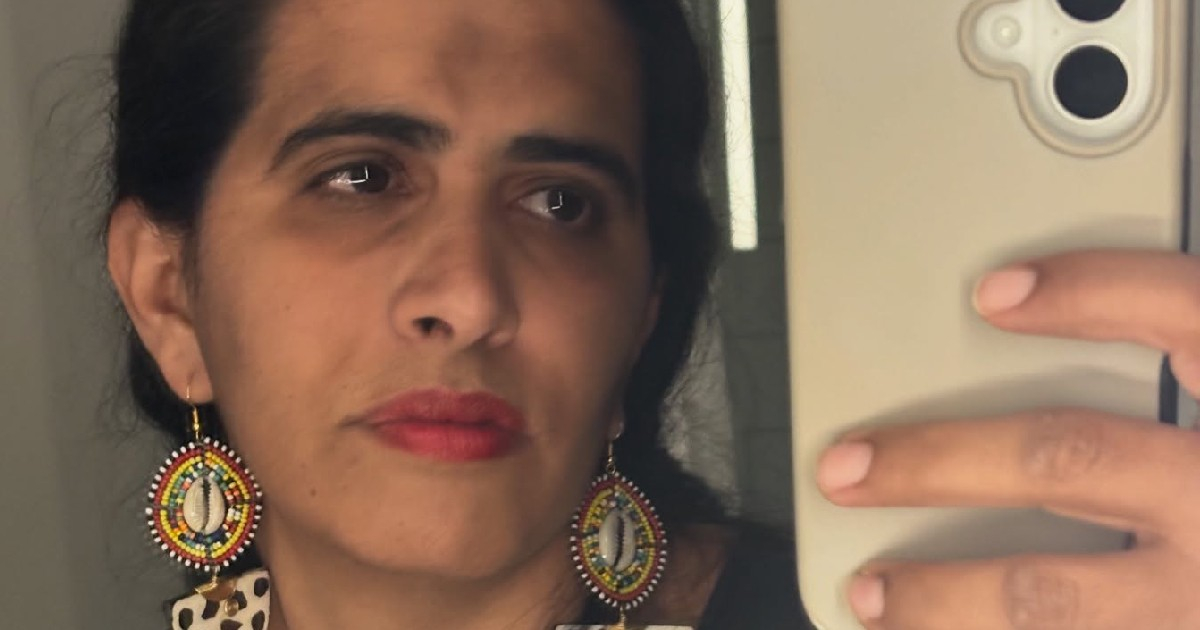
Art activist Anamely Ramos González expressed her outrage this Friday, highlighting that the recent releases announced by the Cuban government favor only common criminals, while political prisoners continue to endure what she described as "extreme cruelty" behind bars.
The Cuban regime has declared the pardon of 2,010 sentenced individuals, portraying it as an Easter gesture under Article 90, Section II of the Constitution. However, this decree explicitly omits offenses against authority, a legal category the regime routinely uses to target protesters and political dissidents, especially those involved in the July 11, 2021 protests.
According to information received by Ramos, releases are occurring in two forced labor camps in Havana: 41 common prisoners in Toledo 2 and 75 in La Lima, with offenses ranging from theft and violence to drug-related crimes.
Deliberate Cruelty and Political Manipulation
Ramos described the release process as a deliberate display of sadism: "They gather the prisoners and read the list of those to be released. Imagine the shock, the collapse among many political prisoners. It's extreme cruelty."
She didn't mince words when addressing the regime's intentions: "Possibly the worst of those in prison are being released to the streets because the regime seeks to protect itself, not the Cuban people."
Criticism of International Media and Call to Action
The activist also criticized portions of the international press, accusing them of complicity with the Cuban regime by often reporting with biases that favor the government, thus harming the civil society that suffers under its rule. She urged the media to report from the perspective of the Cuban people, not their oppressors.
Her message ended with a direct call to action: "Our political prisoners are our pain, family. We need to take action for them and for all of us. The time is now."
Voices of Dissent and Human Rights Organizations
Ramos's denunciation adds to a chorus of critical voices. Artist Ulises Toirac labeled the pardon a selective trap for excluding offenses against authority. Manolín "The Salsa Doctor" accused the regime of using the pardon as a "manipulation to extend its power." Opposition figure José Daniel Ferrer argued that the regime employs the pardon to sidestep pressure without including any political prisoners, amid a backdrop of Russian oil arriving on the island.
Human rights organizations also condemned the announcement. Prisoners Defenders, led by Javier Larrondo, denounced the pardon amidst increasing repression, with dozens of new political prisoners counted in March alone. The organization documented 1,214 political prisoners as of the end of February 2026, while Justicia 11J estimates at least 760, including 358 from the July 11 protests. The Cuban Observatory for Human Rights demanded the inclusion of all political prisoners in a swift and transparent process.
This marks the second mass pardon of 2026. The first occurred on March 12, when 51 prisoners were released following a Vatican-mediated agreement, with only 19 to 27 verified as political prisoners by independent organizations. This deceptive pattern has repeated in every pardon over recent years.
Understanding the Cuban Political Prisoner Crisis
What are the main criticisms of the Cuban government's recent release policy?
The main criticisms include the exclusion of political prisoners from the release policy and the perception that it is a manipulative gesture to maintain control while ignoring the plight of political dissidents.
Who are some of the notable voices criticizing the Cuban regime's actions?
Notable critics include activist Anamely Ramos, artist Ulises Toirac, musician Manolín "The Salsa Doctor," and opposition leader José Daniel Ferrer, among others.
How many political prisoners are currently estimated to be in Cuba?
As of February 2026, organizations like Prisoners Defenders estimate 1,214 political prisoners, while Justicia 11J estimates at least 760, including many from the July 11, 2021 protests.