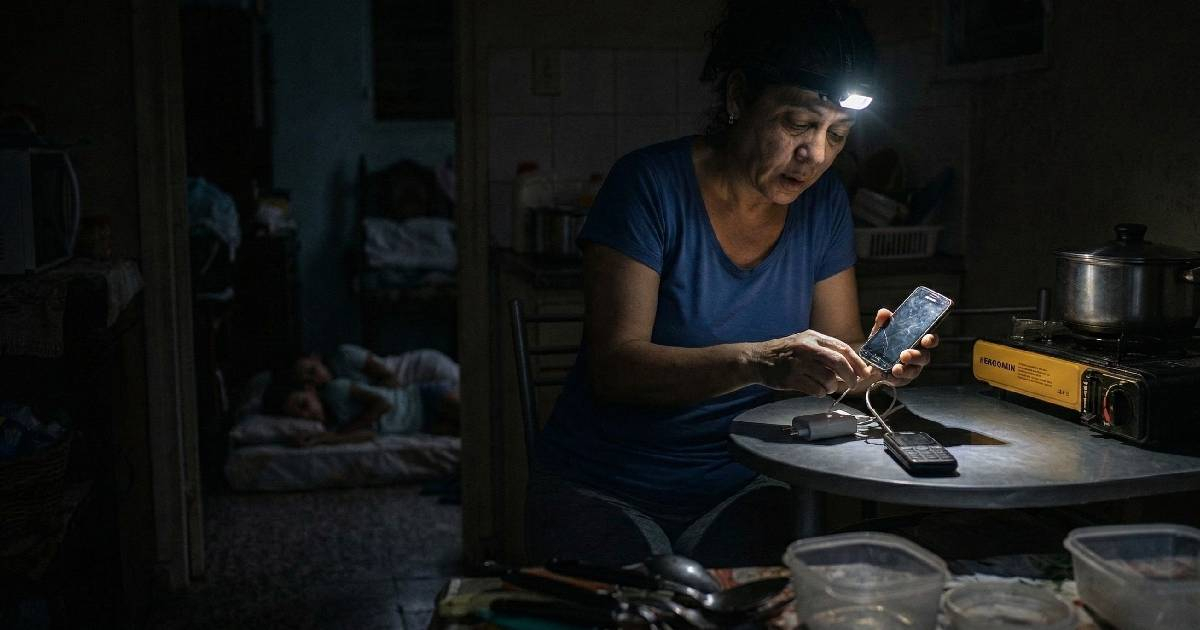
The Cuban content creator, Lilianne, who is known on social media as Lili.cubana, recently shared a video depicting her reality of having to cook at three in the morning after enduring a 24-hour power outage. This scenario is increasingly becoming a common aspect of daily life on the island.
"24 hours without electricity. It's three in the morning and we're going to cook," she announces at the start of the video, explaining how she seized the temporary return of power to prepare some food.
In the footage, Lilianne is seen cooking shelled green peas and chicken seasoned with salt, cilantro, and annatto. As she prepares the meal, she shares some details of her improvised late-night culinary process, like making cuts in the chicken to speed up cooking or creating a sauté with chorizo, garlic, peppers, and onions.
"Look how this turned out... finger-licking good," concludes the influencer, showcasing the final result of her dish.
Adapting to Power Outage Schedules
This seemingly everyday scene, however, underscores a reality that has become common for many Cuban households: adjusting domestic life to the unpredictable electricity schedules.
On social media, comments on the video highlighted this stark reality. Some users pointed out that many families don't even have enough food to cook. "Lucky you have food because most Cubans don't even have rice or eggs," one user commented.
Another comment encapsulated the exhaustion caused by these nocturnal routines: "I went to bed at that time, doing the exact same thing. What a miserable life."
Life in the Shadow of Energy Shortages
Similar scenes frequently appear on social networks. Recently, a Cuban woman shared that she woke up at 3:40 AM to soften beans while the electricity briefly returned. Her post went viral and garnered thousands of reactions from people describing similar routines: cooking, doing laundry, charging phones, or filling water tanks during the early hours of the morning.
These stories illustrate how the energy crisis has reshaped daily life on the island. For many families, nighttime rest has been replaced by fragmented domestic tasks that hinge on the unpredictable return of electricity.
In a nation plagued by prolonged blackouts, gas shortages, and high coal prices, basic tasks like preparing meals or preserving food have become an ongoing exercise in improvisation. For thousands of households, the early morning is no longer synonymous with rest but rather the only time available to cook.
Understanding Cuba's Energy Crisis
Why are power outages common in Cuba?
Cuba experiences frequent power outages due to a combination of aging infrastructure, insufficient energy resources, and economic challenges, which are exacerbated by the inefficiencies of the socialist communist regime.
How do power outages affect daily life in Cuba?
Power outages disrupt daily routines, forcing families to adapt by performing tasks like cooking, laundry, and charging devices during irregular hours, often in the middle of the night.
What coping strategies do Cubans use during power outages?
Cubans often improvise by cooking and completing chores whenever electricity is available, regardless of the time, and using alternative resources such as gas or coal stoves when possible.