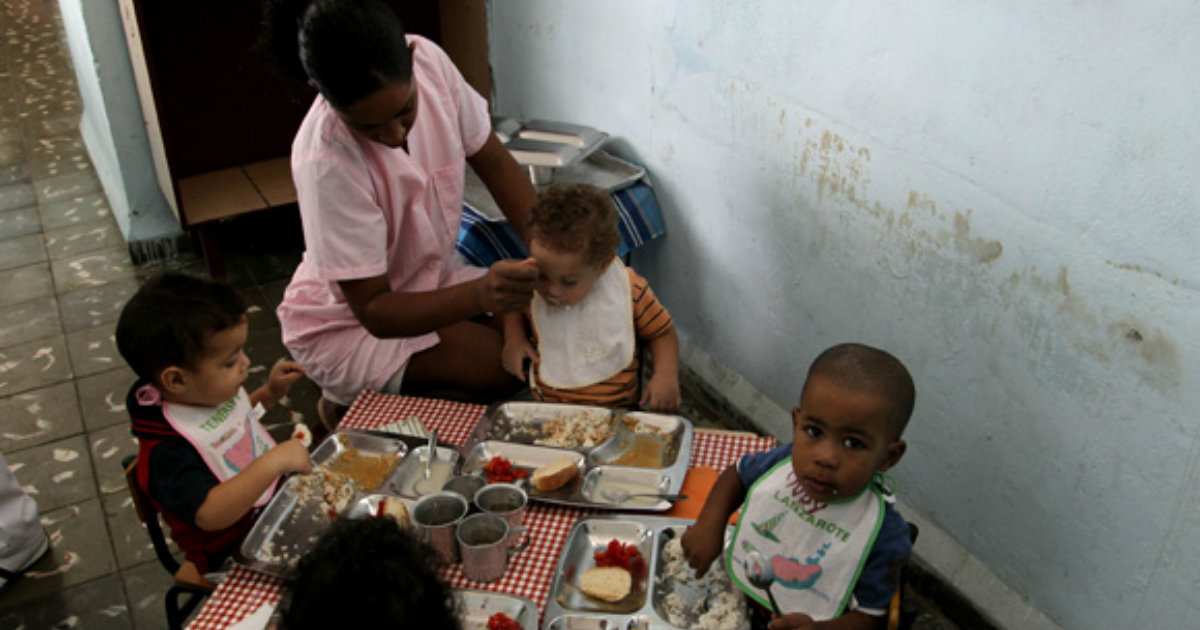
This Thursday, Cuba's Ministry of Education announced Resolution 62, which introduces new institutional care formats for children and teenagers lacking family protection. The resolution outlines various types of homes, capacity limits, and psychological care protocols.
Falling under the Code of Childhood, Adolescence, and Youth, which was ratified by the National Assembly last July, this regulation is the first operational guideline detailing how the Cuban government will enforce this code concerning foster care and adoption.
Different Types of Homes for Various Age Groups
The resolution categorizes facilities based on the child's age. Emergency or temporary shelters will accommodate up to 12 children for a maximum of 30 days, specifically designed for immediate crises.
Homes aimed at early childhood will take in up to ten children for periods ranging from three to six months, aiming to mimic a family environment.
Facilities for those aged seven to 18 will focus on small groups, emphasizing preparation for independent living and family reunification.
Institutional Foster Care as a Temporary Solution
Described as an "exceptional and temporary measure of protection," institutional care is ordered by the relevant authority to provide affected children with emotional and developmental support.
Theoretically, this obligates the state to actively seek familial alternatives for each child instead of keeping them in institutions indefinitely.
The resolution also addresses "solidarity families," volunteers who host children from state-run homes during weekends or holidays. These families are described not as adoptive but as providing emotional respite, allowing children to experience family life while easing institutional congestion.
Adoption and Emotional Preparation
In terms of adoption, these homes serve as centers for emotional preparation. Before adoption, psychologists and social workers will compile a detailed dossier and guide the child through gradual meetings with their prospective family.
Despite these measures, a significant gap exists between policy and reality. As of 2023, Cuba had only 54 social assistance centers for minors, serving just over 400 children, according to OnCuba News.
Since 2022, only three new homes have been constructed for children without family protection, with no further developments.
Data presented to the Cuban Parliament in 2024 revealed 100,737 students are in vulnerable situations and 9,006 children aged zero to six face "complex social situations," as reported by 14ymedio.
Understanding Cuba's New Child Care Policies
What is the goal of Cuba's Resolution 62?
Resolution 62 aims to establish new institutional care formats for children and teenagers without family protection in Cuba, detailing types of homes and care protocols.
How does the resolution categorize care facilities?
The resolution categorizes facilities based on age, with emergency shelters for immediate needs, early childhood homes for family-like environments, and facilities for older children focusing on independence and reunification.
What role do "solidarity families" play in this new system?
"Solidarity families" are volunteers who host children from state homes on weekends or holidays, providing emotional support and reducing institutional overcrowding.