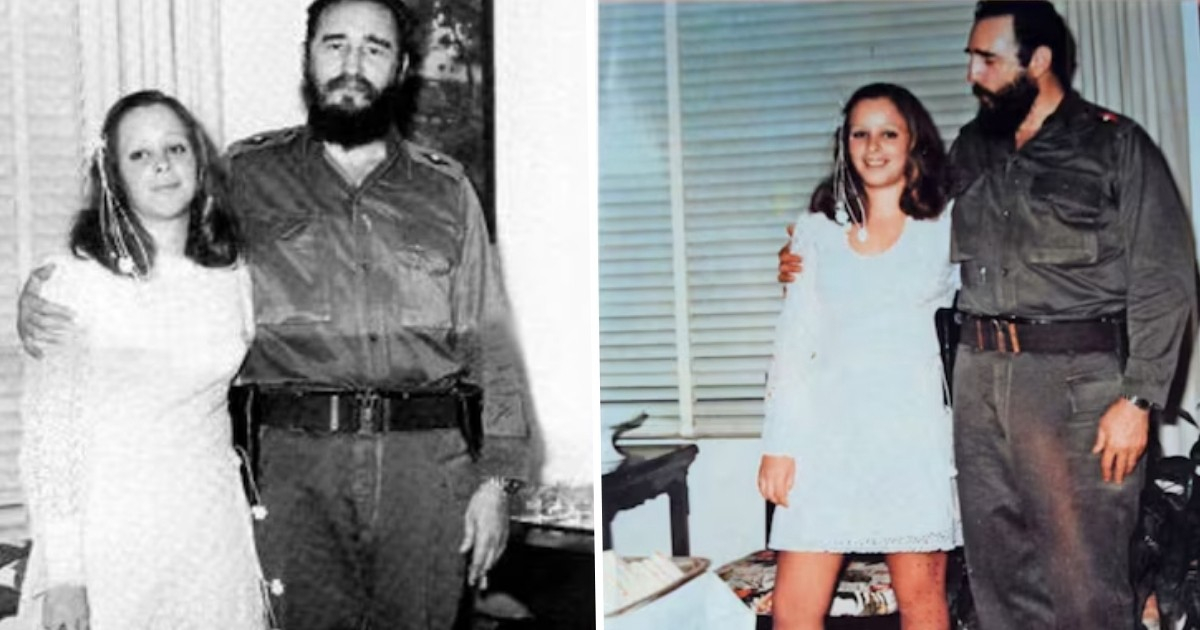
In an exclusive interview with The Epoch Times, Alina Fernández Revuelta, the biological daughter of Fidel Castro, stated that Cuba has been in dire need of a regime change for decades, and the urgency for such a shift is greater now than ever before.
Fernández is not just any observer; she spent her formative years within the revolutionary elite as the daughter of the very architect of the system she now criticizes. For more than three decades, she has lived in exile, actively speaking out against the regime.
“I believed the time for regime change had arrived by the late 1980s,” Fernández remarked in the interview conducted by Emel Akan and published on Wednesday. “When Fidel Castro passed away, many thought his regime would crumble. His government was extremely personal, paternalistic... narcissistic. Yet, it endured.”
Born in 1956, Fernández discovered her true paternity at the age of ten, having previously thought her father was Orlando Fernández Ferrer, her mother's husband and a prominent cardiologist. Her stepfather left Cuba for Spain with her sister in the early 1960s, forcing her to label them as "traitors in the family" in school documents.
Her political awakening began in childhood as she realized that what was touted as "voluntary work" was, in reality, compulsory. “I learned early on that in Cuba, voluntary meant mandatory,” she recalled. “I quickly understood that I was being deceived.”
Becoming a Public Dissenter
By the late 1980s, Fernández had become a public dissenter, haunted by fears for her teenage daughter’s safety during the Special Period, which she described as "years of utter misery" marked by shortages of electricity, food, and transportation.
The Mariel Boatlift crisis of 1980 was another turning point. Fernández witnessed the regime orchestrating mobs to harass and attack those seeking to leave Cuba. “It was devastating to see people treated that way officially,” she stated.
In 1993, at the age of 37, she escaped Cuba using a Spanish tourist’s passport. Her journey took her first to Spain, where she secured political asylum at the U.S. Embassy in Madrid, and on December 21, she arrived in Atlanta. Shortly thereafter, the reverend Jesse Jackson visited Cuba, securing the release of her daughter, which Fernández described as "divine intervention."
Life in Exile
Now residing in Miami, Fernández leads a modest life similar to other Cuban exiles. She no longer maintains contact with her family, including her uncle Raúl Castro, who is 94 years old.
“One of Cuba’s greatest tragedies is how this madness tore families apart in the most dramatic way,” she pointed out. “If you didn’t think the same way, you became the enemy. It’s terrible. It’s been like that since the start.”
Current Crisis in Cuba
Her comments come amid intense pressure on Havana. Following the capture of Nicolás Maduro by U.S. forces on January 3, the flow of Venezuelan oil to Cuba was halted, triggering one of the island’s worst economic and energy crises in decades, with widespread blackouts, food and medicine shortages, and protests erupting in several cities.
Former President Donald Trump declared last Sunday that Cuba is "next" to collapse. “It will fail soon, and we will be there to help,” he asserted.
Nonetheless, Fernández warns that significant internal change is unlikely in the near future. The regime is deeply entrenched, and mere protests won’t topple a highly centralized power structure.
After years out of the spotlight, Fernández is now featured in the documentary "Revolution’s Daughter," premiering in Miami on April 10 as part of the 43rd Miami Film Festival. “I’ve remained silent for many, many years,” she acknowledged. “I felt that I had already said everything I needed to say.”
Insights into Cuba's Political Landscape
Why does Alina Fernández believe a regime change in Cuba is urgent?
Alina Fernández argues that the need for regime change in Cuba has been pressing for decades, but the current economic and energy crises make it more urgent than ever.
What event marked a turning point in Fernández’s stance against the Cuban regime?
The Mariel Boatlift crisis in 1980 was a pivotal moment for Fernández, as she witnessed the regime's orchestrated violence against those wanting to leave Cuba.
How did Alina Fernández escape Cuba?
In 1993, Alina Fernández fled Cuba using a Spanish tourist’s passport, traveled to Spain, then secured asylum in the U.S., eventually settling in Miami.