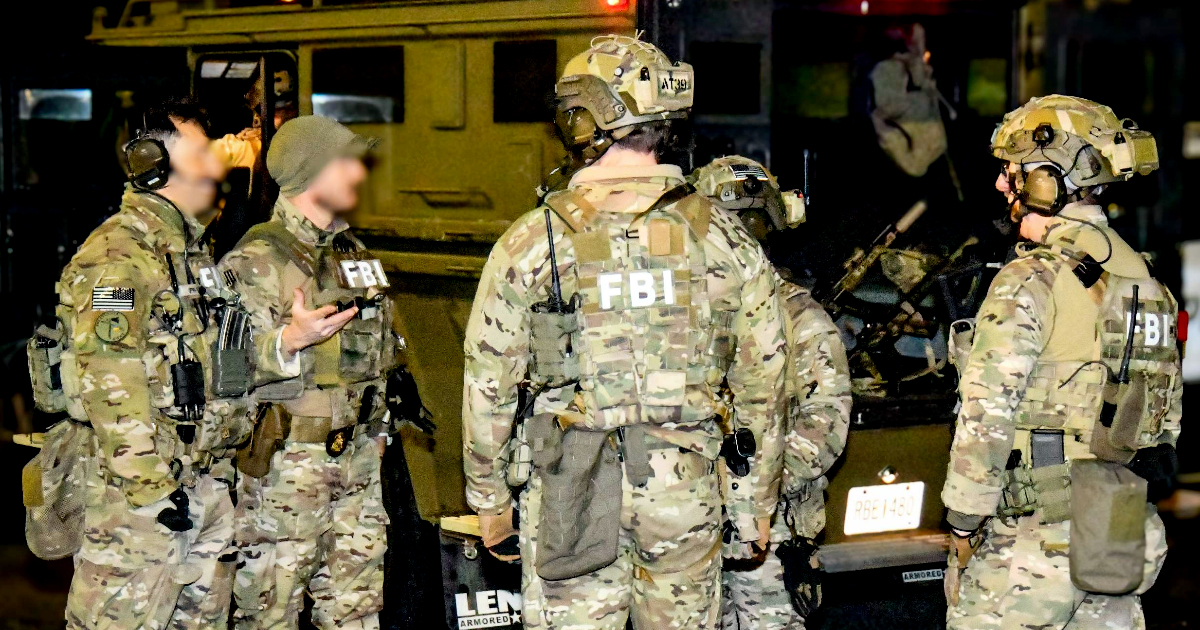
This past Wednesday, a team from the FBI arrived in Cuba to participate in a joint investigation into the recent shooting incident involving Cuban border guards and the crew of a Florida-registered speedboat.
The altercation unfolded near Cayo Falcones in Corralillo, a municipality in Villa Clara province, roughly one nautical mile off Cuba's northern coast. According to EFE, the arrival of the Federal Bureau of Investigation (FBI) team represents a rare occurrence in the recent history of bilateral relations between the two nations.
The Cuban Ministry of the Interior (MININT) reported that the vessel, bearing the registration number FL7726SH, was occupied by ten individuals armed with assault rifles, pistols, incendiary devices, bulletproof vests, and camouflage uniforms.
Details of the Confrontation
A Cuban border patrol unit, consisting of five officers, approached the boat to identify it. According to Havana, the occupants opened fire first, injuring the vessel's commander in the abdomen.
The clash resulted in the deaths of five of the boat's crew members—four during the shootout and another who later succumbed to injuries. Six others were detained and face terrorism charges in Cuba.
International Repercussions
At least one American citizen was killed, and another was injured during the confrontation, as reported by U.S. sources.
The identities of the boat's occupants have been contentious from the beginning. A name on the list released by MININT surfaced hours later in the U.S., casting doubt on the Cuban regime's official account.
The family owning the boat in Florida claimed it was stolen by an employee and insisted it was a family fishing vessel, not meant for armed operations.
U.S. Response and Political Reactions
The FBI visited a Miami Lakes residence connected to the boat's ownership records, and Florida Attorney General James Uthmeier ordered a state investigation to clarify the involvement of American citizens.
Secretary of State Marco Rubio described the incident as highly unusual for open sea shootings and affirmed that the U.S. would independently verify the facts.
On March 13, Cuban President Miguel Díaz-Canel confirmed in a televised speech that Cuba had informed Washington of the incident through diplomatic and consular channels and mentioned the possible visit of FBI agents.
"We are awaiting the potential visit of FBI experts," he stated, to aid in the investigation alongside our Ministry of the Interior personnel.
Broader Context of U.S.-Cuba Relations
This event unfolds amid broader concerns over the Cuban regime's activities.
Mere hours before, the FBI publicly warned that Cuba poses a genuine threat to U.S. security, particularly in espionage, highlighting decades of infiltration into U.S. government institutions.
Counterintelligence officials emphasized that, despite its size, the island has developed a sustained capacity to acquire sensitive information and anticipate Washington's decisions, adding a strategic dimension to the current cooperation in the boat shooting investigation.
In this context, the FBI's presence in Cuba aims not only to clarify what happened near Villa Clara but also reflects the delicate balance between specific cooperation and structural distrust that characterizes today's U.S.-Cuba relations.
Key Questions Regarding the Cuba-U.S. Investigation
What prompted the FBI to visit Cuba regarding the boat shooting?
The FBI's visit to Cuba is part of a joint investigation into a shooting incident between Cuban border guards and a Florida-registered boat, which resulted in multiple casualties and involved U.S. citizens.
How has the U.S. government responded to the incident?
The U.S. government, including Secretary of State Marco Rubio, has expressed the need for independent verification of the incident's details, and Florida's Attorney General has launched a state investigation.
What are the broader implications of this incident for U.S.-Cuba relations?
The incident highlights ongoing tensions and the complex relationship between the U.S. and Cuba, emphasizing issues of security and espionage that have historically strained bilateral relations.