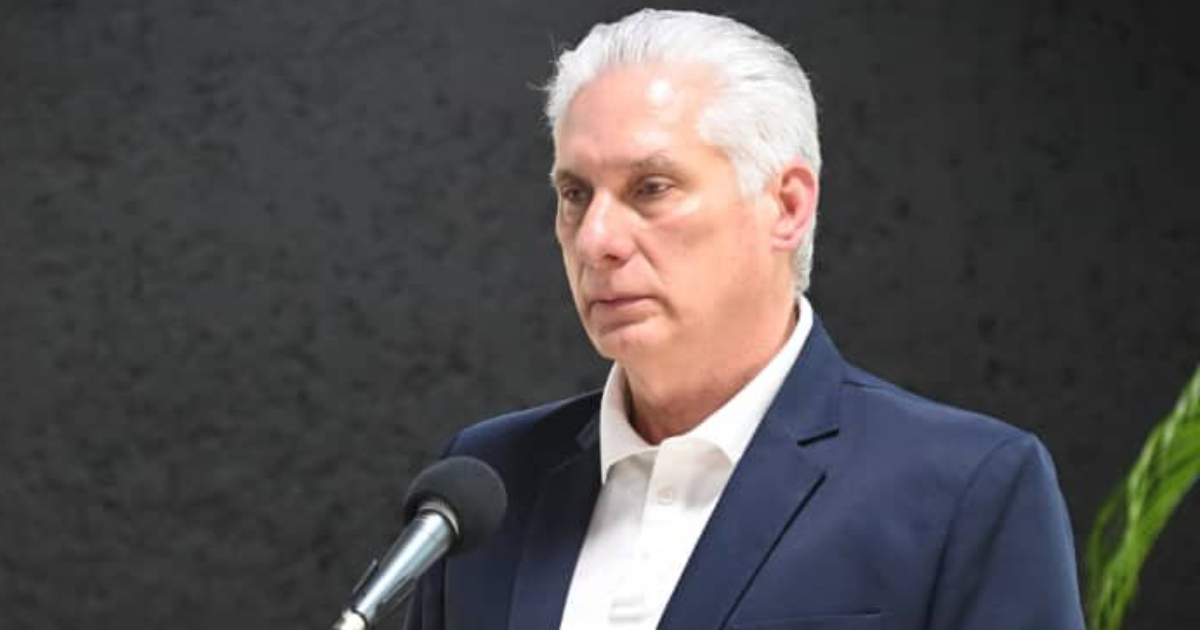
On Monday, Cuban leader Miguel Díaz-Canel declared that the government will not yield to the nation’s ongoing crisis. This statement was made during a meeting in Havana with international ecumenical organization leaders visiting the island.
“The principle we have shared and defended is that we will not surrender,” Díaz-Canel asserted at the exchange, held at the Palace of the Conventions during the Holy Week period.
The session included religious representatives who, according to official information, represent about 600 million Christians across roughly 120 countries. The delegation was hosted by the Council of Churches of Cuba and the Presbyterian Reformed Church.
Díaz-Canel expressed gratitude for the visit, interpreting it as a sign of international support amid the country’s internal challenges. “We deeply appreciate and attach great significance to your visit. It reaffirms that Cuba is not alone at a time like this and also confirms your historic relationship with the Church and the Cuban people,” he stated at the meeting, which was also shared in a video on social media.
During his speech, the Cuban leader once again blamed the United States for the island’s crisis, aligning with the official narrative that attributes economic hardships to the embargo.
“What we are experiencing is a cumulative process of 67 years of blockade,” he claimed, as reported by the official website of the Cuban Presidency regarding the meeting with ecumenical leaders. He denounced what he described as a sustained policy of pressure against the country.
Additionally, he emphasized that the current situation is a result of an “economic war imposed by the empire,” asserting that there is “collective punishment against the Cuban people.”
Díaz-Canel urged the religious leaders to convey this perspective globally. “What we ask of you, our visitors, is that with awareness and the sensitivity you have shown towards Cuba, you can explain the harshness of this situation. It is a punishment, a violation of the human rights of Cubans, and it deprives a generous, hardworking, and supportive people of the most basic necessities to live peacefully,” he stated.
This meeting occurred amid a severe economic crisis in Cuba, characterized by shortages of food, medicine, and fuel, as well as prolonged blackouts impacting much of the population—a situation the government has highlighted in recent exchanges with international and religious figures.
In recent months, the energy situation has worsened due to reduced oil shipments from Venezuela, exacerbating difficulties in electricity generation and increasing service interruptions.
Despite these circumstances, the official discourse remains focused on resilience and denouncing U.S. sanctions as the primary cause of the crisis—a stance Díaz-Canel reiterated to the international religious leaders.
Understanding Cuba's Current Crisis
What is Miguel Díaz-Canel's stance on Cuba's crisis?
Miguel Díaz-Canel has vowed that the Cuban government will not surrender to the ongoing crisis, emphasizing resistance and blaming U.S. sanctions for the country's difficulties.
How does the Cuban government explain the current economic situation?
The Cuban government attributes the economic hardships to a long-standing U.S. embargo, describing the situation as an "economic war" and blaming external pressures for the crisis.
What role do international religious leaders play in this context?
International religious leaders are seen as potential advocates who can convey Cuba's perspective on the crisis to the wider world, emphasizing the impact of external sanctions on the Cuban people.
What are some of the challenges faced by the Cuban population?
The Cuban population is currently facing shortages of essential goods such as food and medicine, fuel scarcity, and extended power outages, all of which contribute to the overall economic crisis.