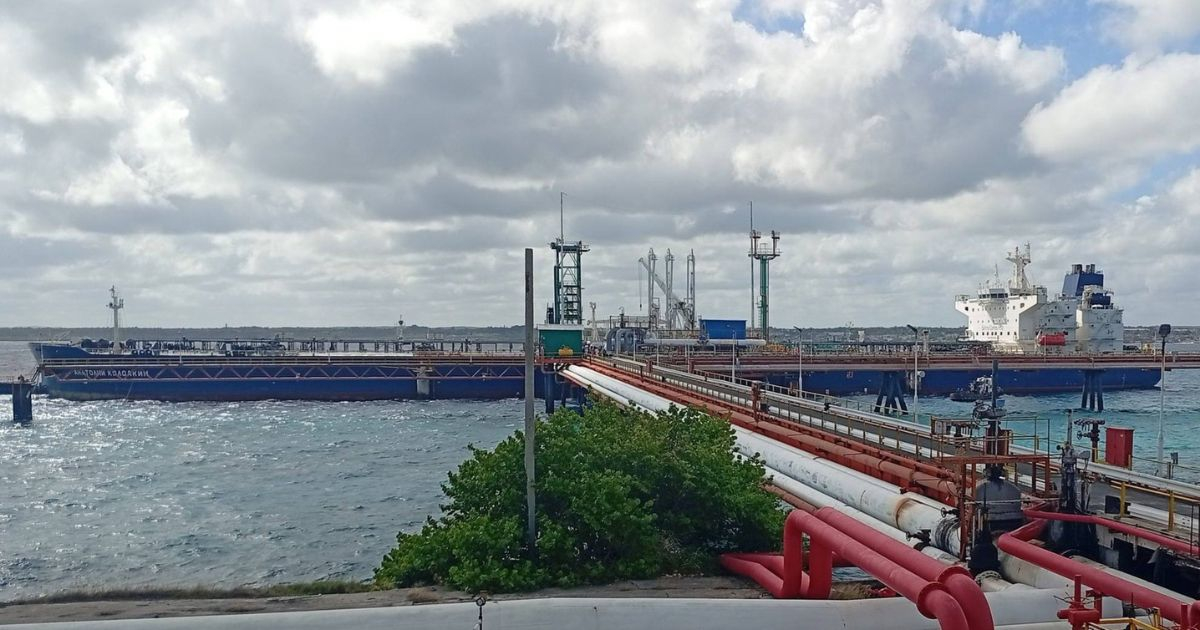
The state-owned company, Cuba Petróleo (CUPET), has outlined its plan for distributing the Russian fuel recently delivered to the island, a crucial development as Cuba grapples with a severe energy crisis.
Irenaldo Pérez Cardozo, CUPET's deputy director, announced the distribution strategy, explaining that the crude oil will be refined to produce various derivatives meant for sectors deemed high priority.
The allocation plan reveals that a portion of the fuel will support distributed electricity generation and maintain essential economic activities. This comes at a time when the country is experiencing widespread and prolonged power outages.
Additionally, some of the fuel will be used to produce fuel oil for electric barges and power plants, particularly those in Mariel and Moa, which are vital to the national power grid.
The plan also includes generating liquefied petroleum gas to ensure the preparation of food in critical facilities such as hospitals and residential centers.
CUPET has also mentioned that a certain amount of gasoline will be produced to ease demand, although specific volumes and the actual impact of this measure remain unspecified.
According to official data released earlier, Russia sent 100,000 metric tons of crude oil to Cuba. This supply will be processed in Cuban refineries and is seen by the government as a temporary relief to the nation's complex energy situation.
The arrival of this shipment comes during a widespread fuel shortage affecting transportation, electricity generation, and daily life, a crisis that has worsened in recent months.
Interestingly, The New York Times interpreted the arrival of the shipment as an indication that the Trump administration might be "easing" its effective blockade on oil supplies to Cuba. This perception followed the U.S. Coast Guard's permission for the Anatoli Kolodkin tanker to dock at Matanzas port, carrying about 730,000 barrels of crude oil (approximately 100,000 metric tons).
Key Details on Russian Fuel Shipment to Cuba
How will the Russian fuel be used in Cuba?
The Russian fuel will be refined into various derivatives for priority sectors, supporting electricity generation, economic activities, and the production of liquefied petroleum gas for critical facilities.
What is the significance of the fuel shipment in the current crisis?
The shipment provides temporary relief to Cuba's energy crisis, helping to alleviate widespread fuel shortages affecting transportation, power generation, and daily life.
What did The New York Times say about the shipment?
The New York Times suggested that the shipment might indicate the Trump administration's softening stance on the oil blockade, following the U.S. Coast Guard's permission for the tanker to dock in Cuba.