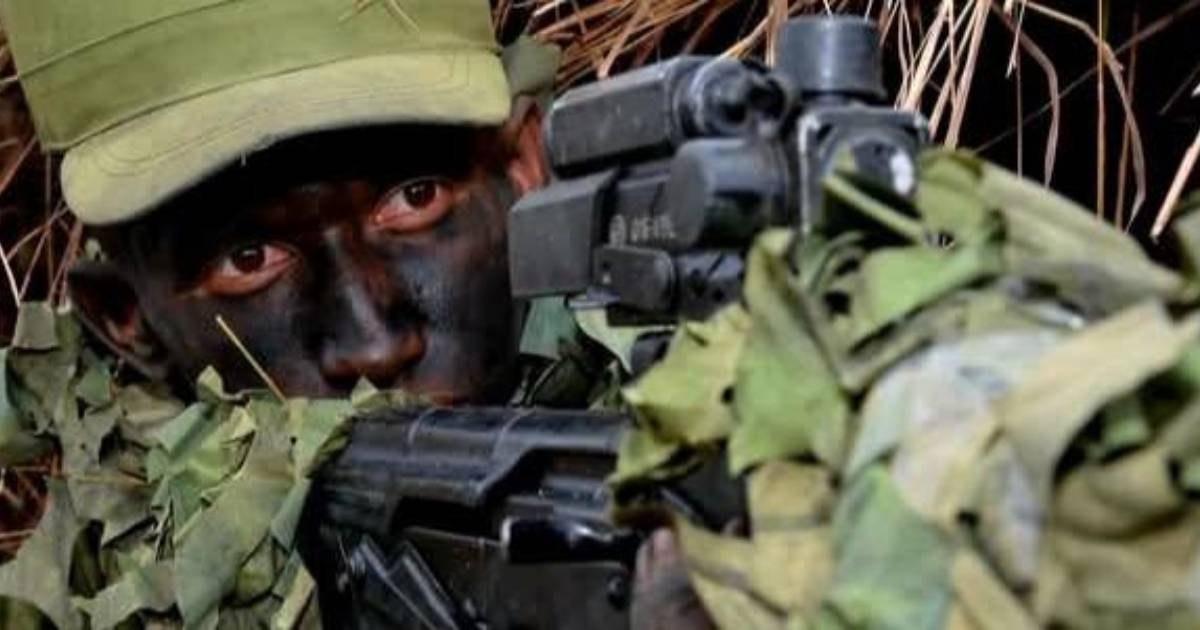
The Cuban regime's military rhetoric is becoming increasingly aggressive, now targeting one of society's most sensitive issues: children.
Recent social media posts from Cuba's Central Army declare that in the event of a conflict, "the vast majority of Cubans—women, men, the elderly, and even children—will not shirk their duty to the Nation." This message has raised alarms due to the implications of its rhetoric.
Loaded with historical references and political slogans, the statement emphasizes that the current generation must be prepared to "defend the Revolution with weapons" if necessary, especially during the centennial celebration of dictator Fidel Castro's birth.
This is not an isolated incident. Other military branches have echoed this aggressive tone. The Central Army reiterated that "there will be no reprieve in our duty," insisting that those who believe in the Revolution—"women, men, the elderly, youth, and even children"—are ready to defend it. Meanwhile, the Eastern Army appealed to ideological continuity, asserting that new generations will uphold "the ideas of the Commander in Chief."
Escalating Tensions and the Involvement of Children
The emphasis on involving minors in a potential military conflict comes amidst escalating rhetoric that has already caused concern among Cubans.
Days earlier, the Ministry of the Revolutionary Armed Forces (MINFAR) issued a blatantly threatening message, stating that any enemy could "fly with a mine" or be annihilated in ambushes. This was corroborated by Deputy Foreign Minister Carlos Fernández de Cossío, who confirmed that the country is preparing for the possibility—though not likelihood—of military aggression from the United States.
Simultaneously, the regime has ramped up military training within the country. Since January, exercises like the so-called University Bastion have included rifle drills, mine placements, and combat maneuvers, involving not only university students but also school-aged children, under the concept of "people's war."
The Human Cost Amid Economic Crisis
This shift towards militarization occurs during a particularly delicate time for the population. Cuba is enduring a severe economic crisis, characterized by power outages, shortages, and massive migration that has torn families apart.
For many Cubans, the issue transcends politics and becomes profoundly human. The thought of children and young people being drawn into a military confrontation deeply worries parents already grappling with daily uncertainty both on and off the island.
While the official discourse emphasizes defense and sovereignty, there is growing concern about the real cost this call to arms might have on a generation already deeply affected by crisis and exodus.
Key Concerns About Military Involvement of Cuban Youth
What is the Cuban Central Army's stance on citizens' involvement in conflict?
The Cuban Central Army has stated that the majority of Cubans, including women, men, the elderly, and children, should be prepared to fulfill their duty to the nation in the event of a conflict.
How has the militarization affected Cuban society?
The increased militarization has raised concerns among Cubans, particularly due to the involvement of minors, and comes at a time of severe economic crisis, leading to greater uncertainty and fear among families.
What preparations has the Cuban regime made for a potential conflict?
The regime has intensified military training, including exercises like the University Bastion, which involves students and school-aged children in combat training under the concept of "people's war."