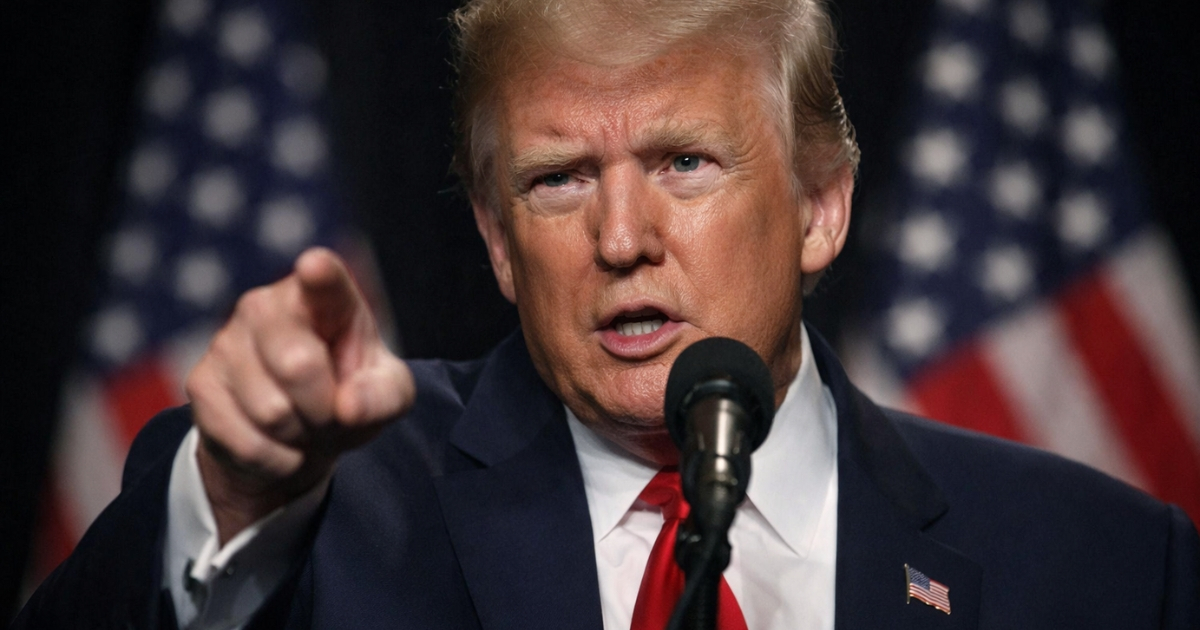
On Monday, Donald Trump once again made headlines with his remarks about Cuba. He described the nation as a "disaster" and a "failed country" that is on the brink of collapse. Trump emphasized that the United States will be ready to assist the Cuban-American community. This statement represents the most direct escalation in a series of comments he has made throughout March. Here are five key points to grasp what his words mean and what might unfold next.
Trump's Direct Remarks on Cuba
When questioned by a reporter, Trump did not hesitate to label Cuba as a "disaster" and a "failed country," predicting its imminent failure. He expressed a commitment to support "our great Cuban-Americans" and noted the suffering inflicted by the Castro regime on their families. His comments left little room for interpretation.
The Implication of "Cuba is Next"
Trump has used the phrase "Cuba is next" before. On March 28, at the FII Priority Summit in Miami, he mentioned Cuba following discussions on Venezuela and Iran, jokingly asking the media to "pretend I didn't say that." Earlier, on March 16, at the White House, he declared he would be "honored to take Cuba." According to Bloomberg, the strategy involves establishing an economic protectorate through energy isolation and a controlled transition, rather than a military invasion.
The Trump Administration's Actions Against Cuba
The pressure on Cuba has been tangible and escalating. On January 3, Delta Force captured Nicolás Maduro in Caracas, severing Venezuela's oil supply to Cuba, which accounted for 80-90% of its imports. Mexico halted its shipments on January 9 under tariff threats. On January 29, Trump signed Executive Order 14380, designating Cuba as an extraordinary threat and imposing tariffs on countries supplying it with oil. The Coast Guard has intercepted at least seven tankers. Since January 2025, over 240 sanctions have been imposed on Cuba by the administration.
Cuba's Severe Energy Crisis
The island faces a dire energy situation. On March 25, the peak nighttime electricity generation deficit hit 1,885 megawatts, with only 1,145 MW available against a demand of 3,000 MW. Blackouts affect between 50% and 64% of the country. Satellite images reveal a 50% reduction in nighttime light intensity in Cuban cities compared to historical levels. The economy has shrunk by 23% since 2019, with a further -7.2% contraction projected for 2026. Protests erupted on March 7 across Havana and other regions.
Democratic Response in Congress
On March 27, 14 Democratic congress members, led by Gregory Meeks and Pramila Jayapal, introduced the Preventing Unconstitutional War in Cuba Act, aiming to restrict the executive branch's military actions without Congress's approval. Meanwhile, over 8,000 Cuban-Americans gathered in Hialeah to support Trump's stance against the Cuban regime.
Reports indicate secret negotiations, spearheaded by Marco Rubio, are underway to reach an economic agreement with parts of the Cuban government. Senator Ted Cruz has predicted changes in Cuba within six months. Despite external pressures, human rights organizations report 1,214 political prisoners in Cuba, highlighting the ongoing internal repression.
Key Insights into Trump's Stance on Cuba
What are Trump's recent comments about Cuba?
Trump described Cuba as a "disaster" and "failed country," predicting its imminent collapse and pledging support to Cuban-Americans.
What is the significance of the phrase "Cuba is next"?
The phrase indicates Trump's intention to focus on Cuba following actions in Venezuela and Iran, possibly through economic isolation and transition rather than military intervention.
How has the Trump administration increased pressure on Cuba?
The administration has cut off Venezuela's oil supply to Cuba, imposed sanctions, and intercepted oil shipments, significantly impacting Cuba's energy resources.
What actions have Democrats in Congress taken regarding Cuba?
Democrats introduced legislation to limit the president's ability to engage militarily in Cuba without Congressional approval, while many Cuban-Americans support Trump's policies.