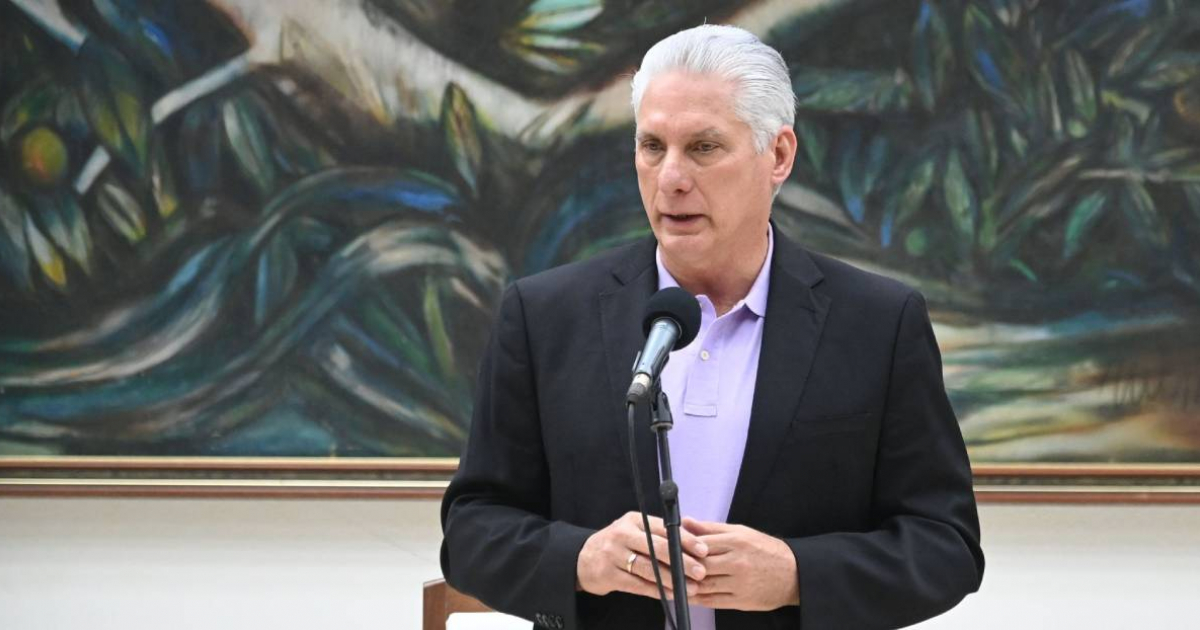
During the 11th National Defense Day, Cuban leader Miguel Díaz-Canel visited the Antonio Guiteras area in East Havana and emphasized "the need to harness all the potential of the municipality."
He specifically mentioned food production and the critical need to secure cooking materials, ranging "from charcoal to wood."
The Repeated Call for Wood Cooking
This call is neither new nor accidental. The leader's stark statement highlights the severe energy and economic collapse facing Cuba in 2026. Díaz-Canel made a similar appeal for cooking with wood almost verbatim on May 22, 2025, during a visit to the municipalities of Manicaragua and Cifuentes in Villa Clara.
This repetition underscores the lack of progress from the previous year and the ongoing absence of solutions to the crisis.
Severe Power Deficit
On March 14, 2026, the electrical deficit reached 2,040 megawatts, with the system providing only 1,000 MW against a demand exceeding 3,000 MW. On March 7, the shortage peaked at 2,046 MW, leading to protests in Havana and Matanzas, where residents endured up to 24 hours without electricity.
Frequent Nationwide Blackouts
Between October 2024 and March 2026, Cuba experienced at least six total nationwide blackouts: October 2024, November 2024 (due to Hurricane Rafael), December 2024, March 2025, September 2025, and twice in the week of March 16-22, 2026.
Nine out of the 16 thermoelectric units in the country are non-operational due to obsolescence and lack of maintenance.
The 29-Hour Blackout
The blackout that began on March 16 lasted approximately 29 and a half hours, impacting 62% of the territory at its peak. On March 22, a new total collapse of the national electrical system occurred at 6:38 PM, caused by a failure in Unit 6 of the Nuevitas thermoelectric plant in Camagüey, leading to a cascading effect.
Loss of Venezuelan and Mexican Oil
Cuba produces about 40,000 barrels of oil daily but needs over 110,000 to meet its demands. Venezuela, which once supplied 60,000 barrels daily, halted shipments after Nicolás Maduro's capture on January 3, 2026.
Mexico, the primary supplier, also ceased its deliveries of approximately 17,200 barrels daily in February 2026 under pressure from Executive Order 14380 signed by Donald Trump on January 29, 2026. For the first time in a decade, oil imports hit zero in January 2026.
Economic Downturn
The Economist Intelligence Unit forecasts a 7.2% contraction in Cuba's GDP for 2026. The economy had already shrunk by 5% in 2025, marking the third consecutive year of decline, accumulating a drop of more than 15% since 2020.
In 2025, Cuba and Haiti were the only Latin American countries experiencing a contraction, while the regional average saw a growth of 2.4%.
Water Shortages in East Havana
In the same municipality Díaz-Canel visited, water supply is a "major issue" for residents. Maikel Pérez Valdés, president of the Municipal Defense Council, admitted to Díaz-Canel that the service is "greatly reduced" due to power outages that halt the pumps of the three main pipelines supplying the area.
Experts estimate that the full recovery of Cuba's electrical system would require between 8 to 10 billion dollars, a sum far beyond the island's economic reach.
Understanding Cuba's Energy and Economic Challenges
Why is Díaz-Canel emphasizing cooking with wood?
Díaz-Canel's emphasis on cooking with wood highlights the severe energy shortages and economic challenges Cuba faces, which force citizens to rely on alternative cooking methods.
What is causing the frequent blackouts in Cuba?
The frequent blackouts are due to obsolete and poorly maintained thermoelectric units, along with a significant power deficit that fails to meet the country's energy demands.
How has the cessation of oil imports affected Cuba?
The cessation of oil imports from Venezuela and Mexico has exacerbated Cuba's energy crisis, leaving the country unable to meet its oil demands and contributing to widespread power outages.