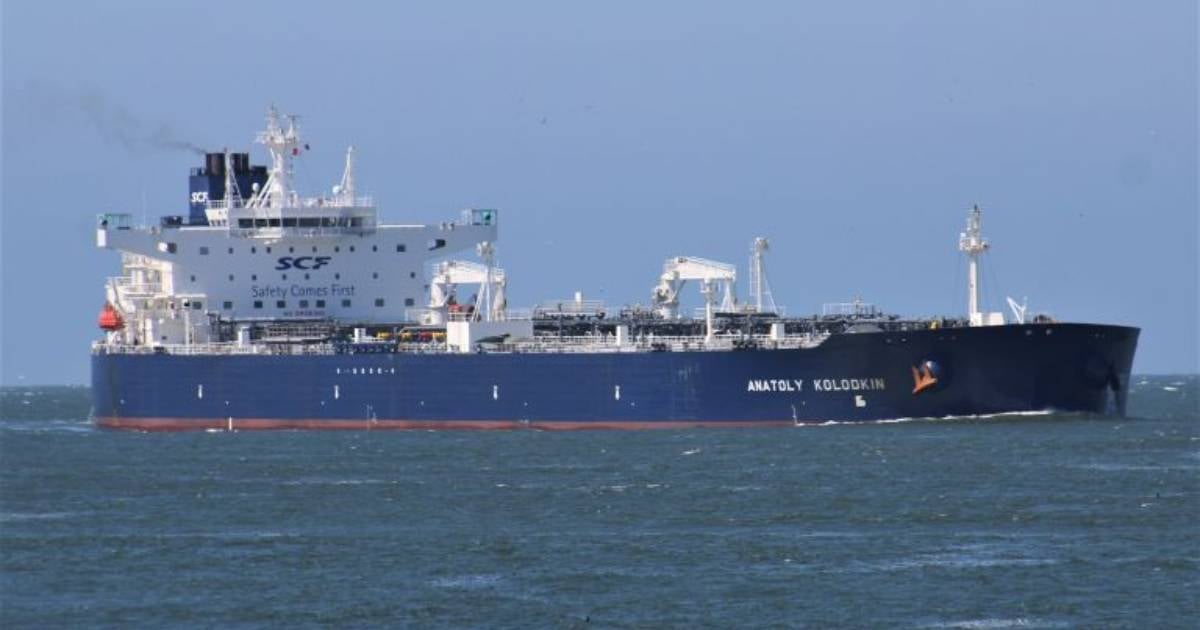
The Russian tanker Anatoly Kolodkin, loaded with 730,000 barrels of crude oil and under sanctions from the United States, the European Union, and the United Kingdom, was located north of Haiti on Sunday, heading towards the port of Matanzas. It is expected to dock in western Cuba this Monday.
According to AFP, the ship, owned by the Russian state shipping company Sovcomflot, departed from the Baltic port of Primorsk on March 8, allegedly declaring Atlantis, USA as its destination falsely, as reported by maritime analytics firm Kpler.
The tanker was escorted by a Russian Navy vessel through the English Channel, but they parted ways once the tanker reached the Atlantic Ocean, as noted by the British Royal Navy.
This shipment marks the first significant delivery of fuel to Cuba in over three months, amidst an unprecedented energy crisis that the regime of Miguel Díaz-Canel has failed to resolve.
Since January 9, 2026, the island has been without stable oil supplies: Venezuela ceased shipments following the capture of President Nicolás Maduro by U.S. forces, and Mexico halted Pemex shipments due to threats of sanctions from Washington.
In March, Cuba faced an electric deficit ranging from 1,700 to 2,040 megawatts daily, with blackouts lasting over 30 hours. On March 16, only 1,140 megawatts were available against a demand of 2,347 megawatts.
Bloomberg's satellite images showed a 50% drop in nighttime electricity consumption in Cuban cities, and Cuban deputy minister Argelio Abad Vigoa described the situation as the "most complex" scenario for the National Electro-energy System.
Consequently, Díaz-Canel has enforced emergency measures, including strict gasoline rationing. Fuel prices have soared, public transport has been significantly reduced, and some airlines have suspended flights to the island.
The U.S. has responded with a strategy of direct pressure. On March 12, the Office of Foreign Assets Control of the Treasury Department issued a license explicitly barring Cuba from receiving Russian oil.
Moreover, two Coast Guard cutters have been stationed off Cuba's northeast coast for possible interception, and the Southern Command has acknowledged tracking the Anatoly Kolodkin, although it estimates that its cargo would provide, at best, a two-week supply.
This pressure has already diverted other ships: the Ocean Mariner changed course in February, the Bella-1 was seized in January, and the Sea Horse redirected to Venezuela in late March with around 190,000 barrels of Russian diesel.
Former President Trump had threatened tariffs on any country shipping oil to Cuba and even suggested the possibility of "taking" the island. Russia, however, has called the Anatoly Kolodkin's shipment "humanitarian aid."
"We are providing and will continue to provide Cuba with the necessary support, including material aid."
Implications of Russian Oil Shipment to Cuba
Why is the Anatoly Kolodkin significant for Cuba?
The Anatoly Kolodkin is significant because it is the first major fuel delivery to Cuba in over three months, providing temporary relief amid an ongoing energy crisis.
What measures has the Cuban government taken in response to the energy crisis?
The Cuban government has implemented emergency measures like strict gasoline rationing, which have led to increased fuel prices and a reduction in public transportation services.
How has the United States responded to Cuban oil imports?
The United States has issued a license to prevent Cuba from receiving Russian oil and has positioned Coast Guard cutters to potentially intercept shipments.