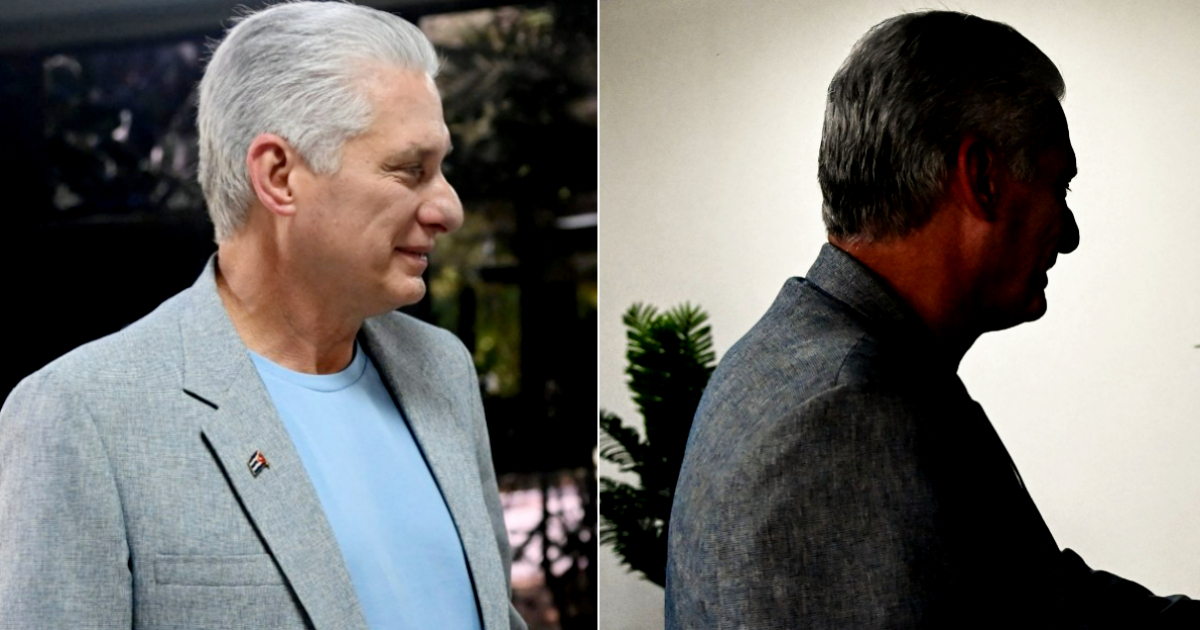
A recent statement by Miguel Díaz-Canel, claiming that "Washington doesn't decide if I stay or go," has sparked a heated debate on Facebook, as reported by CiberCuba. In just under a day, the post drew a massive response, highlighting the deep unrest among many Cubans and those familiar with the island's situation.
The comments section quickly became a battleground for criticisms aimed at the Cuban leader, demands for free elections, and challenges to the legitimacy of the country's political system. A recurring theme among readers was the assertion that neither Washington nor the Cuban people actually make the decisions, but rather the ruling elite.
Voices of Dissent and Calls for Change
Many comments echoed this sentiment: “Raúl decides,” “The Castros make the decisions,” “You don't rule, you were placed there,” and “Neither Washington nor the people: it's decided by those who appointed you.” These comments reveal a pervasive skepticism toward the official narrative that the appointed leader's continuity relies on citizen support.
Alongside these criticisms, there was a strong call for genuine electoral reform. Numerous users pointed out the irony in Díaz-Canel's references to the “people,” arguing that Cubans lack the freedom to choose their leaders. “It should be up to the Cubans in free elections,” one user insisted, while another stated plainly, “Let the people decide, but through voting, as in other countries.”
Economic Desperation Fuels Public Outcry
Amid the political demands, the ongoing economic crisis in Cuba was a significant factor in the public outcry. Many connected Díaz-Canel's tenure with the deteriorating living conditions in the country. “While you stay, the country falls apart,” lamented one user, a sentiment widely shared by others.
Comments further highlighted issues like “blackouts,” “poverty,” “lack of food,” and “desperation,” contrasting the government's rhetoric with the harsh realities faced by ordinary Cubans. “Don't speak for the people,” urged one commentator, while another noted, “The working people's life is misery.”
Sarcasm and Irony in Social Media Responses
In addition to serious critiques, the post attracted a wave of sarcastic remarks. Comparisons to Venezuelan leader Nicolás Maduro were frequent, with comments like “Just like Maduro said,” and “Maduro Season 2.” Some users joked about Díaz-Canel's potential ousting: “He won't leave, he'll be removed,” “That's already decided, you just don't know it,” and “Better leave before you're forced out.”
Even among those opposing foreign intervention, there was a consensus that a legitimate resolution to Díaz-Canel's leadership should involve a true popular vote. “Washington shouldn't decide, the Cuban people should,” summarized one comment, emphasizing a sharp contrast with the regime's stance.
Many interpreted Díaz-Canel's words as a sign of nervousness or weakness. “He's provoking to see who really decides,” suggested one user, while another added, “When a dog barks a lot, it's nervous.” These remarks imply that despite trying to project confidence, the leader's statements might betray underlying pressure and fear during a particularly tense period.
The discussion generated by the CiberCuba article—over 3,000 comments in less than a day—revealed a clear pattern: widespread rejection of Díaz-Canel, distrust in Cuban institutions, and a demand for the people's right to determine the nation's political future through free elections. The economic crisis has further shaped public perception of Díaz-Canel, with many attributing the worsening conditions in Cuba to his leadership.
This wave of responses confirmed that any comment by Díaz-Canel about his hold on power strikes a particularly sensitive chord with Cubans. The issue transcends mere rhetoric with the United States, touching on deeper questions of legitimacy, representation, and the exhaustion of a model that, according to many reacting on Facebook, no longer addresses the national crisis.
Understanding Cuban Political Dynamics and Public Sentiment
Why did Díaz-Canel's statement spark such a strong reaction?
Díaz-Canel's comment about Washington not deciding his fate touched on deep-seated frustrations among Cubans about their lack of political agency and the perceived illegitimacy of the government. It also coincided with severe economic hardships, amplifying public discontent.
What are the main criticisms against Díaz-Canel mentioned in the article?
Critics argue that Díaz-Canel lacks genuine electoral legitimacy and that his leadership is associated with worsening living conditions in Cuba. Many call for free, fair elections to allow the Cuban people to truly decide their leaders.
How do economic issues influence the public's perception of Díaz-Canel?
The economic crisis in Cuba, characterized by shortages and deteriorating living standards, is closely linked to Díaz-Canel's administration. Many citizens blame his leadership for the country's economic woes, intensifying calls for change.