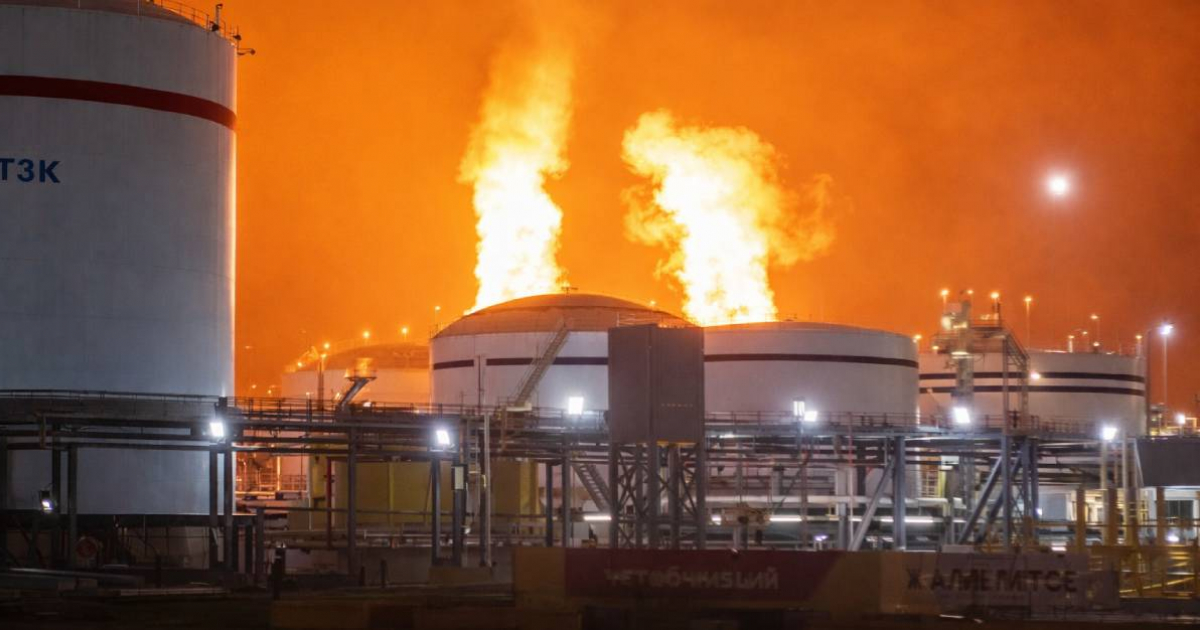
Recent assaults on Russian oil infrastructure have intensified stress on an already strained global energy market, with direct impacts on economically vulnerable nations such as Cuba.
For at least the past five days, Ukraine has targeted critical components of the Russian economy, particularly focusing on fuel resources. One significant attack occurred at the Ust-Luga port, igniting a facility responsible for gas processing and petroleum product exports.
According to Oilprice, disruptions at key Baltic Sea ports, alongside other tensions in strategic international routes, have substantially decreased the global oil supply.
In this environment, the price of Brent crude has surged past $100, increasing import expenses for dependent countries. Cuba, with limited financial capacity and heavy reliance on external energy sources, is among the hardest hit.
While Russia continues to profit from rising prices, the reduced availability of crude oil hinders access for partners like Havana, who struggle to compete in the international market. Given the current circumstances, it's unlikely they can support the island with fuel shipments.
Cuba Caught in International Tensions
The situation is further complicated by the presence of U.S. ships north of Cuba, coinciding with the Russian oil tanker Anatoly Kolodkin's journey toward the Caribbean.
Washington's firm stance against the supply of Russian oil to Havana adds a geopolitical layer to Cuba's energy crisis.
The active monitoring of regional maritime traffic underscores the delicate nature of the moment, where any movement could exacerbate tensions between the United States and Russia.
Amidst this scenario, Cuba finds itself ensnared in a global standoff, which limits its options and deepens its internal crisis, characterized by blackouts, shortages, and growing social unrest.
FAQs on the Impact of Russian Oil Port Strikes on Cuba
How do the strikes on Russian oil ports affect Cuba?
The strikes have reduced the availability of crude oil, making it difficult for Cuba to secure affordable fuel, thus exacerbating its energy crisis.
Why is Cuba particularly vulnerable to these disruptions?
Cuba's vulnerability stems from its limited financial resources and heavy reliance on external energy imports, which are now harder to obtain due to global supply constraints.
What is the geopolitical context of the situation?
The geopolitical tension involves U.S. opposition to Russian oil supplies reaching Cuba, adding complexity to the island's energy challenges.