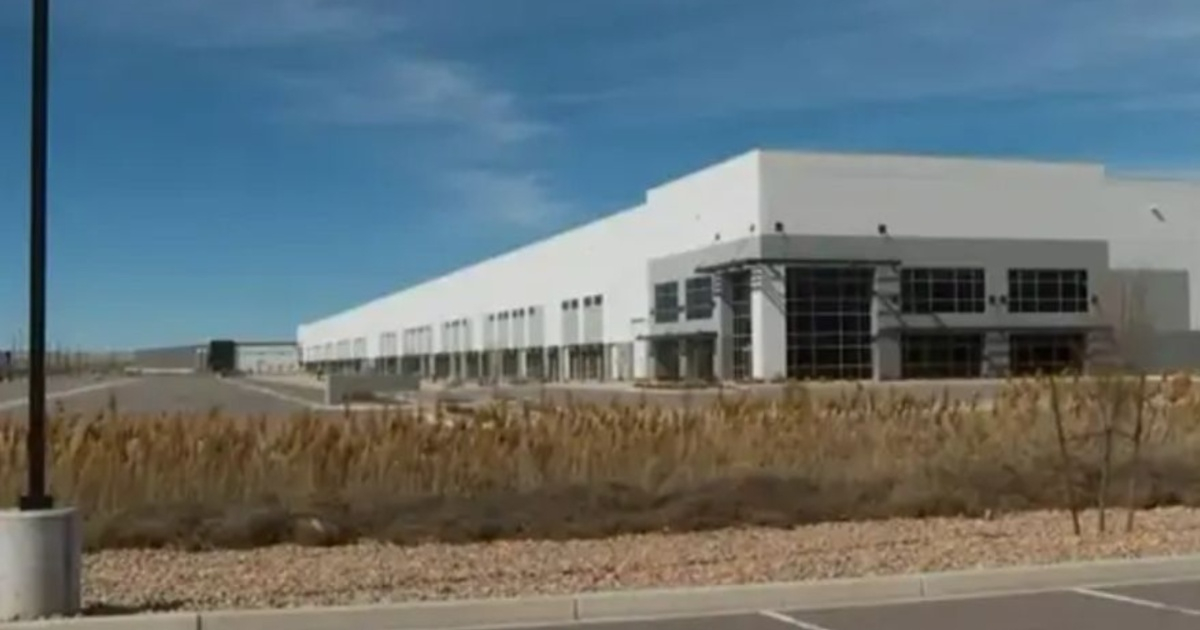
The U.S. Department of Homeland Security (DHS) is transforming vacant commercial warehouses across the nation into Immigration and Customs Enforcement (ICE) detention centers, as part of a $38.3 billion initiative approved in July 2025. This move has sparked criticism, with detractors labeling them as "human warehouses" that lack adequate protections for detainees.
A report by The Wall Street Journal highlights that this strategy is funded by the One Big Beautiful Bill Act, allocating $45 billion for immigration detention. This significantly boosts ICE's annual budget, ensuring its operational funds through 2029.
The “Hub and Spoke” Model
The plan involves acquiring and converting 24 warehouses: 16 regional processing centers and eight massive "mega centers," each capable of holding up to 10,000 detainees. These facilities will operate under a "Hub and Spoke" model, where smaller centers feed into larger, centralized ones.
The goal is to consolidate the number of detention facilities from roughly 300 to just 34 by the close of the 2026 fiscal year.
Notable Acquisitions
One notable purchase includes a warehouse exceeding 833,000 square feet near Salt Lake City Airport, bought for $145 million on March 11. This marks ICE's first dedicated detention center in Utah, projected to create nearly 10,000 jobs in the area.
In January 2026, DHS acquired another warehouse spanning 400,000 square feet in Surprise, Arizona, for $70 million. They awarded a $313 million contract to GardaWorld Federal Services for its renovation and operation, with a capacity for up to 1,500 migrants. Internal documents suggest a partial opening for 250 individuals by late May, with full operation expected by September.
In February 2026, DHS purchased a one million square foot warehouse in Social Circle, Georgia, for $128.6 million, intended to house between 7,500 and 10,000 detainees. This acquisition has met with resistance from the small town of less than 5,500 residents.
Community and Political Backlash
Local authorities in Social Circle have obstructed the warehouse's water service, stating that "water and sewer services will not be available" until ICE addresses infrastructure issues. The city projects that necessary infrastructure upgrades would cost $44 million and require at least 28 months to complete.
The expansion has encountered significant community and political opposition in various states. Erin Mendenhall, the mayor of Salt Lake City, vowed to employ "every tool at the city's disposal" to prevent the facility's establishment.
Utah State Senator Luz Escamilla and Representative Angela Romero were more blunt, asserting, "An ICE detention center has no place in our state."
In Surprise, Arizona, over 100 residents protested during a five-hour City Council meeting, with one protester describing the project as a "human warehouse." Meanwhile, a similar deal in Virginia fell through due to public pressure on the seller.
ICE Detention Capacity Surge
ICE's detention capacity soared from fewer than 40,000 people in January 2025 to over 70,000 by early 2026, marking a record high, with a target of exceeding 100,000 beds.
Prior to February 2025, ICE owned only 10 of the 220 facilities it used for detention purposes. Existing centers have faced serious allegations, including 24-hour lighting, contaminated food, and inadequate medical care. In 2025, 32 individuals died in ICE custody, the highest in two decades, and the first months of 2026 already saw six additional deaths and two fatal shootings involving agents.
Questions About ICE's New Detention Centers
What is the purpose of ICE's new "mega centers"?
The "mega centers" are designed to centralize and increase ICE's detention capacity, with each facility capable of holding up to 10,000 detainees.
How have communities responded to these new detention centers?
Many communities have strongly opposed the centers, citing concerns over infrastructure, local impact, and moral objections to the concept of "human warehouses."
What issues have been reported at existing ICE detention facilities?
Existing facilities have faced accusations of poor conditions, such as constant lighting, food contamination, lack of medical care, and deaths in custody.