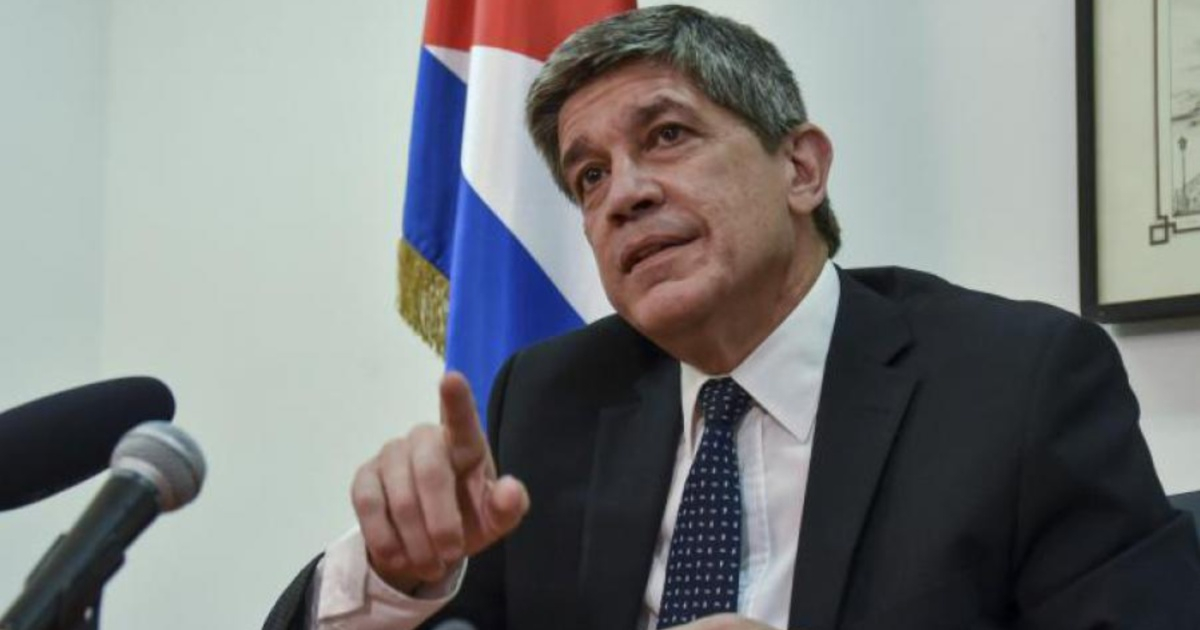
On Friday, Carlos Fernández de Cossío, the Cuban Deputy Foreign Minister, issued a direct rhetorical challenge to the United States government via his account on X, questioning the rationale behind the embargo that has been in place for nearly seventy years.
His statement came in response to comments made by Secretary of State Marco Rubio. On the same day, speaking from Paris after a G7 meeting, Rubio described the Cuban government as "incompetent" and "communist," demanding a complete overhaul of the regime, political system, and economic model.
"The U.S. government has yet to clarify why they have needed almost seven decades of brutal economic warfare and apply it so ruthlessly in their endeavor to undermine a government they already deem incompetent and ineffective. Why not allow it to fail on its own?" Cossío wrote on his social media profile.
In Paris, Rubio had declared that Cuba's government system must change and that Cubans' success lies outside their country. He dismissed any economic agreement without structural political transformation, insisting on "new people in charge."
Cossío's tweet cleverly turns Rubio's words—calling the Cuban government "incompetent"—back as an argument: if Washington already assumes the regime's failure, what's the purpose of the embargo?
Background of Bilateral Tensions
This exchange occurs amid high bilateral tensions, with confirmed negotiations between the two nations since mid-March.
On March 13, Díaz-Canel publicly acknowledged talks with the Trump administration, led by Raúl Castro "at the highest level," following weeks of denials.
Nonetheless, the regime has set immovable red lines. In a press conference, Cossío emphatically stated that Cuba's political system is not up for negotiation, nor is the president or any government position, with the United States or any other country.
Last week, on NBC's Meet the Press, Cossío also asserted that Cuba would not accept becoming a vassal or dependent state of any other country. He confirmed that the Cuban military is preparing for a potential U.S. military aggression.
During the same program, the deputy minister acknowledged for the first time the existence of political prisoners in Cuba, though he labeled it as a "non-negotiable internal matter."
Economic Crisis Behind the Scenes
The backdrop is Cuba's worst economic crisis in decades: a 23% GDP drop since 2019, power outages lasting between twenty and twenty-five hours daily, and widespread shortages of food, medicine, and fuel.
The Trump administration has enacted over 240 sanctions since 2025, including a January 29, 2026 decree that enforced an extraterritorial boycott on Cuban oil, cutting off supplies from Venezuela and Iran.
Trump branded Cuba a failed nation from the White House. Rubio, meanwhile, was unequivocal on Friday, stating that any report on Cuba not originating from him or the president is false, making it clear that Washington will not recognize any agreement that does not involve a complete political change on the island.
U.S.-Cuba Relations and the Embargo
What is the main argument posed by Carlos Fernández de Cossío?
Carlos Fernández de Cossío questions the logic behind the U.S. embargo on Cuba, suggesting that if the Cuban government is already deemed incompetent, the embargo is unnecessary and the government should be allowed to fail on its own.
What recent actions have escalated tensions between the U.S. and Cuba?
Recent actions include the Trump administration's imposition of over 240 sanctions and a decree enforcing an extraterritorial boycott on Cuban oil, alongside public statements from U.S. officials demanding political change in Cuba.
How has the Cuban government responded to U.S. demands for change?
The Cuban government has categorically rejected negotiations on its political system or leadership, maintaining that these matters are non-negotiable with the United States or any other nation.
What is the current economic situation in Cuba?
Cuba is experiencing its worst economic crisis in decades, with a 23% decrease in GDP since 2019, extensive power outages, and significant shortages of essential goods like food and medicine.