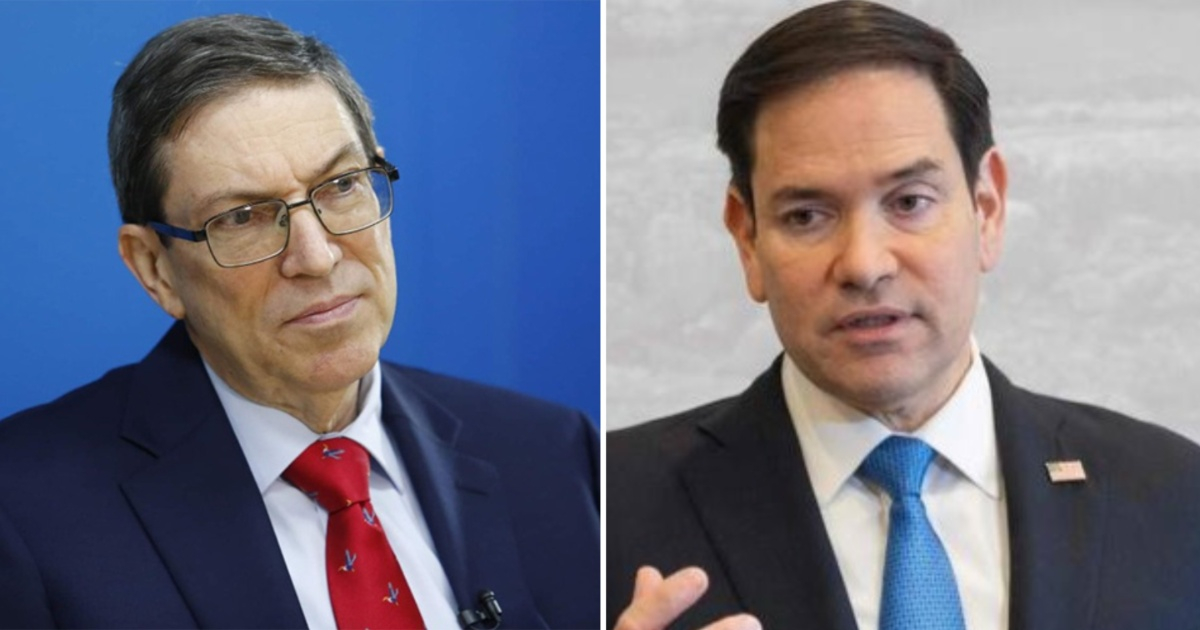
Cuba's Foreign Minister, Bruno Rodríguez Parrilla, lashed out at the United States government on Saturday, accusing it of deceitful lies concerning the island's ongoing energy crisis.
In a post on X, Rodríguez indirectly addressed comments made by Secretary of State Marco Rubio in Paris, never mentioning him by name. He claimed that U.S. statements in Europe are designed to create confusion and argued that Washington contradicts its own policies by denying restrictions on fuel supplies to Cuba.
"A simple reading of the Executive Order from January 29 and subsequent Treasury Department regulations demonstrates the severe block on fuel supplies, intended to expand collective punishment on the Cuban people," Rodríguez stated.
The Cuban minister detailed that these U.S. measures include "threats of sanctions against third countries, foreign companies, and hostile actions against tanker ships," concluding his message with a stark single word in capital letters: "LIES".
Marco Rubio's Direct Rebuke
Notably absent from Rodríguez's remarks was any mention of Rubio by name. Rubio had made strong statements on Friday at Le Bourget Airport in Paris, following a G7 Foreign Ministers meeting, which prompted Rodríguez's response.
Rubio dismissed the Cuban regime's narrative, asserting, "There is no naval blockade around Cuba. The reason Cuba lacks oil and fuel is because they want it for free."
The Secretary of State attributed the crisis to Cuba's historical reliance on Soviet and Venezuelan subsidies, calling for systemic change: "Cuba's economy needs reform, and that can't happen without a change in their governing system. It's an absurd system. It's that simple."
Rubio also posed a rhetorical question: "Who will invest billions in a communist country ruled by incompetent communists?"
Energy Crisis and Diplomatic Tensions
Rubio's comments came a day after President Donald Trump declared at the FII Priority Summit in Miami that Cuba would be next on his administration's agenda, in reference to military actions in the Middle East, though he jokingly asked the media to disregard the statement.
This exchange is part of an unprecedented escalation of energy-related pressure that has been ongoing since January 2026, when Trump signed Executive Order 14380, declaring a national emergency and imposing tariffs on countries supplying oil to Cuba.
Although a court ruling forced the removal of these tariffs on February 20, the national emergency remained, along with maritime controls. The Coast Guard intercepted at least seven tankers linked to Venezuelan crude shipments to the island.
By mid-March, the Treasury Department updated a general license to explicitly ban Cuba from receiving Russian oil, affecting at least two vessels in transit.
The crisis has resulted in power outages lasting up to 25 hours a day in Cuba. Last Thursday, the UN launched a $94.1 million emergency humanitarian plan to secure fuel for critical services, warning of the risk of "loss of life."
On Friday, Trump confirmed that the U.S. is in talks with the Cuban regime and hinted at a potential agreement soon, though he added, "We're talking to Cuba, but we'll deal with Iran before Cuba."
Understanding the U.S.-Cuba Energy Crisis
What is causing the energy crisis in Cuba?
The energy crisis in Cuba is primarily attributed to the U.S. blocking fuel supplies through regulations and sanctions, along with Cuba's historical dependency on external subsidies.
How has the U.S. government responded to the situation?
The U.S. has maintained maritime controls and imposed sanctions on countries supplying oil to Cuba, insisting that systemic change is necessary for economic reform on the island.
What solutions are being proposed to resolve the crisis?
The UN has launched an emergency humanitarian plan to secure fuel for critical services in Cuba, while the U.S. is in discussions with the Cuban government for potential agreements.