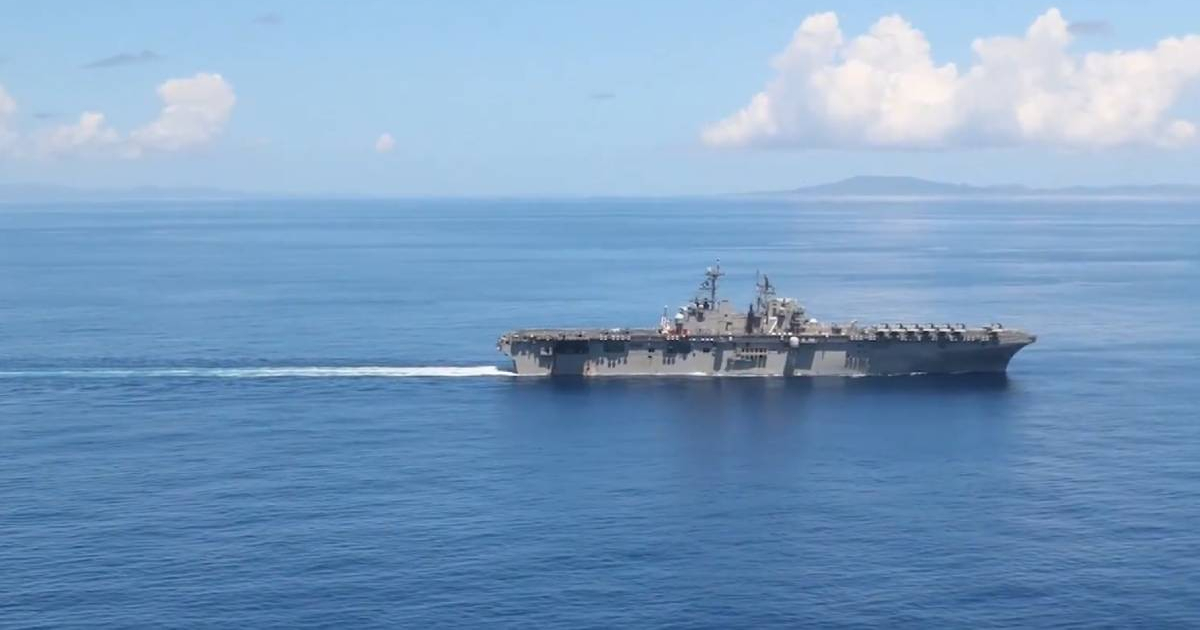
The presence of several U.S. warships in the northern waters near Cuba comes as the Russian oil tanker Anatoly Kolodkin heads towards the Caribbean, escalating geopolitical tensions in the region.
Maritime tracking data, shared by analyst Falcon on X, indicates that U.S. units are actively operating in strategic locations such as the Florida Straits, the Bahamas, and eastern Cuba.
One prominent vessel, the CG Tahoma, a Coast Guard ship, is navigating east of Florida at a speed of approximately 11.3 knots, making its way toward the Caribbean.
Additionally, the Richard Etheridge, another U.S. vessel, is noted south of the Florida Keys, along with a warship positioned north of the Bahamas moving at roughly 20.9 knots.
Further south, near the eastern coast of Cuba, the USAV Wilson Wharf is observed traveling at about 10.1 knots.
Strategic Naval Deployment amid Russian Oil Transport
This distribution of naval forces suggests a strategic deployment at key access points to the Caribbean, as Washington maintains a firm stance against the delivery of Russian oil to Cuba.
The movement of the Russian tanker Anatoly Kolodkin coincides with this deployment, as it continues its journey across the Atlantic towards the Caribbean.
Recent tracking shows the vessel heading on a course of 226° at a speed of approximately 13 knots, maintaining its trajectory toward the region.
Currently, the tanker is positioned east of the Antilles arc, still at a considerable distance but aligned with its planned route to the Caribbean. This movement follows the announcement of U.S. government restrictions prohibiting Russian crude shipments to Cuba.
While the U.S. naval presence does not necessarily indicate a direct action against the Russian vessel, it underscores active monitoring of maritime traffic in the area.
Intervening with a tanker in international waters could pose legal and diplomatic risks, especially given the heightened sensitivity between Washington and Moscow.
Impact on Cuba's Energy Crisis
Meanwhile, Cuba's energy crisis continues to worsen, with fuel shortages leading to prolonged blackouts and a sustained decline in daily life on the island, increasing pressure on the regime to secure supplies.
The potential arrival of the Anatoly Kolodkin might partially ease this shortage but would challenge U.S. sanction policies. The presence of U.S. ships in the area reinforces surveillance of any operations that might breach these restrictions.
This scenario once again highlights Cuba's energy dependency on external allies and the fragility of its system amid an international standoff, against the backdrop of the internal crisis facing its populace.
Key Questions on U.S. Naval Presence and Russian Tanker
Why are U.S. warships near Cuba?
The U.S. warships are positioned near Cuba as a strategic response to monitor maritime activity, especially with the approach of the Russian oil tanker Anatoly Kolodkin, amidst tensions over Russian oil deliveries to the island.
What is the significance of the Russian tanker Anatoly Kolodkin?
The Russian tanker Anatoly Kolodkin is significant as it represents a potential breach of U.S. sanctions against Russian oil shipments to Cuba, highlighting the geopolitical standoff between the U.S. and Russia.
How does this situation affect Cuba's energy crisis?
Cuba's energy crisis, characterized by fuel shortages and blackouts, could see temporary relief with the arrival of the Russian tanker, but it also tests the effectiveness of U.S. sanctions.