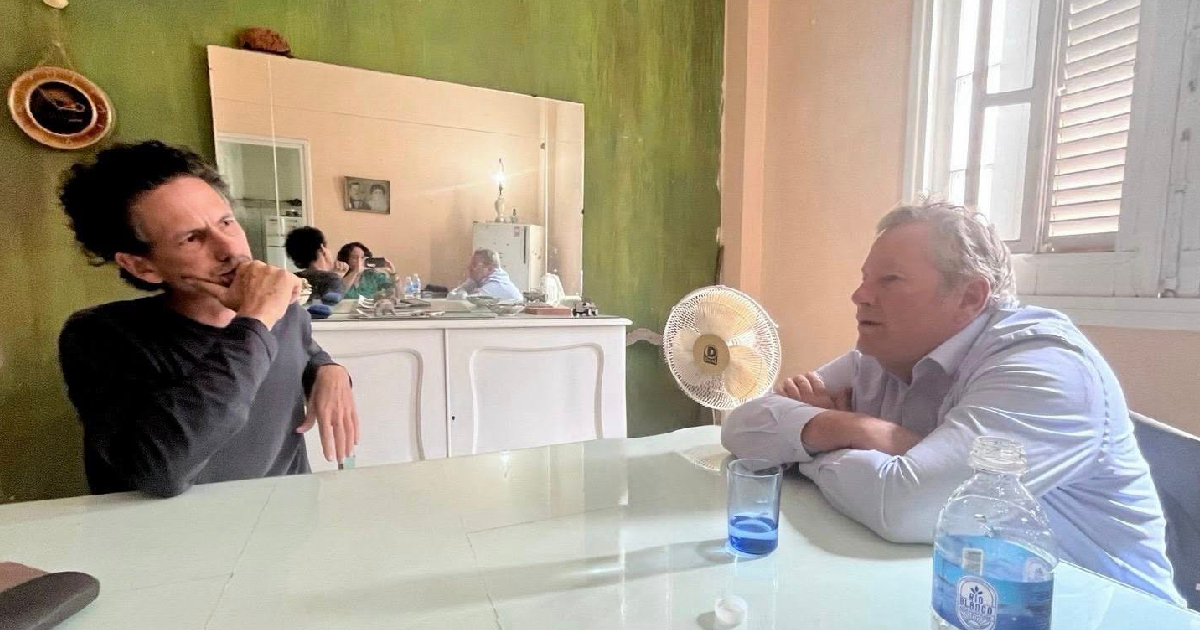
U.S. Chief of Mission in Cuba, Mike Hammer, recently held a meeting with independent journalist and dissident Boris González Arenas. This interaction comes shortly after the Cuban regime barred González Arenas from participating in an exchange program in the United States.
The U.S. Embassy in Havana announced that the meeting took place at the journalist's home, emphasizing its support for the Cuban people's right to free expression and genuine journalism on the island.
The embassy highlighted in its statement that "freedom of expression is a fundamental right" and underscored the necessity of "a free and independent press." Furthermore, it reiterated its commitment to backing those who "raise their voices in defense of justice and truth."
González Arenas described the visit as "a true pleasure" and praised the historical role of the United States as an ally of the Cuban nation during the "communist dictatorship." He also noted that the current U.S. administration appears to be taking a more assertive stance against the island's political system, showing determination to end it.
This meeting follows weeks after González Arenas, who is also a filmmaker, was prevented from leaving Cuba at the José Martí International Airport. Authorities cited a "travel impediment" without providing any further explanation, blocking his participation in an international program for journalists.
The encounter is part of a broader engagement strategy by Hammer, who has been meeting with various civil society actors in Cuba. These include independent journalists, activists, organization leaders, and ordinary citizens, amid ongoing reports of restrictions on freedom of expression and movement in the country.
Hammer's visits have included interactions with journalist Camila Acosta and her partner, writer and former political prisoner Ángel Santiesteban; editors of 14ymedio Yoani Sánchez and Reinaldo Escobar; and members of the Alliance of Evangelical Churches in Cuba. Additionally, the U.S. diplomat attended a mass at the Shrine of Our Lady of Regla in Havana, where he received an ovation from attendees.
This public support contrasts sharply with the hostile "acts of repudiation" reportedly organized by individuals linked to the government, against which U.S. authorities have responded.
The embassy's publication sparked numerous reactions on social media, where many users voiced their support for both the journalist and the diplomat, recognizing the significance of the meeting as a gesture in favor of critical voices in Cuba.
According to historian and political scientist Armando Chaguaceda, Boris González Arenas, who has consistently faced repression from the Cuban government, "is one of the most sophisticated, relevant, and valuable democratic intellectuals on the island" at present.
Key Questions About U.S. Engagement in Cuba
Why was Boris González Arenas prevented from traveling?
Authorities at the José Martí International Airport cited a "travel impediment" but did not provide any specific reasons for preventing González Arenas from leaving Cuba.
What is the significance of the U.S. Embassy's statement?
The U.S. Embassy's statement emphasizes the fundamental right to freedom of expression and the importance of a free press, signaling continued support for those advocating for justice and truth in Cuba.
How has the current U.S. administration's stance on Cuba changed?
The current U.S. administration is perceived to be taking a more assertive and firm stance against Cuba's political system, expressing a commitment to ending the regime's oppression.