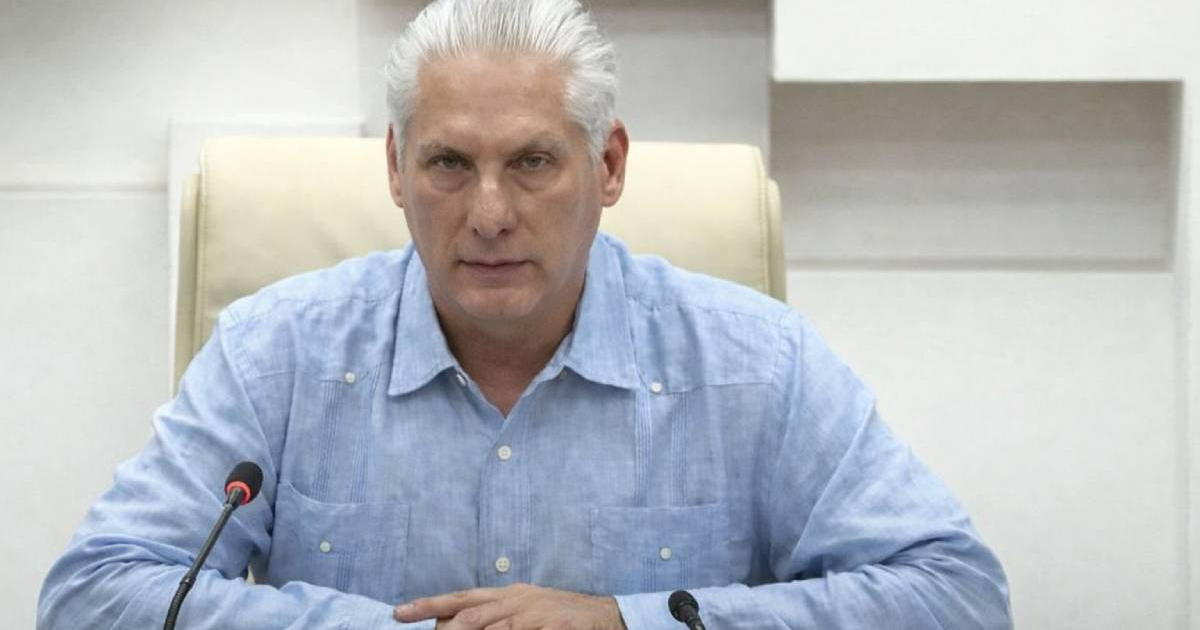
Miguel Díaz-Canel, the Cuban leader, has firmly dismissed the possibility of any alterations to Cuba's political framework, while emphasizing the government's efforts to modernize its economic system with unique, Cuban-specific elements.
In an exclusive conversation with Mexico's La Jornada newspaper, based in Havana, Díaz-Canel highlighted that the ongoing reforms do not equate to a political opening similar to those seen in other socialist nations.
"This is not about imitation. It's a uniquely Cuban system, albeit one that incorporates aspects of Chinese and Vietnamese models," he stated. He reiterated the Communist Party's role as the "guiding force of society."
His comments come amidst a severe crisis in Cuba, characterized by fuel shortages, power outages, inflation, and daily hardships that are driving countless families into extreme poverty.
Economic Strategy and External Investments
The newly proposed economic strategy, as he explained, merges "centralized planning with market mechanisms to curb speculation," along with enhanced coordination between state and non-state sectors.
The goal is to achieve "sustainable development, social justice, inclusivity, and equity," he mentioned.
Díaz-Canel also discussed the potential for increased involvement of Cubans living abroad in the national economy, albeit under stringent regulations. "Their investments in our country operate under our legal framework," he specified.
Impact of U.S. Sanctions
The leader attributed Cuba's dire economic situation to the intensification of U.S. sanctions, particularly since 2019. He claimed the nation is enduring an "energy blockade" that has restricted fuel imports, exacerbating electricity generation issues.
"We haven't received a drop of fuel in nearly four months," he claimed, describing a scenario that impacts daily Cuban life with prolonged blackouts and challenges in transportation, production, and food distribution.
Political Stance and International Relations
Díaz-Canel asserts that "Cuba endures, functions, and continues to dream." In terms of politics, he insisted that any dialogue with Washington is contingent on mutual respect. He acknowledged recent interactions between officials from both countries, though he withheld specifics, noting, "These processes are very sensitive."
He declared that "the greatest failure of U.S. governments over the 67 years of revolution has been their inability to seize control of Cuba," adding that this inability "provokes anger" in Washington.
When asked about potential shifts in the political system or participation mechanisms, Díaz-Canel rejected personalizing decisions and defended the regime's collective nature. "In Cuba, processes like these cannot be personalized," he insisted.
He also acknowledged the prevailing social unrest due to the crisis. "Life is very tough," he admitted, while defending the government's management and affirming a willingness to enhance popular participation spaces.
The leader highlighted the historical bond with Mexico, describing it as "deeply cherished," and expressed gratitude for the support received during challenging times.
This interview underscores the Cuban regime's official stance. Díaz-Canel aims to maintain political control while trying to implement economic adjustments amidst harsh criticism, U.S. pressure, and myriad constraints within Cuba.
Key Points on Cuban Politics and Economy
What are the main elements of Cuba’s economic strategy?
Cuba’s economic strategy involves combining centralized planning with market mechanisms to prevent speculation, while fostering better coordination between state and non-state sectors.
How does Díaz-Canel view Cuba’s relationship with the United States?
Díaz-Canel views any potential dialogue with the United States as needing to be based on mutual respect. He also believes that the U.S.'s failure to control Cuba over the past 67 years has caused frustration in Washington.
What role does the Communist Party play in Cuba according to Díaz-Canel?
According to Díaz-Canel, the Communist Party continues to serve as the "guiding force of society" in Cuba, and there are no plans to alter this structure.