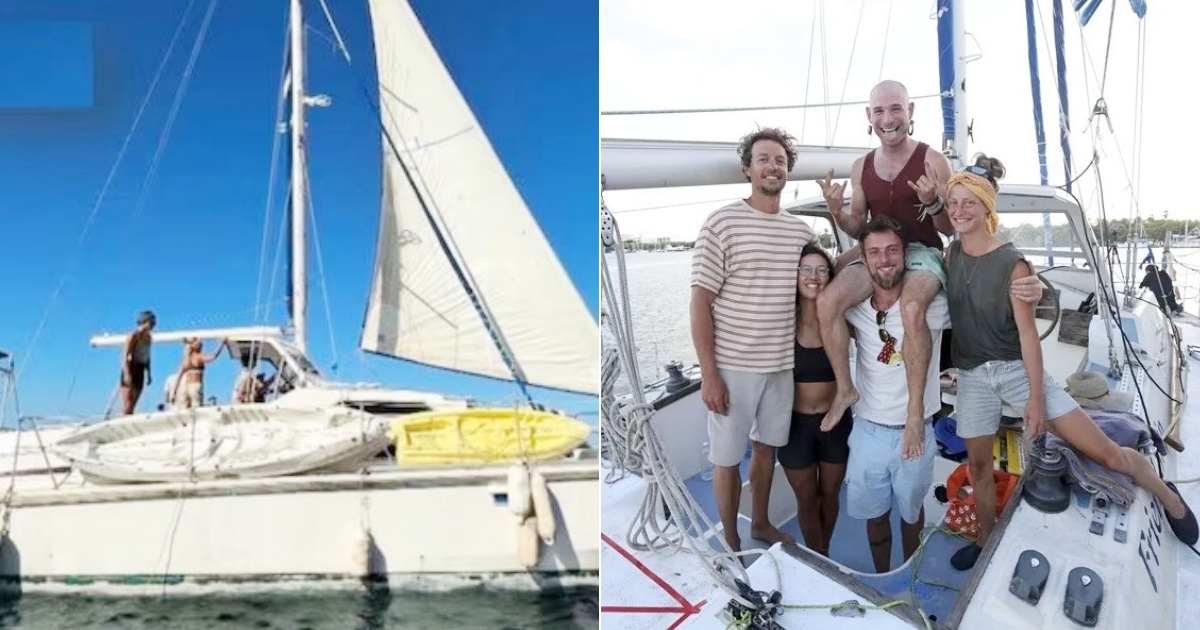
Two vessels carrying humanitarian aid, along with nine passengers—including a three-year-old child—have been missing in the Caribbean for several days. The boats set sail for Cuba, but there has been no sign of their arrival.
The Mexican Navy (SEMAR) confirmed the alert and initiated an emergency operation due to the lack of communication with the sailboats, which were expected to reach their destination between March 24 and 25.
In an official statement, SEMAR announced, “The Search and Rescue (SAR) component of the Marina Plan has been activated to locate two sailboats with nine crew members of various nationalities.” These vessels departed from Isla Mujeres, Quintana Roo, heading to Havana.
Authorities have acknowledged that, despite the time elapsed, “there is still no communication or confirmation of their arrival,” increasing concerns about the crew's safety.
The Uncertain Fate of a Humanitarian Mission
The missing boats were part of the “Nuestra América” convoy, an activist-led effort delivering humanitarian aid to Cuba amid the island’s severe economic crisis.
The group was transporting approximately 30 tons of supplies, including food, medicine, hygiene products, and solar panels.
While other ships in the convoy successfully reached their destination, these two sailboats were delayed due to adverse weather conditions.
According to EFE, the passengers included two women, six men, and one child. In response to the lack of news within the expected timeframe, the Mexican Navy promptly activated its response mechanisms.
The institution emphasized its duty to protect life at sea, stating, “Protocols were immediately activated to fulfill Mexico’s responsibility to safeguard human life at sea.”
This operation involves a substantial deployment of naval and aerial resources along the estimated route between Mexico and Cuba.
SEMAR has deployed surface units and aircraft, including Persuader planes, conducting search patterns that account for ocean currents, weather conditions, and potential course changes.
International Cooperation in Search Efforts
Additionally, authorities are maintaining “constant monitoring and continuous analysis of available information” to adjust search areas and enhance chances of locating the vessels.
The search has also triggered international cooperation mechanisms, with Mexico communicating with maritime rescue centers and authorities from several countries.
According to the statement, there is coordination with Poland, France, Cuba, and the United States “to strengthen cooperation and real-time information exchange.”
In tandem with these efforts, the Navy has requested assistance from those navigating the area.
The institution issued “a call to the national and international maritime community (…) to immediately report any information or sightings of the mentioned vessels.”
As search efforts continue, the situation remains tense for families, activists, and authorities engaged in this race against time.
FAQs on Missing Vessels in the Caribbean
What was the purpose of the missing vessels?
The missing vessels were part of a humanitarian mission, transporting approximately 30 tons of aid, including food, medicine, hygiene products, and solar panels, to Cuba amid its economic crisis.
What measures has the Mexican Navy taken to locate the vessels?
The Mexican Navy has activated the Search and Rescue component of the Marina Plan, deploying both naval and aerial resources, including Persuader planes, to search for the missing vessels. They are using search patterns that consider ocean currents, weather conditions, and possible changes in course.
How is international cooperation being utilized in the search efforts?
Mexico is coordinating with maritime rescue centers and authorities from Poland, France, Cuba, and the United States to strengthen cooperation and ensure real-time information exchange in the search efforts.