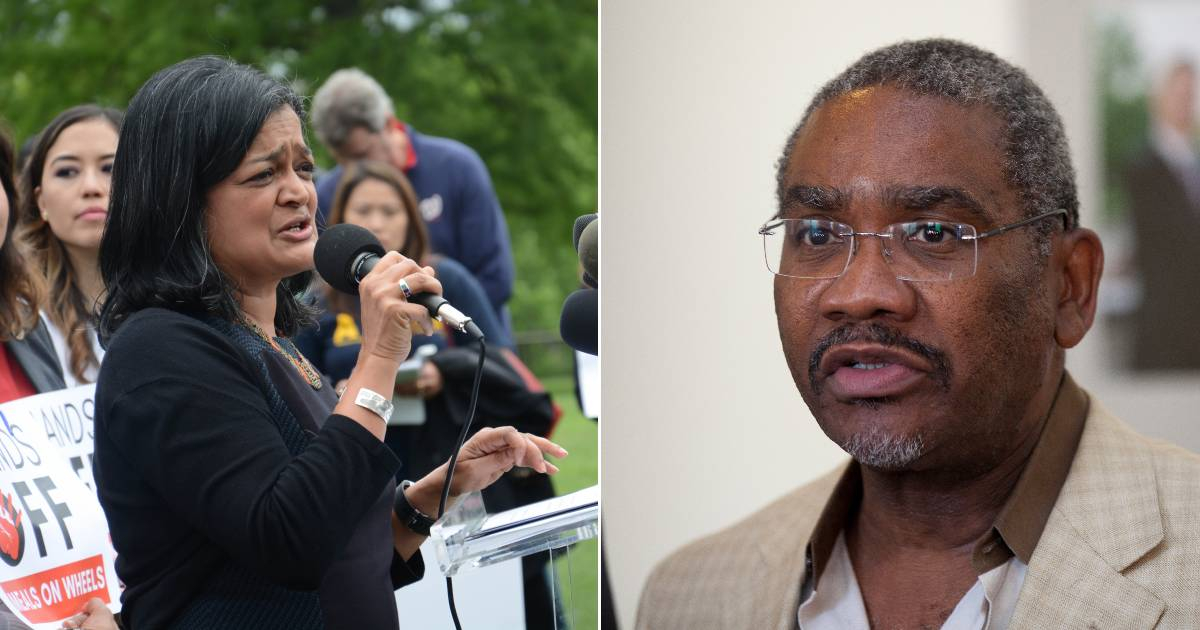
A coalition of Democratic lawmakers voiced their opposition on Thursday, asserting that "Cuba is not for Donald Trump to seize," and expressing their strong disapproval of any "unauthorized use of the U.S. military" on the island.
Gregory W. Meeks (NY-05), the senior Democratic member on the House Foreign Affairs Committee, passionately stated on X, "Cuba is not for Trump to claim, and today we stand firmly against the unauthorized deployment of American troops to transform Cuba into another playground for Trump's chaotic adventurism."
Meeks emphasized that such recklessness could "endanger American lives, cost taxpayers billions, and likely leave the underlying political and economic conditions unchanged."
He further argued, "The United States cannot resolve Cuba's economic collapse or political oppression through military intervention; lasting change must come from empowering the Cuban people, rather than persisting with a failed approach that disproportionately harms them."
The group introduced the Prevent an Unconstitutional War in Cuba Act in the House of Representatives, aiming to prevent President Donald Trump from using federal funds for military action against Cuba without prior Congressional approval.
This development was also reported by The Hill, which elaborated on the proposal's scope.
Representatives Meeks and Pramila Jayapal (WA-07) spearheaded the initiative, which boasts 14 Democratic co-sponsors.
The proposed legislation seeks to prohibit federal funding for military force in or against Cuba from its enactment until December 31, 2026, unless Congress declares war or an emergency under the War Powers Act arises.
Jayapal directly criticized the administration's pattern: "Trump has initiated illegal regime change conflicts in Venezuela and Iran, and now he is threatening Cuba. Trump promised to end endless wars — he lied. Only Congress has the authority to declare war, something Trump blatantly disregards."
This initiative responds to public statements by the president, who declared, "I believe I'll have the honor of taking Cuba," adding that "whether it's liberating it, taking it — I think I can do whatever I want with it... They are a very weakened nation now."
On March 16, Trump hinted to Politico about a potential collapse of the Cuban regime, stating "Cuba sees the end."
Just two days before this bill was introduced, Congresswoman Nydia M. Velázquez had presented a War Powers Resolution with the same objective.
"While he threatens to 'take' Cuba, his oil blockade is worsening a humanitarian crisis and punishing the Cuban people," remarked Velázquez, who also warned that Trump's policy "is endangering countless American and foreign lives."
The backdrop of these legislative efforts is one of escalating tension. On January 1, Trump signed an executive order declaring a national emergency over threats posed by Cuba.
Understanding the Implications of the Prevent an Unconstitutional War in Cuba Act
What is the main objective of the Prevent an Unconstitutional War in Cuba Act?
The Act aims to restrict the President from using federal funds for military actions against Cuba without Congressional authorization, ensuring any such military intervention adheres to constitutional protocols.
Who are the key figures leading this legislative initiative?
Representatives Gregory W. Meeks and Pramila Jayapal are at the forefront of this initiative, with the support of 14 other Democratic co-sponsors.
How has this legislative effort been received by other political entities?
The bill has garnered media attention, with outlets like The Hill covering its implications. It is part of a broader Democratic effort to curtail unilateral military actions by the Trump administration.